

- India,
- 01-Feb-2026 09:06 AM IST


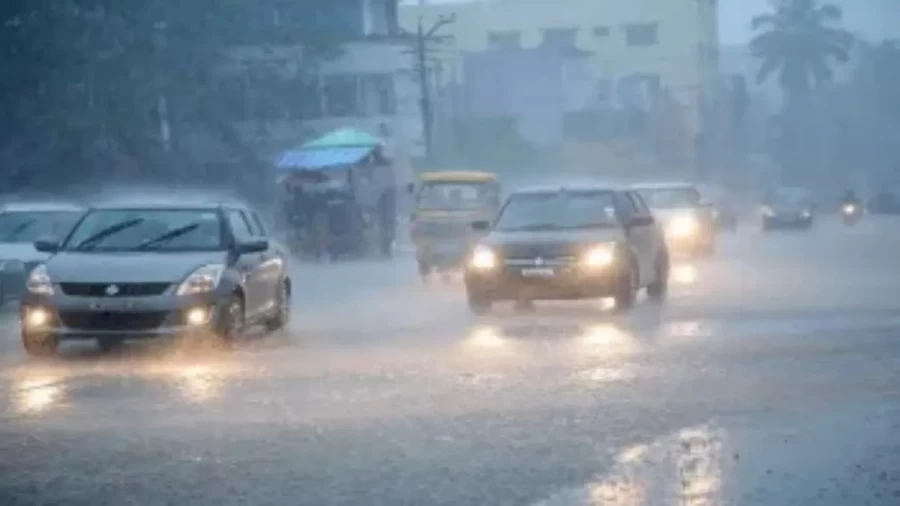
Delhi and the National Capital Region (NCR) witnessed a sudden shift in weather patterns on Sunday morning as light to moderate rainfall lashed several parts of the city. This precipitation has resulted in a noticeable drop in temperatures, bringing back a brief spell of cold weather. According to the India Meteorological Department (IMD), this change is attributed to the influence of a Western Disturbance, while however, the weather agency has noted that this cooling effect is temporary, as the forecast for February indicates a trend of rising temperatures across the country.
Current Weather Conditions in Delhi-NCR
On February 1, the national capital and its surrounding areas experienced overcast skies and intermittent showers. The IMD has projected the maximum temperature for the day to hover between 16°C and 18°C, while the minimum temperature is expected to settle around 10°C. The moisture brought by the Western Disturbance has increased humidity levels, leading to foggy conditions in the early hours. Meteorologists suggest that while the current rain has provided a brief respite from the rising mercury, the skies are expected to clear soon, leading to a gradual increase in daytime temperatures.
IMD Forecast: Above-Normal Heat in February
In a recent press conference, Mrutyunjay Mohapatra, Director General of the IMD, stated that February 2024 is expected to be warmer than usual. The seasonal outlook suggests that both maximum and minimum temperatures will remain above normal across most parts of North and Central India. Only certain regions in South Peninsular India might experience temperatures within the normal range, while On top of that, monthly rainfall is predicted to be below average for Northwest India, including states like Delhi, Punjab, Haryana, Uttar Pradesh, and Uttarakhand.
Concerns for the Agricultural Sector
The prediction of an early onset of heat has raised concerns for the agricultural sector, particularly for Rabi crops, while the IMD chief highlighted that rising temperatures in February could lead to the premature ripening of crops such as wheat and barley. If the heat intensifies during the grain-filling stage, the grains may not develop fully, leading to shriveled seeds and a subsequent reduction in overall yield. Agricultural experts emphasize that the current growth stage of wheat requires cooler conditions, and any significant thermal stress could adversely affect food production targets.
Impact of Climate Change and Western Disturbances
The current winter season has been characterized by a significant lack of active Western Disturbances, which are crucial for winter rain and Himalayan snowfall. Snowfall in the Himalayan region was delayed until after January 20, resulting in a largely dry winter for the plains. The IMD analysis suggests that a low-pressure area in the Bay of Bengal also deprived eastern parts of the country of expected rainfall. Experts link these erratic patterns to broader climate change trends and global warming, noting a clear decline in winter precipitation over the long term.
Conclusion and Future Outlook
According to the IMD's analytical models, the weather in Delhi-NCR is expected to stabilize with clearer skies in the coming days. As the influence of the current Western Disturbance wanes, the intensity of solar radiation will increase, pushing temperatures upward. The weather department maintains that the absence of frequent and strong cold waves this season is a result of changing atmospheric circulations. This transition to an early summer-like feel in February could have cascading effects on water management and energy consumption patterns in the region.
