

- India,
- 02-Apr-2026 09:08 AM IST


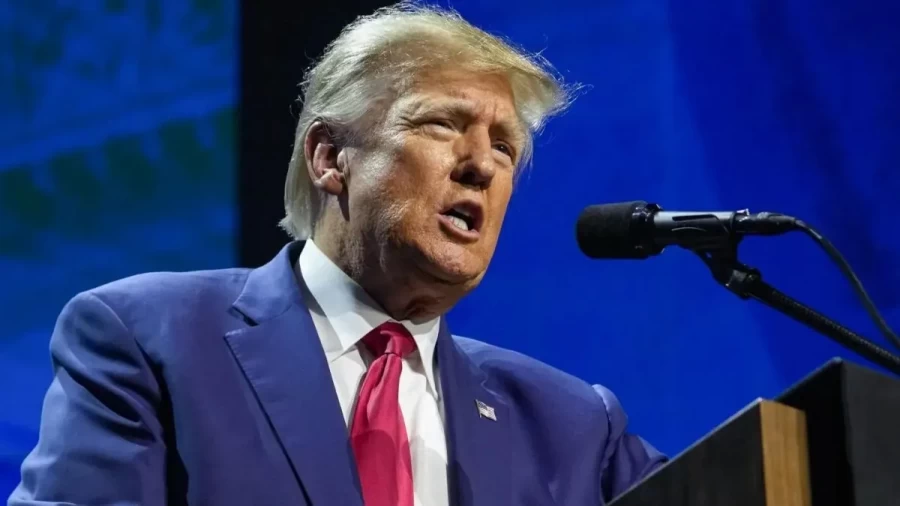
President Donald Trump addressed the nation on Thursday, declaring a significant military victory in the conflict with Iran. He claimed that the United States has systematically dismantled Iran's leadership, navy, air force, and missile programs. According to the President, the primary objective of "regime change" has been realized, and a new administration in Tehran is now seeking a ceasefire and a diplomatic deal with Washington. Trump emphasized that Iran is no longer in a position to threaten the United States or project power beyond its borders.
Systematic Dismantling of Iranian Military Infrastructure
Referring to "Operation Epic Fury," President Trump stated that the mission's objectives were simple and clear. He claimed that the Iranian Navy has been completely destroyed, while the Air Force and missile programs have sustained damage at an unprecedented level, while the President asserted that the defense industrial base of the Iranian regime has been entirely wiped out. He noted that the leadership has been eliminated, leaving the military in a state of total defeat, ensuring they can't pose a threat to American interests or regional stability.
Neutralization of Nuclear Capabilities and Proxy Networks
A central theme of the address was the elimination of Iran's nuclear ambitions. Trump declared that the military actions have successfully destroyed Iran's capacity to build a nuclear bomb. On top of that, he stated that the regime's ability to support terrorist proxies across the region has been neutralized. Describing the performance of the US Armed Forces as "amazing," the President noted that such military precision had never been witnessed before. He predicted that the ongoing operations would conclude within the next 2 to 3 weeks, marking the end of the conflict.
Honoring Fallen Heroes and Mission Completion
The President paid tribute to the 13 American service members who lost their lives during the campaign. Recounting his visits to Dover Air Force Base, Trump expressed his commitment to the families of the fallen, stating that their sacrifice ensured future generations wouldn't face the threat of an Iranian nuclear weapon. He shared that the families had urged him to "finish the job," a task he promised to complete rapidly. He emphasized that the mission was nearing its final stages and that the bravery of these heroes would be honored through total victory.
Regional Alliances and the Strait of Hormuz
Trump extended his gratitude to regional allies, including Israel, Saudi Arabia, Qatar, the UAE, Kuwait, and Bahrain, for their support during the conflict. Addressing the recent spike in global oil prices, the President attributed the volatility to "insane terrorist attacks" by the Iranian regime on commercial tankers. He argued that this instability further justified the necessity of preventing Iran from acquiring nuclear weapons, which would have led to decades of economic blackmail and global instability. He reassured that the US economy remains the strongest in history and is well-prepared for such challenges.
US Energy Independence and Economic Resilience
In a significant policy statement, Trump declared that the United States no longer requires oil from the Middle East or the Strait of Hormuz. He highlighted that the US possesses sufficient domestic oil and gas reserves, rendering imports from the region unnecessary, while the President suggested that nations dependent on the Strait of Hormuz for their energy needs should take responsibility for its protection. He concluded by stating that once the conflict ends, the waterway will reopen naturally as the new administration seeks to sell oil for reconstruction, eventually leading to lower global energy prices.
