

- India,
- 08-Mar-2026 08:43 AM IST


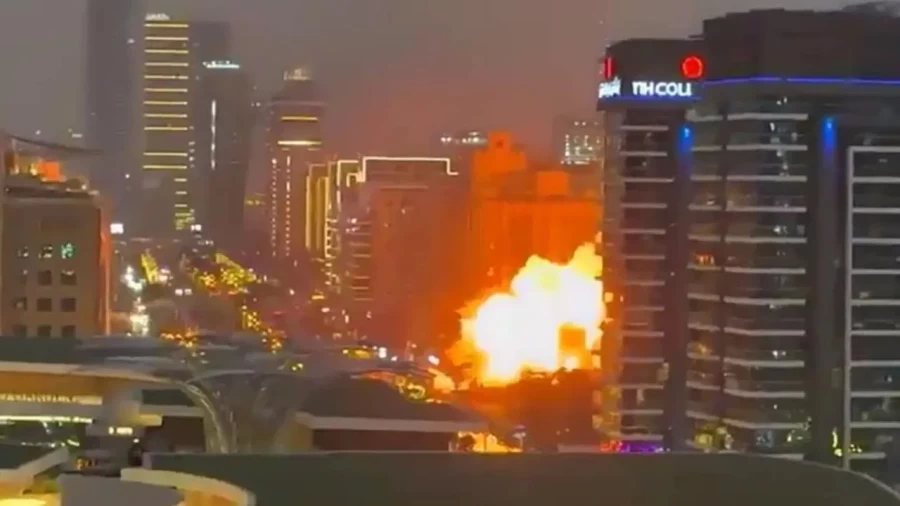
A drone and missile offensive launched from Iran targeted the United Arab Emirates (UAE) on Saturday, leading to the death of one individual and causing property damage in Dubai. According to the UAE Ministry of Defense, national air defense systems were activated to intercept incoming threats from Iranian territory. While the interceptions were largely successful, the resulting shrapnel and debris fell over several populated areas of the city, causing immediate concern among residents and authorities.
Casualties and Structural Damage in Dubai
The Dubai Media Office confirmed that an Asian national was killed in the Al Barsha district when debris from an intercepted missile struck the vehicle he was operating. Simultaneously, in the upscale Dubai Marina area, a high-rise tower sustained damage to its facade due to falling fragments. Officials reported that the situation was quickly brought under control, though the incident has raised the total death toll in the UAE since the onset of regional hostilities to four. All deceased individuals reported so far have been identified as foreign nationals residing in the country.
Iranian President’s Apology Amidst Ongoing Strikes
Iranian President Masoud Pezeshkian issued a formal apology on Saturday for the strikes carried out against neighboring countries. However, the apology appeared contradictory as missile and drone launches toward Gulf Arab nations continued unabated. According to diplomatic observers, this discrepancy suggests a potential lack of total control by the Iranian political leadership over the country's armed forces, specifically the Islamic Revolutionary Guard Corps (IRGC). S. President Donald Trump.
Internal Power Dynamics and the Revolutionary Guard
The ongoing conflict has highlighted the complex power structure within Iran. The Revolutionary Guard, which controls the nation's missile arsenal, has historically been accountable only to the Supreme Leader. Following recent escalations and the reported weakening of Iran's central leadership due to numerous external airstrikes, the IRGC appears to be operating with increased autonomy. President Pezeshkian’s message, recorded with minimal professional equipment, underscored the challenges faced by the tripartite leadership council currently overseeing Iranian affairs.
International Response and Trump’s Warning
S, while president Donald Trump issued a stern warning via his Truth Social platform. S. is considering strikes on areas and groups previously not under consideration. He characterized the Iranian leadership's behavior as unacceptable and promised a forceful response. The attacks have already caused significant disruptions at Dubai International Airport, affected major oil facilities in Saudi Arabia, and prompted emergency safety measures in Bahrain.
Impact on Regional Stability and Global Markets
The escalation of hostilities has sent ripples through global markets and the international aviation sector. As a primary hub for global trade and travel, any threat to Dubai’s security has immediate economic implications. According to aviation officials, several flights were diverted or delayed following the missile interceptions. The persistent threat to infrastructure and civilian safety continues to challenge regional stability, with experts noting that the conflict's expansion could further impact global oil supplies and international shipping routes in the Gulf.
