
- India,
- 12-Nov-2026 03:38 PM IST



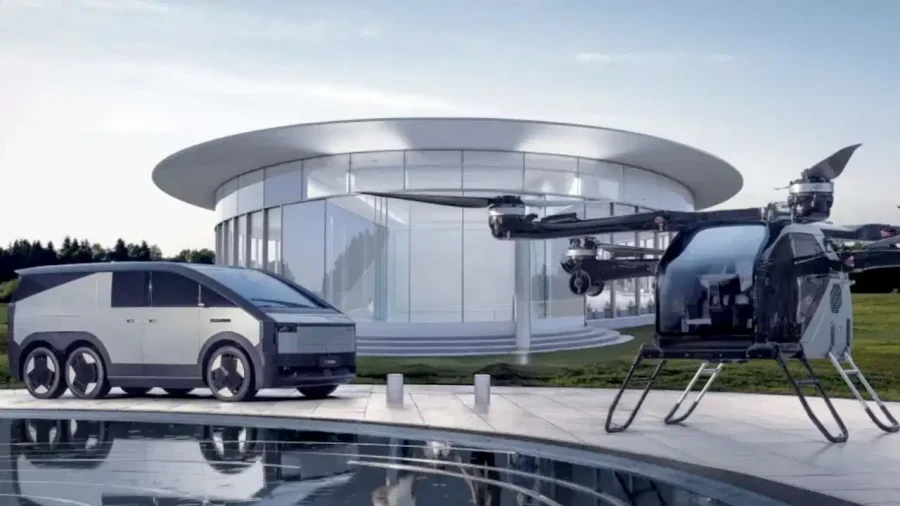
The long-held dream of flying cars and electric air taxis across the globe is rapidly moving towards becoming a tangible reality, while intensive work on this advanced technology is currently underway in major nations including China, the United States, Japan, the United Kingdom, and India. The present scenario reveals that while some aerospace companies are rigorously testing their futuristic aircraft, others have moved remarkably close to securing official government approvals. These flying vehicles are fundamentally electric air taxis, technically categorized as eVTOLs, which stand for electric vertical take-off and landing aircraft. Powered entirely by electricity, these innovative machines possess the unique ability to lift vertically straight up into the air without the need for a conventional runway, much like a helicopter. Once airborne, they transition to forward flight just like a standard airplane, typically accommodating a pilot and a small number of passengers. These aerial vehicles remain distinct from dual-purpose cars designed to drive on roads and fly in the sky.
China leads the race with EHang and other key developments
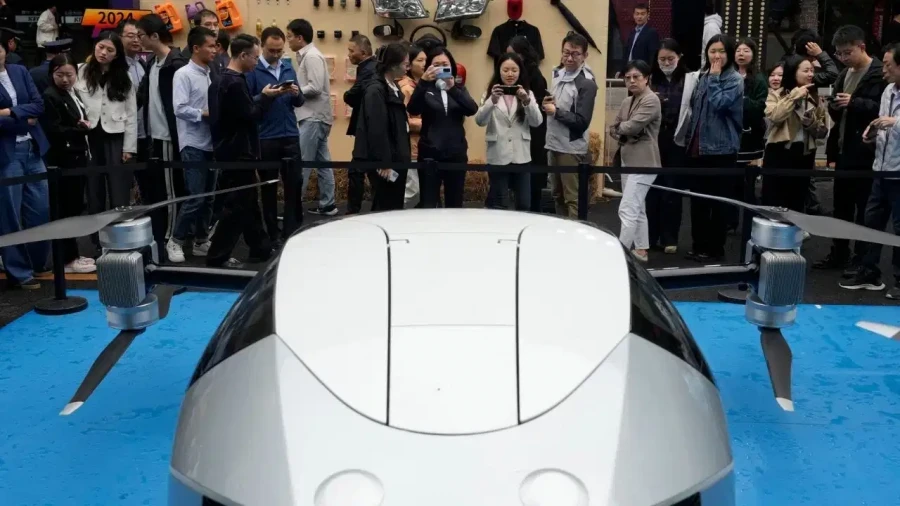
China clearly stands at the forefront of this global technological revolution. The leading Chinese company EHang features the EH216-S model, which accommodates two passengers and operates completely without the need for a pilot. The Chinese government granted the essential design approval in October 2023, production certification in March 2024, and passenger service authorization to two distinct operators in March 2025. According to official company data, trial flights with two operators in Guangzhou and Hefei have been actively ongoing for 17 months leading up to August 2026, while inner-city designated aerial routes are simultaneously being evaluated within Guangzhou. Also, AutoFlight is actively developing its five-passenger Prosperity aircraft, while in February 2024, this aircraft successfully completed a 50 kilometer flight between Shenzhen and Zhuhai. Subsequently, in November 2026, five of its eVTOL aircraft simultaneously flew for 47 minutes, covering a distance exceeding 133 kilometers. This particular test was structured to evaluate mutual fleet coordination and autonomous flight capabilities rather than securing passenger operational clearance, while Also, Chinese electric vehicle manufacturer XPeng is aggressively preparing to introduce its two-seater electric flying car to the market by the year 2027.
United States advancements with Joby, Archer, and Tesla Roadster
In the United States, industry pioneers like Joby Aviation and Archer Aviation are leading the aggressive race to secure vital government regulatory approvals. Joby Aviation's S4 aircraft is engineered to carry one pilot alongside four passengers. As of November 4, 2026, the company successfully completed three phases of the rigorous five-stage Federal Aviation Administration certification process, with the fourth phase focusing on detailed inspections and the fifth centering on final safety verification. Pilot-led flight testing is widely anticipated to commence during the first half of 2027. Joby has successfully executed several government-backed flights across Texas and Florida. Besides, its second dedicated air taxi station in Dubai is fully completed, with pilot-inclusive testing scheduled before the end of the year, while meanwhile, Archer Aviation's Midnight aircraft secured a special airworthiness certificate from the FAA on November 9, 2026, which paves the way for crewed flight tests in Los Angeles. The company is actively preparing for government-affiliated programs and potential transport services tied to the 2028 Olympic Games, though this doesn't constitute final commercial passenger operational clearance. Amidst these developments, Tesla unveiled its second-generation Roadster on October 16, engineered by a collaborative team of Tesla and SpaceX engineers. 81 seconds. Equipped with specialized cold-gas thrusters and high-pressure air tanks, the car is engineered to execute short jumps, flips, and safe landings, while commercial production is eagerly anticipated to begin in 2028.
Progress across Japan, the United Kingdom, and India
In Japan, the SD-05 aircraft developed by SkyDrive successfully completed 300 test flights and achieved a top speed of 100 kilometers per hour by June 2026. In March 2026, the company established a formal certification plan agreement with the Civil Aviation Bureau, maintaining a steadfast corporate target to launch commercial service by 2028. In the United Kingdom, Vertical Aerospace conducted successful flight tests of its Valo aircraft in April 2026. The vehicle demonstrated vertical takeoff like a helicopter, transitioned to horizontal wing-borne flight like an airplane, and landed vertically. This entire testing protocol was conducted under the direct supervision of the UK Civil Aviation Authority, with the company aiming for full certification by 2028. Shifting focus to India, domestic startups Sarla Aviation and The ePlane Company are maintaining high levels of operational activity. Bengaluru-based Sarla Aviation completed testing of a half-scale model of its Sylla aircraft in July 2026. This 700 kilogram model has undergone more than 500 tests, accumulating over 18 hours of cumulative flight time. The company's subsequent model is engineered to hover before transitioning to forward flight, with the ultimate corporate goal being the development of a six-passenger vehicle named Shunya. Plus, the company secured design organization approval from the Directorate General of Civil Aviation in August 2026. Chennai-based The ePlane Company publicly showcased the full-scale prototype of its e200X aircraft, designed to seat one pilot and two passengers. The enterprise intends to deploy the technology initially for air ambulance services before expanding into general passenger transport. By August 2026, the company was actively progressing through the second phase of the DGCA's four-stage approval procedure. Although this specific prototype had not yet undertaken flight operations, flight testing of the prototype was officially targeted to begin in April 2027.
Key operational challenges and regulatory requirements
Significant technical, engineering, and administrative hurdles continue to loom over the widespread commercial deployment of flying cars and air taxis. Major challenges involve optimizing battery weight constraints, extending limited operational flight ranges, and guaranteeing safe landing procedures during unexpected mechanical malfunctions or system failures. Also, densely populated urban environments demand the establishment of secure low-altitude aerial corridors, the construction of dedicated vertiports, and the creation of affordable charging and maintenance infrastructure characterized by minimal noise pollution, while according to data published by the United States Government Accountability Office, by December 2025, airport layout plans across 47 American airports successfully incorporated electric aircraft charging stations, 43 of which were classified as small or lesser-used facilities. Achieving full commercial passenger service necessitates securing three distinct regulatory approvals: design and airworthiness certification, production quality manufacturing approval, and final commercial operational certification. EHang remains the sole global entity to have successfully secured all three regulatory milestones, while competing companies worldwide continue advancing through various preliminary phases of the certification pipeline. The question of whether everyday passengers will truly be able to commute via flying cars by the year 2028 remains one of the most anticipated milestones in modern aviation history.