

- India,
- 21-Nov-2024 08:46 AM IST


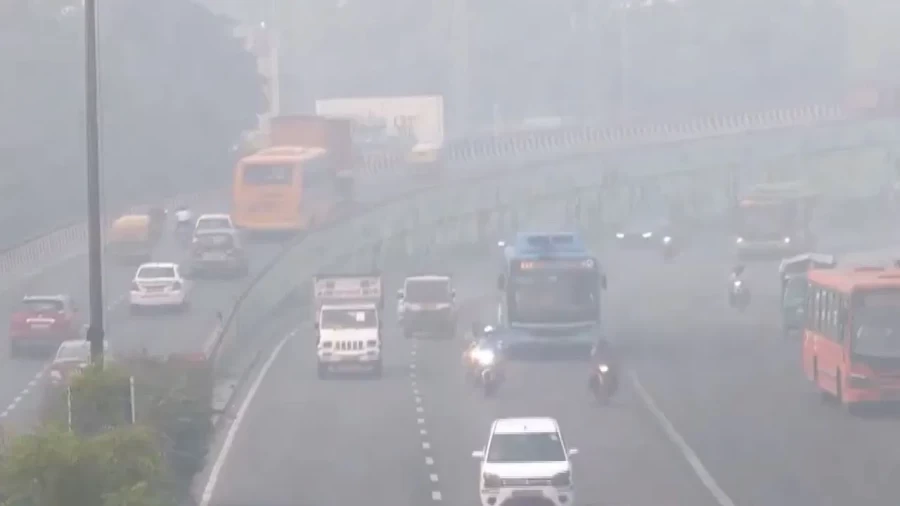
Delhi Air Pollution: Air pollution continues to remain at dangerous levels in Delhi and its NCR (National Capital Region) areas. The situation has become so serious that people are having difficulty breathing. On Thursday morning, Delhi's average Air Quality Index (AQI) was recorded at 384, which falls in the "very poor" category. The situation is even worse in many places. AQI was recorded above 400 in areas like Anand Vihar, Ashok Vihar, Bawana, Mundka, and Jahangirpuri, which indicates the "severe" category.
Schools and colleges closed, work from home started
In view of the poor air quality, the Delhi government has taken several emergency steps. Schools and colleges have been temporarily closed. Also, government employees have been given the facility of work from home.
The government has started considering a plan to make artificial rain to reduce air pollution. This can help in cleaning the harmful particles present in the air.
Implementation of GRAP-4
Graded Response Action Plan (GRAP) has been implemented in Delhi to control air pollution. Earlier GRAP-1 was implemented, but when the situation did not improve, strict GRAP-4 measures were taken. Under these steps, measures like stopping construction work, limiting the number of vehicles and controlling industrial activities are being taken.
Strictness on sale and use of firecrackers
The Delhi government has completely banned the manufacture, storage, sale and use of firecrackers. Delhi Police has instructed e-commerce websites and social media platforms to immediately stop online sale of firecrackers.
Areas with dangerous conditions
On Thursday morning, the AQI remained at a very dangerous level in various areas. The AQI of some major areas are as follows:
Anand Vihar: 409
Ashok Vihar: 418
Jahangirpuri: 439
Bawana: 423
Mundka: 419
Punjabi Bagh: 411
Causes and Solutions
The main causes of air pollution in Delhi and NCR include vehicle emissions, industrial activities, construction work, stubble burning and low wind speed during winter season. The following steps can be taken to address this:
More use of public transport
Limiting the use of vehicles
Expansion of green cover
Regular monitoring of air quality
Role of citizens
Along with the efforts of the government, it is also the responsibility of the citizens to cooperate in reducing air pollution. Limit the use of non-essential vehicles, promote walking or cycling, and follow the instructions issued by the government.
Conclusion
Collective efforts are needed to solve the serious problem of air pollution in Delhi-NCR. This situation can be improved only with the policy measures of the government as well as the active cooperation of the citizens. Until the situation improves, the safest solution is to take precautions and stay indoors.
