
- India,
- 03-Oct-2026 05:38 PM IST



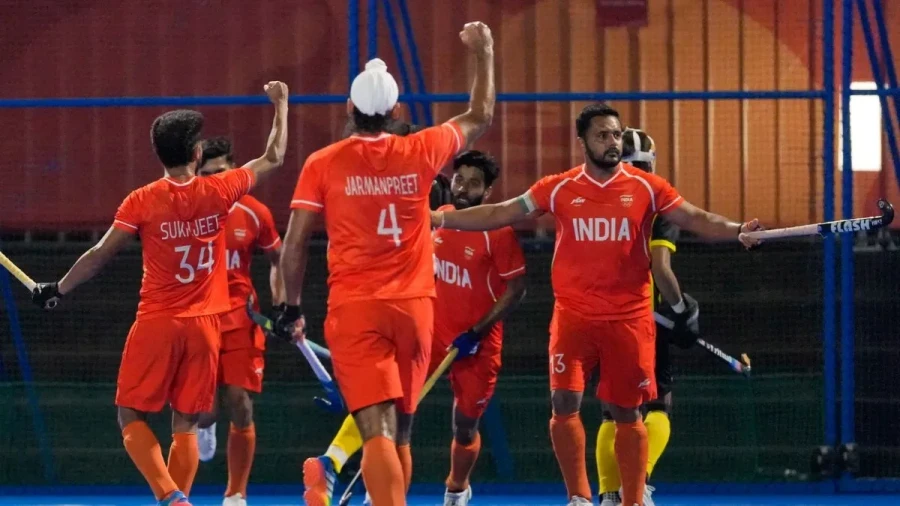
The Indian men's hockey team has etched its name in the history books at the Asian Games 2026. In a high-stakes final match against Malaysia, the Indian team displayed an extraordinary level of skill and dominance to secure the gold medal. The final scoreline of 5-1 reflects the one-sided nature of the contest, where India outclassed their opponents in almost every department of the game. This victory isn't just about the gold medal; it represents a significant milestone for Indian hockey on the continental stage, showcasing the team's preparation and tactical superiority throughout the tournament.
Historic Achievement and Olympic Qualification
The triumph at the Asian Games 2026 carries immense weight for several reasons. Most notably, this edition of the games marked a historic first for Indian hockey, as both the men's and women's teams secured gold medals in their respective categories. This dual success highlights the growing strength and consistency of the sport in the country. On top of that, by winning the gold medal in this tournament, the Indian men's team has officially secured its berth for the 2028 Los Angeles Olympics. This early qualification provides the team with a clear roadmap and ample time to prepare for the global event, ensuring that the momentum from this victory is carried forward to the highest level of international competition.
First Quarter: India Takes the Lead
India started the match with high intensity, immediately putting pressure on the Malaysian defense. In the opening minutes, the Indian team played with a balanced approach, focusing on solid defense while looking for openings to launch aggressive attacks. The strategy paid off as India earned their first penalty corner early in the game. Although they were unable to convert the first opportunity, the pressure remained relentless. Shortly after, India earned a second penalty corner. In the 11th minute of the match, captain Harmanpreet Singh stepped up and successfully converted the chance, giving India a 1-0 lead. However, the joy was short-lived as Malaysia responded quickly. In the 14th minute, Malaysian player Shello Silverius scored a brilliant field goal, bringing the score to 1-1 by the end of the first quarter.
Second Quarter: Regaining Control
The second quarter saw a shift in Malaysia's tactics as they adopted a more aggressive playing style to challenge the Indian side. Despite the increased pressure from the opposition, the Indian team remained composed. The breakthrough came in the 23rd minute when India was awarded another penalty corner. Jugraj Singh took the shot and found the back of the net, restoring India's lead to 2-1. Following this goal, Malaysia pushed hard to find an equalizer before the break, but the Indian defense stood firm, thwarting every attempt. By the time the whistle blew for half-time, India maintained their 2-1 advantage, having successfully navigated the Malaysian surge.
Third Quarter: Extending the Dominance
In the third quarter, India continued to create numerous scoring opportunities, although they faced some initial frustration in converting them. Jugraj Singh had a chance to extend the lead through a penalty corner but missed the target. Similarly, Nilakanta had an opportunity for a field goal that didn't materialize. Captain Harmanpreet Singh also saw a penalty corner attempt go wide. However, the persistence of the Indian attackers eventually led to another penalty corner, while when Harmanpreet took the shot, the ball struck a Malaysian defender, resulting in a penalty stroke for India. In the 42nd minute, Hardik Singh took the responsibility and calmly converted the stroke, making the score 3-1 in favor of India. The Indian team continued their scoring run across the quarters, eventually finishing the match with a comprehensive 5-1 victory to claim the gold medal.