

- India,
- 26-Nov-2025 07:16 PM IST


India has strongly rebuked Pakistan's criticism regarding the flag hoisting at the Ram Temple in Ayodhya, with the Ministry of External Affairs (MEA) spokesperson Randhir Jaiswal stating that Pakistan has no right to lecture India on atrocities against minorities and religious extremism. This sharp response came after Pakistan's foreign ministry condemned Prime Minister Narendra Modi's flag hoisting at the temple, terming it an attempt to erase Muslim heritage and increase pressure on religious minorities in India. India highlighted Pakistan's own extensive history of persecuting minorities, asserting that it lacks the moral authority to advise any other nation.
India's Firm Stance on Pakistan's Allegations
MEA spokesperson Randhir Jaiswal delivered a strong message to Pakistan, emphasizing that a country with a long history of atrocities against its own minorities and rampant religious extremism is in no position to offer advice to India, while jaiswal's statement underscored India's consistent position that Pakistan's internal record on minority rights is abysmal, making its criticisms of India's secular fabric hypocritical and unfounded. This diplomatic exchange highlights the ongoing tension between the two nations over religious and cultural matters.
Pakistan's Condemnation of Ram Temple Event
Pakistan's Ministry of Foreign Affairs issued a statement on Tuesday, expressing strong disapproval of Prime Minister Modi's flag hoisting at the Ram Temple in Ayodhya. Pakistan alleged that the event was part of a broader effort to increase pressure on religious minorities in India and to erase Muslim heritage. The statement specifically mentioned the construction of the Ram Temple on the site where the Babri Masjid once stood, claiming the mosque was a centuries-old religious site that was demolished by a mob on December 6, 1992. Pakistan viewed this as a significant example of discrimination against minorities in India.
Demand for UN Intervention
In its condemnation, Pakistan appealed to the international community to take note of. What it described as rising Islamophobia, hatred, and attacks on Muslims in India. It urged the United Nations (UN) and other international organizations to intervene and take steps to protect the religious sites and rights of minorities in India. Pakistan further claimed that Indian courts had acquitted those accused of demolishing the Babri Masjid and allowed the. Construction of the temple on the same land, which it presented as a major instance of discrimination against minorities.
PM Modi Hoists Saffron Flag
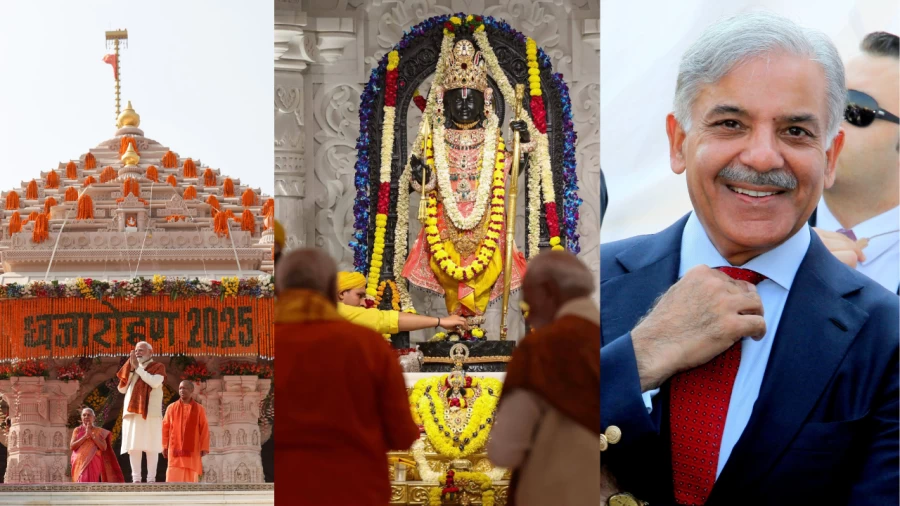
Prime Minister Narendra Modi hoisted a 2-kilogram saffron flag on the 161-foot high spire of the Ram Temple in Ayodhya. The flag hoisting ceremony took place at 11:50 AM on Tuesday, during the auspicious Abhijit Muhurat. This event marked a significant spiritual and cultural moment following the. Temple's consecration and construction, drawing widespread attention and celebration across India. The saffron flag, a symbol of Hindu faith, now adorns the temple's pinnacle, further solidifying its presence.
Pakistan's Own Record on Minority Rights
While accusing India, Pakistan itself faces widespread criticism for its treatment of minorities. According to a US report, the first half of 2025 saw numerous incidents of attacks and threats against minorities in Pakistan, with the government often failing to take strict action against perpetrators. Recently, 10 individuals accused of burning a church in 2023 were acquitted by a court. Cases of forced conversions and forced marriages of Hindu and Christian girls, particularly in. Sindh and Punjab provinces, are frequently reported, highlighting the precarious situation of minorities in Pakistan.
Previous Condemnation of Temple Inauguration
This isn't the first instance of Pakistan condemning events related to the Ram Temple. Approximately two years prior, on January 22, 2024, Pakistan had also denounced the Pran Pratishtha (consecration) ceremony of the Ram Temple. At that time, Pakistan's foreign ministry issued a statement asserting that the temple's construction on the site of the demolished Babri Masjid would remain a 'blot on the face of Indian democracy. ' It also warned that the rising 'Hindutva' ideology in India posed a significant. Threat to religious harmony and regional peace, accusing India of attempting to marginalize Muslims.
International Support for India
In contrast to Pakistan's condemnation, Israel's Ambassador to India, Reuven Azar, extended congratulations to India on the flag hoisting at the Ram Temple via social media platform 'X'. He shared images and remarked that the event was a 'very important moment for civilization. ' Ambassador Azar also shared pictures from his visit to Ayodhya during the temple's construction last year, indicating a positive international reception from some quarters, while this diplomatic exchange underscores the complex interplay of religious, cultural, and political narratives between India and Pakistan, with India celebrating its heritage amidst international recognition.
