

- India,
- 16-Jan-2026 06:08 PM IST


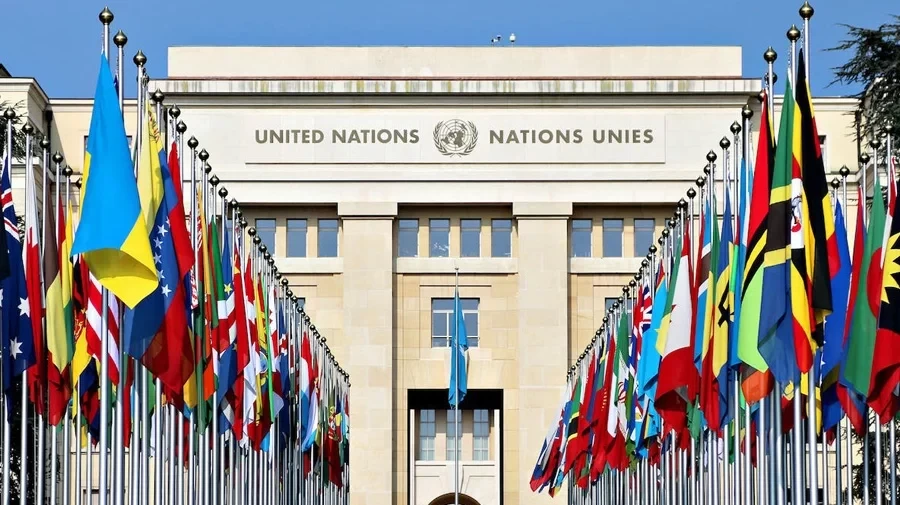
India delivered a strong rebuke to Pakistan at the United Nations, accusing it of repeatedly misusing UN platforms to advance its “divisive agenda. ” The sharp response came after Pakistan's ambassador raised the issue of Jammu and Kashmir during a General Assembly session. India's Ambassador Eldos Mathew Punnus firmly countered Pakistan's claims, asserting. That Kashmir is an “inseparable and integral part” of India. This strong stance effectively thwarted the agenda of Pakistan's Prime Minister Shehbaz Sharif and Army Chief Asim Munir, who sought to internationalize the Kashmir issue and malign India's image. India dismissed Pakistan's remarks as “inappropriate and completely detached from reality,” labeling them as yet another attempt to spread misinformation.
Pakistan's Divisive Agenda at UN
During the plenary session of the United Nations General Assembly on the 'Report of the Secretary-General on the Work of the Organization,' Counselor Eldos Mathew Punnus from India's Permanent Mission to the UN stated unequivocally that Pakistan continues to politicize multilateral forums. He emphasized that Pakistan consistently misuses all UN platforms and processes to push its divisive agenda. This pattern, which India has repeatedly highlighted and condemned, distracts from the crucial work of the United Nations and goes against the fundamental principles upon which the organization was founded. India believes that such forums should be utilized for constructive dialogue and global cooperation, rather than for narrow political objectives that only foster tension and distrust. Pakistan's persistent behavior is a matter of concern for the. International community, as it undermines the sanctity of UN platforms.
Kashmir: An Integral Part of India
India vehemently criticized Pakistan for its unwarranted mention of the Kashmir region, firmly reiterating that Kashmir is an integral and inseparable part of India, while this is a fundamental aspect of India's sovereignty that can't be challenged by any external interference. The Indian representative issued a stern warning to Pakistan against misusing the UN platform, which is dedicated to fostering global peace and security. It was stressed that Pakistan's comments weren't only inappropriate but also entirely detached from the ground realities. This constituted a direct challenge to India's sovereignty and territorial integrity, which India won't tolerate under any circumstances. India conveyed a clear message to the international community that any claims by Pakistan over Kashmir are baseless and unacceptable, and are merely part of a unilateral and misleading propaganda campaign.
Misuse of Self-Determination Right
India also highlighted Pakistan's blatant misuse of the 'right to self-determination. ' India clarified that while the right to self-determination is a fundamental principle enshrined in the UN Charter, it shouldn't be exploited to encourage secession in pluralistic and democratic states. The Indian representative pointed out that this has become a habitual practice for Pakistan, which attempts to misinterpret this principle to serve its divisive objectives. India made it clear that this right is intended for people under colonial rule or foreign occupation, not for regions that are an integral part of a sovereign, democratic nation. Pakistan's attempts in this regard are a clear violation of international law and principles and only serve to promote regional instability. India further emphasized that Pakistan should focus on its internal affairs and refrain from promoting cross-border terrorism.
Rejection of Baseless Allegations
India advised Pakistan to refrain from resorting to baseless accusations and lies, and from presenting a picture that's far from reality. The Indian representative urged Pakistan to channel its energies into constructive endeavors and. Focus on its internal issues, rather than engaging in false propaganda against India. During his address, Punnus also utilized the platform to underscore the concerns of the Global South. India has consistently endeavored to bring these issues to the forefront across. All UN forums, emphasizing the need for coordinated and focused follow-up action. He stressed the imperative to translate the sentiments of the Global South into concrete and tangible forms to address the real challenges they face, such as poverty, climate change, and lack of development. This is an approach that fosters global cooperation, not division.
Questioning UN's Efficacy and Credibility
Reflecting on the broader state of the United Nations, India observed that the organization is navigating a critical phase where expectations regarding its core functions are escalating. The Indian representative articulated that the UN is undergoing a decisive period, confronting various significant challenges. Global citizens anticipate the UN to deliver effectively on its three foundational pillars: peace and security, development, and human rights. India also expressed profound concern regarding the UN's capacity for decisive action on global conflicts. This apprehension underscores the necessity for a review of the organization's current structure and modus operandi to ensure it's adequately equipped to tackle the complexities of the twenty-first century and effectively fulfill its global responsibilities.
India underscored that the UN's inability to intervene effectively in its crucial roles raises questions about its effectiveness, legitimacy, and credibility. This is particularly evident in the maintenance of international peace and security, where the UN's role often appears constrained. Punnus stated that with conflicts persisting in various parts of the world, the global community expects the UN to deliver, to alleviate human suffering and distress. This is an expectation that the organization frequently struggles to meet, thereby casting doubts on its global relevance. India further emphasized that the UN must reform its working methods to become more effective and accountable in alignment with the evolving global geopolitical landscape, while such reform isn't only crucial for the organization's image but also essential for the millions who look to the United Nations for justice and resolution.
