

- India,
- 19-Mar-2026 08:31 AM IST


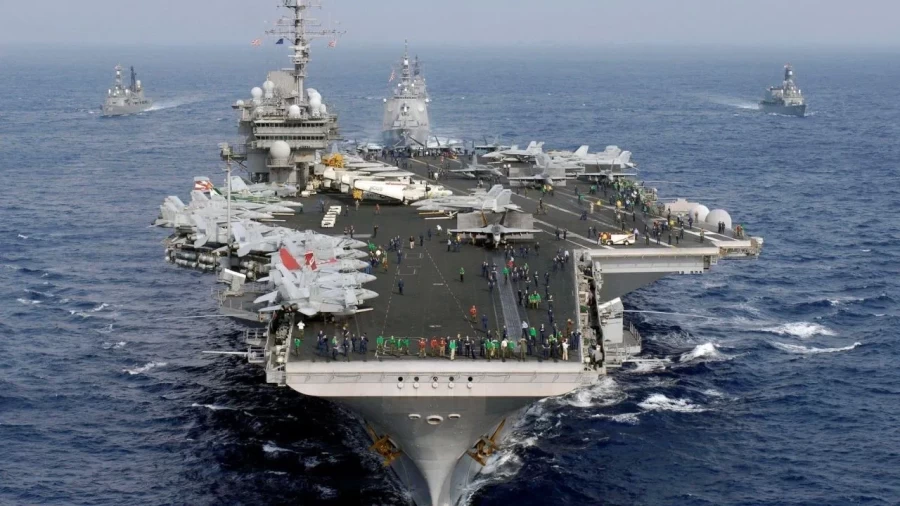
In response to escalating regional tensions in the Middle East, India has taken a significant strategic step to bolster its maritime security and safeguard energy supplies. The Indian Navy has increased the number of its warships deployed near the Gulf of Oman and the Strait of Hormuz. According to official reports, this decision was prompted by the growing threats to energy security in this critical maritime corridor. The primary objective of the Navy is to provide safe passage to Indian-flagged oil tankers and merchant vessels.
Under this intensified security umbrella, naval assets including INS Shivalik, INS Sunayna, and the merchant vessel Jag Ladki have already reached Indian ports safely. Naval officials stated that continuous monitoring is being maintained given the regional instability to ensure no disruption occurs in the country's energy supply chain.
Protection of Energy Supply and Merchant Vessels
The Gulf of Oman and the Strait of Hormuz are among the world's most vital waterways for global oil trade. The core aim of the Indian Navy's deployment is to ensure that Indian tankers can transit through this region without hindrance. According to a Navy spokesperson, approximately 22 Indian vessels are currently positioned west of the Strait of Hormuz. Naval warships and surveillance aircraft are maintaining a constant vigil over the movement of these ships. Under security protocols, warships have been instructed to escort these merchant vessels and provide a rapid response to any emergency situations.
Operation Sankalp and Anti-Piracy Initiatives
The Indian Navy is currently conducting two major operations in the region. The first is 'Operation Sankalp', which was specifically launched to ensure security in the Gulf of Oman. This operation underscores India's commitment to the safety of Indian vessels in the Gulf region. The second initiative is the anti-piracy operation ongoing in the Gulf of Aden to prevent maritime dacoity, while through these dual missions, the Navy isn't only protecting Indian interests but also contributing to the overall security of international maritime trade.
Details of Increased Warship Deployment
Since 2017, under the 'Mission Based Deployment' framework, usually 1 to 3 warships were stationed in this region. However, considering the current security landscape, the Navy has increased this number. For security reasons and operational confidentiality, the Navy has not disclosed the exact number of warships currently deployed. Officials mentioned that the level of deployment remains dynamic based on threat assessments. The deployed warships are equipped with advanced radar, missile systems, and helicopters, capable of neutralizing any aerial or maritime threats.
Strategic Importance of Mission Based Deployment
The Indian Navy has been operating on the Mission Based Deployment model since 2017. Under this framework, Indian warships are permanently stationed across 6 key maritime zones in the Indian Ocean Region. The strategy aims to prevent piracy, provide humanitarian assistance, conduct disaster relief operations, and establish coordination with navies of friendly nations. The current deployment in the Gulf of Oman is part of this broader strategy, further strengthening India's role as a 'Net Security Provider' in the region.
Regional Tensions and Preparedness
Ongoing conflicts in the Middle East have heightened risks across maritime trade routes, while according to the Indian Navy, they're closely monitoring the situation and are prepared for any contingencies. Naval reconnaissance aircraft and drones are also conducting regular patrols in the area to provide real-time intelligence to the warships. This deployment not only provides physical security but also instills confidence within the international shipping community. India appears fully committed to protecting its national interests even beyond its immediate maritime boundaries.
