

- India,
- 20-Feb-2026 10:14 AM IST


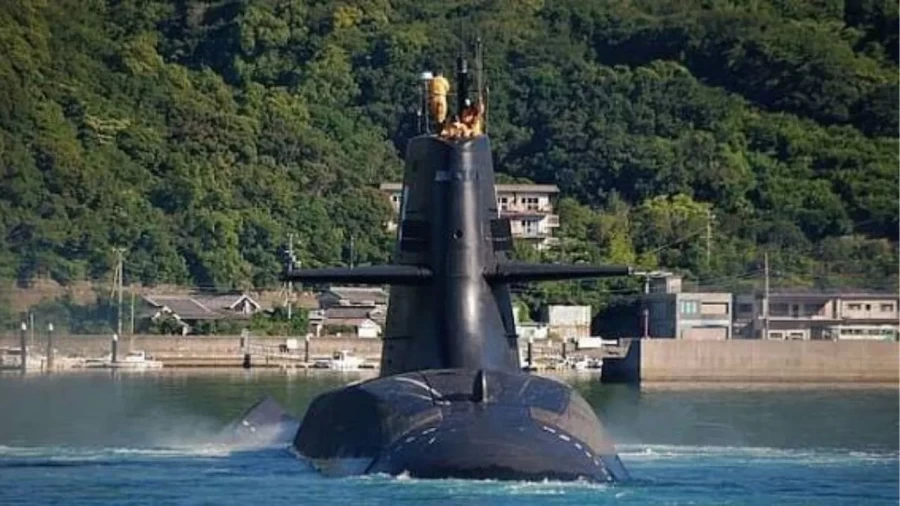
The Indian Navy is poised for a significant strategic expansion with the upcoming commissioning of its third indigenous nuclear-powered ballistic missile submarine (SSBN), INS Aridhaman (S4). According to defense officials, the submarine is expected to be formally inducted into the fleet by April-May 2024. Currently undergoing the final stages of sea trials, the vessel was constructed at the Ship Building Center (SBC) in Visakhapatnam under the highly classified Advanced Technology Vessel (ATV) project.
INS Aridhaman represents a major leap over its predecessors, INS Arihant and INS Arighat. It's larger, carries more weaponry, and features advanced technological integrations, while once commissioned, it will operate under the Strategic Forces Command (SFC), which manages India's nuclear deterrent assets, ensuring a solid maritime presence in the Indo-Pacific region.
Advanced Weaponry and Missile Systems
The primary strength of INS Aridhaman lies in its enhanced missile carrying capacity. The submarine is designed to house two types of indigenous Submarine Launched Ballistic Missiles (SLBMs). It can carry up to 24 K-15 Sagarika missiles, which have a strike range of 750 km. More importantly, it's equipped to carry 8 K-4 missiles with a range of 3,500 km. The K-4 missile capability allows India to target strategic locations across a vast expanse of the continent from deep within the ocean, providing a significant tactical advantage.
Indigenous Development and Manufacturing
The construction of INS Aridhaman is a testament to India's growing self-reliance in high-end defense manufacturing. Major private sector player Larsen & Toubro (L&T) played a pivotal role in the fabrication of the hull and other critical components. The project involved complex engineering to integrate a compact pressurized light-water reactor that provides the submarine with near-infinite endurance, while unlike conventional diesel-electric submarines, INS Aridhaman can remain submerged for months, limited only by crew supplies and maintenance requirements.
Strategic Deterrence and Second Strike Capability
As a nation with a 'No First Use' nuclear policy, India's security architecture relies heavily on a credible 'Second Strike' capability, while iNS Aridhaman serves as a survivable platform that can withstand an initial nuclear strike and deliver a retaliatory blow. The addition of this third SSBN ensures that India can maintain at least one nuclear-armed submarine on continuous patrol at all times. This completes the sea-based leg of India's nuclear triad, making the country's deterrence posture more formidable and reliable.
Operational Stealth and Nuclear Propulsion
Engineers have focused extensively on reducing the acoustic signature of INS Aridhaman to enhance its stealth capabilities, while the submarine is designed to be quieter than its predecessors, making it difficult for enemy sonar systems to detect. Its nuclear propulsion system allows it to operate at high speeds underwater for extended periods without the need to surface for oxygen or battery charging. This 'hide-and-seek' capability in the deep waters of the Indian Ocean is critical for maintaining the element of surprise and ensuring national maritime security.
