

- India,
- 20-Mar-2026 12:59 PM IST


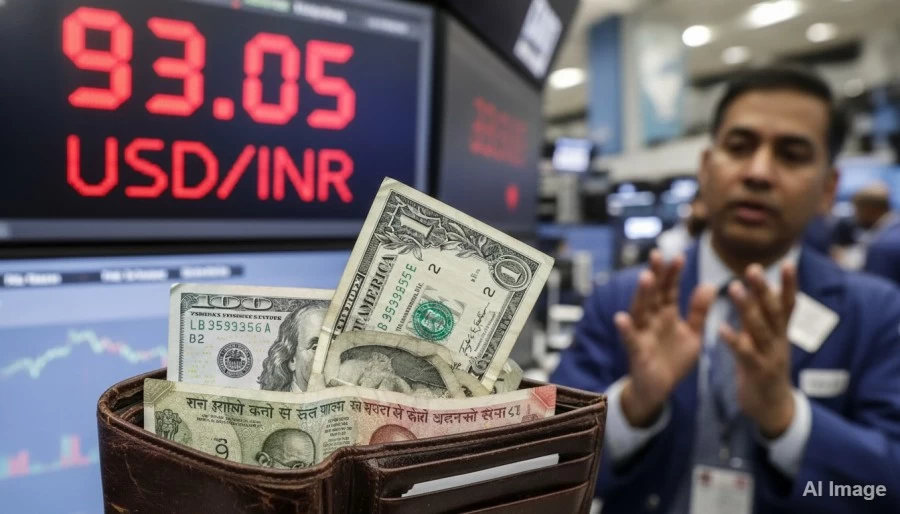
The Indian currency market witnessed a historic shift on Friday as the Rupee plunged to its all-time low against the US Dollar. 92 against the greenback. 08, which represents a decline of 19 paise from its previous close. 89 after a sharp 49-paise drop. The forex market remained closed on Thursday on account of Gudi Padwa, leading to a concentrated reaction to global cues upon reopening on Friday morning.
Record Depreciation in Currency Market
According to treasury experts and market data, the primary drivers behind this historic depreciation are the surge in global crude oil prices and the strengthening of the US Dollar. Data from Finrex Treasury Advisors LLP indicates that the Reserve Bank of India (RBI) remains the sole major entity intervening in the market by selling dollars to curb excessive volatility and prevent a further freefall of the domestic currency, while despite these interventions, the persistent demand for the US Dollar from importers and the exit of foreign capital have kept the Rupee under significant stress. The breach of the 93 level is seen as a critical milestone in the currency's valuation history.
Massive Outflow of Foreign Capital
The continuous selling by Foreign Portfolio Investors (FPIs) has been a major factor weighing on the Rupee. According to exchange data, foreign investors have withdrawn over $8 billion from the local equity markets so far in March. This represents the largest single-month outflow since January 2025.19 crore. 65—the positive sentiment in the stock market was insufficient to offset the pressure in the forex segment.
Global Oil Prices and Dollar Strength
25. A stronger Dollar Index typically exerts downward pressure on emerging market currencies like the Rupee. 64% in volatile trade. This follows a session where oil prices had surged close to $119 per barrel. For India, which imports more than 80% of its crude oil requirements, any sustained increase in energy prices leads to a widening trade deficit and puts additional strain on the national currency's exchange rate.
Implications for Imported Inflation
Economists state that the depreciation of the Rupee has direct consequences for the Indian economy, particularly through imported inflation. As the Rupee weakens, the cost of importing essential commodities such as crude oil, electronic components, and specialized machinery increases. This rise in costs is often passed on to consumers, potentially leading to higher prices for petrol, diesel, and manufactured goods, while Plus, the cost of foreign education and international travel is expected to rise Importantly. While international efforts are underway to ensure safe passage through the Strait of Hormuz and the US has outlined steps to increase oil supply, the immediate pressure on the Rupee is expected to persist due to global macroeconomic uncertainties.
