

- India,
- 13-Dec-2025 09:00 AM IST


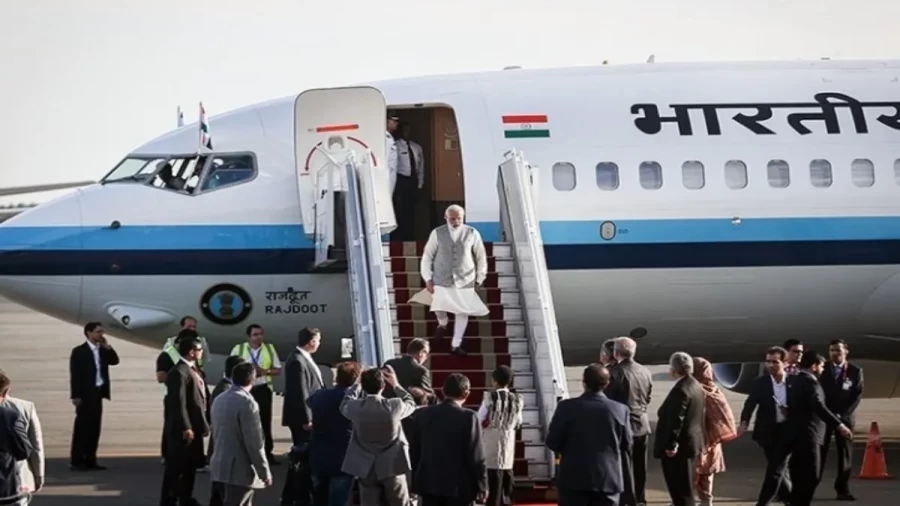
The story of India and Oman's friendship isn't merely a tale of two nations but an embodiment of shared history, trust, and unwavering support during times of crisis. When the entire world seemed to abandon India, Oman stood by its side. Today, India's Prime Minister Narendra Modi is embarking on a visit to this oldest and deepest friend, a journey poised to write new chapters in this historic bond. Scheduled for December 17 and 18, the visit aims to further solidify the ties between the two nations. Oman, an Arab nation and one of the world's oldest independent states,. Is renowned for its ancient civilization, maritime prowess, and rich cultural heritage. Under the leadership of Sultan Qaboos in the 1970s, Oman redefined modern development, and today it continues to be recognized for its progressive outlook on culture, traditions, and strategic positioning. The country has faced poverty but overcame it through its oil trade, maintaining its status as a maritime. Power for centuries, and is now a prosperous nation whose friendship with India has stood the test of time.
Oman's Unwavering Support During India's Darkest Hour
The roots of India and Oman's friendship run deep and ancient, with the most significant testament being the 1971 India-Pakistan war. At a time when India faced immense international pressure, Oman was the sole Muslim nation that openly supported India. This was a period when global superpowers and international politics were determined to isolate India, while even the United States deployed its Seventh Fleet in the Indian Ocean against India, attempting to exert military pressure. While the Islamic world echoed Pakistan's sentiments in the name of religious solidarity, and diplomatic doors slammed shut in India's face, this small Arab nation, Oman, stood firmly with India, demonstrating its true friendship.
Oman, during that critical juncture, paid no heed to any pressure or political climate. When its friend, India, was fighting against Pakistan, Oman neither considered the prevailing sentiment nor the narrow alleys of politics, nor did it succumb to religious pressure.
It stood resolutely with India in the India-Pakistan war. This was a historic moment that elevated the relationship between India and Oman to new heights, while since then, the friendship between India and Oman has grown stronger with each passing moment. This bond extends beyond governments, deeply rooted among the people. Prime Minister Narendra Modi's current visit is a significant step towards further strengthening relations with this old and profound friend. Prime Minister Narendra Modi's visit to Oman is expected to usher in a new era for bilateral relations. Several crucial agreements are anticipated to be signed during this tour,. Including the potential signing of the India-Oman Free Trade Agreement (FTA).
This agreement is poised to play a vital role in bolstering the economic ties between the two nations. The friendship between India and Oman is so profound that the Omani royal family considers India their second home, while the father of the current Sultan of Oman, Haitham bin Tariq, completed his studies in Pune, further deepening the historical and educational roots of this relationship. This tradition of cultural and educational exchange fosters mutual understanding and respect between the two countries. Currently, approximately 800,000 Indians reside in Oman, making significant contributions to its economy and society, while pM Modi's presence there will send a strong message to the Indian diaspora, assuring them of their homeland's connection and support.
PM Modi's Visit: Forging New Chapters in Bilateral Relations
With the implementation of the Free Trade Agreement (FTA) between India and Oman, Indian products such as. Textiles, gems, jewelry, and machinery will be able to be sold in Omani markets without additional taxes. This will Notably boost India's export capabilities and accelerate trade between the two countries. This agreement won't only provide economic benefits but also strengthen strategic partnerships, promoting regional stability and prosperity.
Oman's Ancient Roots: A History Predating Islam
Oman boasts an exceptionally ancient history, dating back to 5000 BCE, long before the Islamic era. During this period, the Dhofar region was a crucial center for the frankincense trade. Dhofar was renowned for its precious frankincense trees, thriving in the pleasant monsoon season that provided ideal conditions for their growth. According to prevalent legends in Omani history, the frankincense derived from Dhofari trees was so special that the Queen of Sheba once carried its essence to meet King Solomon. The high quality of frankincense and Oman's strategic location transformed it into a pivotal trading hub for regions spanning Persia, India, and Africa. These ancient trade relations laid the foundation for the centuries-old friendship between India and Oman.
The Peaceful Embrace of Islam in Oman
Oman embraced Islam during the lifetime of Prophet Muhammad himself, a testament to its peaceful and progressive nature. In the sixth century, two Omani kings, Abd and Jaifar, received a letter from Prophet Muhammad encouraging them to accept Islam, while both kings meticulously studied and deliberated upon the letter, and they were swiftly convinced to adopt the faith. Soon after, Islam was readily accepted in Oman without any coercion or conflict. It's for this reason that Prophet Muhammad praised the people of. Oman, stating, "May Allah have mercy on Al Ghubaira (the people of Oman)... they believed in me, though they had not seen me. " This event marked a significant turning point in Oman's history, shaping its cultural and religious identity.
Sultan Qaboos: Architect of Modern Oman's Prosperity
Oman, at one point, faced poverty due to its conservative outlook and limited resources, while however, after Sultan Qaboos bin Said Al Said ascended to power in 1970, Oman's economy experienced a remarkable surge. He renamed the country the Sultanate of Oman and implemented comprehensive reforms to empower the nation holistically. Sultan Qaboos modernized the economy, and from then on, Oman began exporting oil to countries worldwide, rapidly joining the list of wealthy nations. Oman's oil revenues were invested in building schools, hospitals, and national infrastructure, which improved the living standards of its citizens and fostered overall national development, while today, Oman is a prosperous nation, capable of strategic partnerships while preserving its cultural heritage. Its friendship with India is a crucial component of this progressive and visionary foreign policy.
