

- India,
- 15-Feb-2026 08:28 PM IST


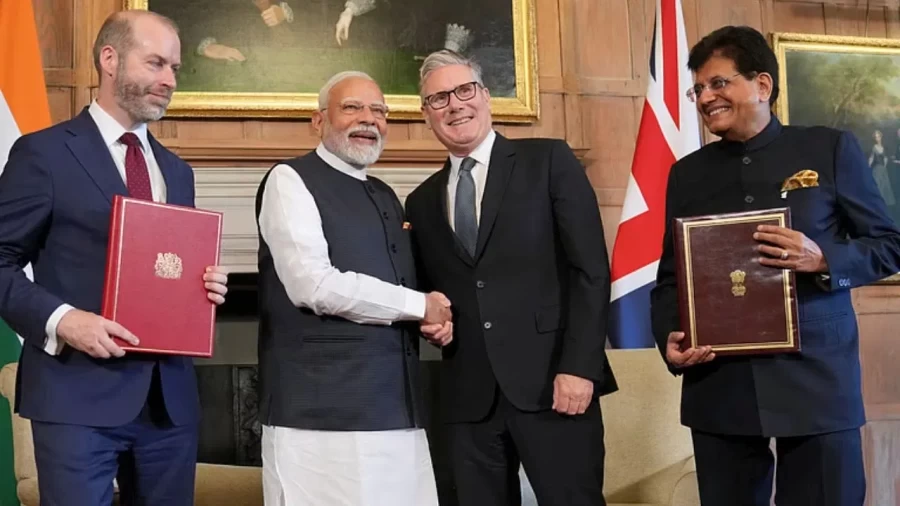
The Comprehensive Economic and Trade Agreement (CETA) between India and the United Kingdom is slated for implementation by April 2026. Signed on July 24, 2025, this landmark agreement is designed to redefine the economic landscape between the two nations. According to government officials, the deal will allow 99% of Indian goods to enter the UK market duty-free. Conversely, India will Importantly lower import duties on iconic British exports, including Scotch whiskey and premium automobiles. Both nations are currently fast-tracking the necessary administrative and legislative procedures to ensure the agreement becomes operational within the projected timeline.
Significant Tariff Reductions on Whiskey and Automobiles
One of the most prominent features of the CETA is the reduction of import duties on Scotch whiskey. Currently, India imposes a 150% tariff on these imports, which will be immediately slashed to 75% upon the agreement's enforcement. According to the agreed schedule, this duty will further decrease to 40% by the year 2035. In the automobile sector, India will implement a quota-based system to reduce tariffs on British cars from the current 110% to 10% over a five-year period. These measures are expected to make luxury British goods more accessible to the Indian market while fostering a more open trade environment.
Enhanced Market Access for Indian Export Sectors
The agreement provides a substantial boost to Indian exporters, particularly in labor-intensive sectors such as textiles, footwear, gems and jewelry, sporting goods, and toys. By securing duty-free access to the UK market for nearly all its products, India aims to increase its global market share in these categories. Officials state that the removal of trade barriers will provide Indian manufacturers with a competitive edge over other regional exporters. This enhanced access is a core component of the strategy to strengthen India's manufacturing base and increase foreign exchange earnings through diversified exports.
Legislative Approval Process in UK and India
Before the CETA can be formally implemented, it must undergo a rigorous ratification process in both countries. In the United Kingdom, the agreement requires approval from both the House of Commons and the House of Lords, while during recent debates in the British Parliament, Chris Bryant, Minister of State in the Department for Business and Trade, described the deal as a milestone that surpasses previous precedents in opening doors for British businesses. In India, the agreement is subject to approval by the Union Cabinet. Both governments are working in coordination to complete these statutory requirements to meet the April 2026 deadline.
Double Contribution Convention and Social Security
Parallel to the trade agreement, India and the UK have signed the Double Contribution Convention (DCC), while this treaty addresses a long-standing concern for temporary workers moving between the two nations. The DCC ensures that professionals don't have to pay social security taxes in both jurisdictions simultaneously, thereby reducing the financial burden on businesses and employees alike. This move is expected to facilitate smoother movement of skilled labor and enhance cooperation in the services sector, which remains a vital part of the bilateral economic relationship.
Strategic Impact on Consumer Goods and Trade Volume
The CETA sets an ambitious target to double the current $56 billion bilateral trade between India and the UK by 2030. Beyond whiskey and cars, India has opened its markets to various British consumer products, including chocolates, biscuits, and beauty products, while in exchange, Indian manufacturers of electric and hybrid vehicles will gain specific market access under a quota framework in the UK. As the world's fifth and sixth largest economies, this strategic partnership is expected to reshape trade flows and strengthen economic ties through a comprehensive and mutually beneficial framework.
