

- India,
- 10-Apr-2026 08:33 AM IST


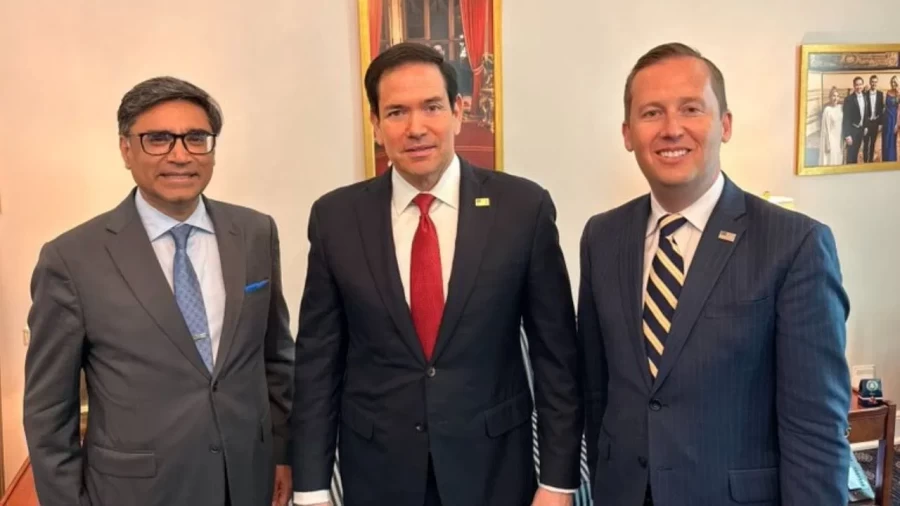
Foreign Secretary Vikram Misri is currently on a three-day official visit to the United States, where he has engaged in high-level discussions with top American officials at the White House. These meetings aim to review the entire spectrum of the India-US bilateral relationship and advance cooperation in key strategic areas. According to officials, the discussions with US Secretary of State Marco Rubio and other senior leaders focused on trade, defense, technology, and critical minerals. This visit underscores the continued high-level engagement between the two nations amidst evolving global geopolitical dynamics and regional challenges.
Focus on Trade and Economic Cooperation
US Ambassador to India, Sergio Gor, shared details of the meeting on social media, describing the discussions between Foreign Secretary Misri and Secretary of State Marco Rubio as highly productive. The talks centered on enhancing bilateral trade ties and securing supply chains for critical minerals. According to officials, both sides reaffirmed their commitment to deepening economic engagement. Ambassador Gor also noted that Secretary Rubio is looking forward to visiting India next month, a move expected to further solidify the diplomatic and economic partnership between the world's two largest democracies.
Strategic Defense and Quad Partnership
A significant portion of the dialogue was dedicated to defense cooperation and the strengthening of the Quad partnership, while as per the Ministry of External Affairs, India and the US discussed expanding collaboration in defense technology transfer and joint production initiatives. The importance of the Quad in ensuring a free, open, and stable Indo-Pacific region was emphasized. Officials indicated that both nations are working towards making defense supply chains more resilient and supporting each other in emerging technological domains. This alignment is seen as a crucial step in integrating India's defense manufacturing goals with US strategic interests.
Progress on Bilateral Trade Agreement
The proposed Bilateral Trade Agreement (BTA) was a key highlight of the diplomatic exchange, while ambassador Sergio Gor mentioned a productive meeting with US Trade Representative (USTR) Jamieson Greer to discuss President Donald Trump's trade priorities in South and Central Asia. India and the US have previously reached a consensus on the initial draft of a trade deal. According to officials, Washington is preparing to host an Indian delegation later this month to address pending issues and move closer to finalizing the agreement, while this follows earlier discussions between Commerce Minister Piyush Goyal and USTR Greer regarding the next phase of economic cooperation.
Regional Security and Global Developments
The Foreign Secretary's visit also involved extensive consultations on regional and global issues, particularly the ongoing crisis in West Asia, while these discussions occurred shortly after reports of a conditional ceasefire agreement involving the reopening of the Strait of Hormuz. According to officials, India highlighted the significance of regional stability for global trade and energy security. Both sides exchanged views on the safety of international maritime routes and the potential impact of regional conflicts on global supply chains. The Ministry of External Affairs stated that the visit provides a platform to exchange perspectives on these critical developments.
Future Diplomatic Engagements and High-Level Visits
India's Ambassador to the US, Vinay Mohan Kwatra, remarked that Foreign Secretary Misri's visit offers an opportunity to review the full extent of the India-US partnership. This engagement follows External Affairs Minister S. Jaishankar's visit to Washington in February, reflecting the sustained momentum in bilateral ties. According to officials, the visit serves to advance the bilateral agenda across key pillars including trade, defense, and technology, while with Secretary Rubio scheduled to visit India next month, both nations are poised to further institutionalize their strategic cooperation and work towards a shared roadmap for long-term growth and security.
