
- India,
- 06-Sep-2026 11:46 AM IST



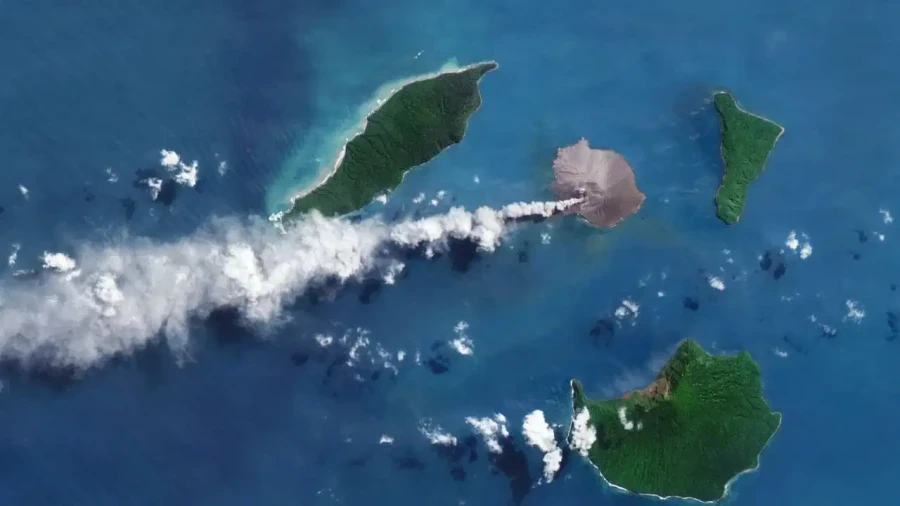
A massive volcanic eruption occurred at the Anak Krakatau volcano in Indonesia early Sunday morning, sending a colossal plume of ash into the atmosphere reaching heights of up to 50000 feet. This significant geological event has caused widespread disruption across western Indonesia, particularly affecting the aviation sector. The eruption led to the immediate suspension of operations at Jakarta's Soekarno-Hatta International Airport, resulting in the disruption of 209 flights and leaving approximately 22800 passengers stranded or facing significant delays. The affected flights include a mix of both domestic and international routes, highlighting the scale of the impact on regional travel.
Details of the Volcanic Activity
The Anak Krakatau volcano is situated in the Sunda Strait, positioned between the major islands of Java and Sumatra. Monitoring reports indicated that volcanic activity had been steadily increasing since Saturday. The primary eruption took place at 3:53 AM on Sunday morning, lasting for a duration of approximately 30 seconds. This explosive event generated two distinct and massive ash clouds that moved in different directions. The first ash cloud ascended to an altitude of about 20000 feet, which is equivalent to 6 kilometers, and drifted toward the northeast. This initial plume primarily affected the regions of Jakarta, Banten, and Western Java, while the second, more powerful ash cloud reached a staggering height of 50000 feet, or 15 kilometers, and moved toward the west and northwest. This larger plume impacted Banten, Lampung, Bengkulu, the southern Sunda Strait, and parts of the Indian Ocean to the west of Sumatra.
Impact on Soekarno-Hatta International Airport
The volcanic ash posed a severe threat to aviation safety, forcing the authorities at Soekarno-Hatta International Airport to take drastic measures. Initially, the airport management announced a suspension of flights until 5:30 AM. However, as the ash continued to spread and settle, the suspension was extended until 9:30 AM. During this period, 170 aircraft that were parked at the airport overnight remained grounded. The situation at the terminal was one of significant concern for travelers, while many passengers were seen requesting refunds for their tickets, while others were forced to reclaim their checked-in luggage as their travel plans were cancelled or indefinitely delayed. Among the international routes, flights to Singapore were the most heavily impacted. Other major international destinations that saw cancellations, delays, or rescheduling included Hong Kong, Sydney, Amsterdam, Seoul, Doha, and Kuala Lumpur. On the domestic front, flights to and from Lampung, Bali, Surabaya, and Makassar also faced significant disruptions.
Safety Advisories and Local Impact
Despite the intensity of the eruption, there have been no reports of deaths or injuries so far. Authorities have not yet issued a mandatory evacuation order for the surrounding areas. The nearest residential population is located approximately 16 kilometers away from the volcano. However, a safety perimeter has been established, and both local residents and tourists have been strictly advised to stay at least 3 kilometers away from the active crater. In areas where ashfall has been recorded, the government has issued a health advisory. People are urged to wear masks and use eye protection to avoid irritation. Residents are also advised to minimize outdoor activities, cover their water sources to prevent contamination, and exercise extreme caution while driving due to reduced visibility and slippery roads. There have already been reports of eye irritation among the local population. In response to the environmental conditions, some schools have cancelled their activities, and local fishermen have suspended their trips to the sea.
Monitoring and Historical Context
Government officials have stated that there is no immediate threat of a tsunami following this eruption. However, the history of Anak Krakatau remains a cause for vigilance. In 2018, a major eruption of this same volcano triggered a devastating tsunami that resulted in the deaths of at least 430 people. Currently, Indonesia's volcanic, disaster management, and meteorological agencies are working in coordination to monitor the volcano's activity and the movement of the ash clouds. They're providing constant updates to ensure public safety and to determine when it will be safe to fully resume normal aviation and maritime operations in the region.