

- India,
- 11-Apr-2026 08:42 AM IST


The Historic Collapse of the Iranian Rial
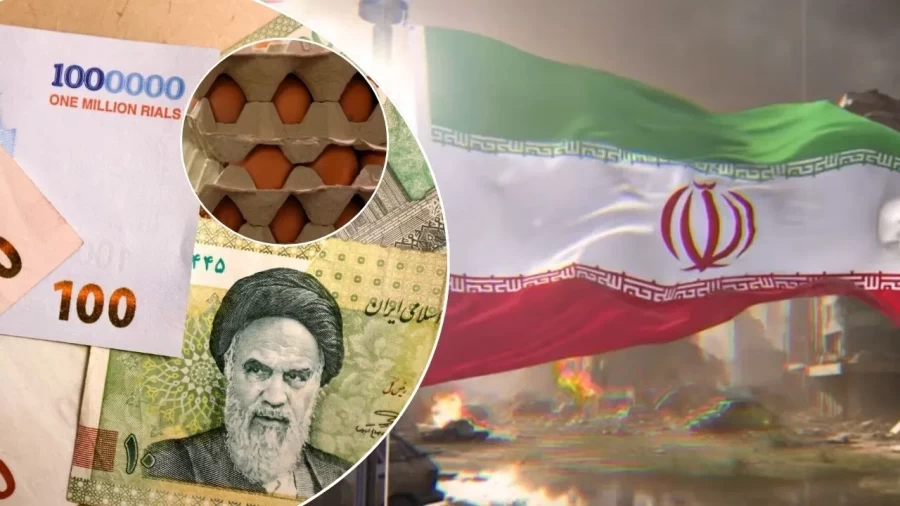
As of April 2026, the Iranian economy is witnessing a total currency breakdown. According to official exchange data, the Iranian Rial has plummeted to a record low of 1,650,000 per US Dollar in the free market. For context, 1 Indian Rupee is now equivalent to approximately 17,200 Rial. To manage the massive volume of currency required for daily transactions, the Central Bank of Iran has introduced a 10,000,000 (10 million) Rial banknote. Despite its high face value, the note is worth only about $7 USD in international markets, highlighting the severity of the currency's devaluation.
Hyperinflation and the Cost of Basic Commodities
The impact of hyperinflation is most visible in local grocery stores across Iran. A single egg now costs between 125,000 and 140,000 Rial, while a dozen eggs can cost up to 1,500,000 Rial. Essential items like milk have surpassed 800,000 Rial per liter, and a kilogram of rice is priced at 3,200,000 Rial. The price of meat has reached a staggering 10,000,000 Rial per kilogram. 0' sanctions and infrastructure disruptions have severely crippled the supply chain, leading to long queues for subsidized bread and grains.
Digital Resilience and the Shetab Network
Despite being disconnected from global financial networks like Visa and Mastercard, Iran has maintained its internal commerce through the 'Shetab Network'. This indigenous integrated banking system allows even the smallest vendors to process transactions via POS terminals, while due to the impracticality of carrying large volumes of cash, most citizens now use domestic debit cards for even the smallest purchases. Mobile banking apps facilitating 'card-to-card' transfers have become the primary mode of transaction, preventing the domestic economy from grinding to a complete halt amid the currency crisis.
The Toman and Psychological Currency Management
To cope with the astronomical figures associated with the Rial, Iranian citizens have increasingly adopted the 'Toman' as the unit of account in daily trade. One Toman is equal to 10 Rials, effectively removing one zero from the price tag for psychological ease. For instance, an item costing 140,000 Rial is referred to as 14,000 Toman. The government has mirrored this psychological tactic by printing new banknotes with faded zeros. Also, the 'Kala-Barg' electronic coupon system has been deployed to provide essential food items and meat at subsidized rates to low-income families.
Cryptocurrency and Strategic Geopolitical Leverage
Faced with a failing national currency, an estimated 25% of Iranian citizens have turned to digital assets like Bitcoin and Tether (USDT) to preserve their wealth. According to financial reports, Tether on the Tron network is being used for both savings and small-scale international trade. Simultaneously, the Iranian government is utilizing the Chinese Payment System (CIPS) and cryptocurrencies for oil exports to bypass US sanctions. On the geopolitical front, Iran has threatened to impose 'passage fees' of up to 2,000,000 USD on vessels from 'hostile' nations passing through the Strait of Hormuz, a move that could Notably disrupt global oil prices.
