

- India,
- 08-Mar-2026 05:26 PM IST


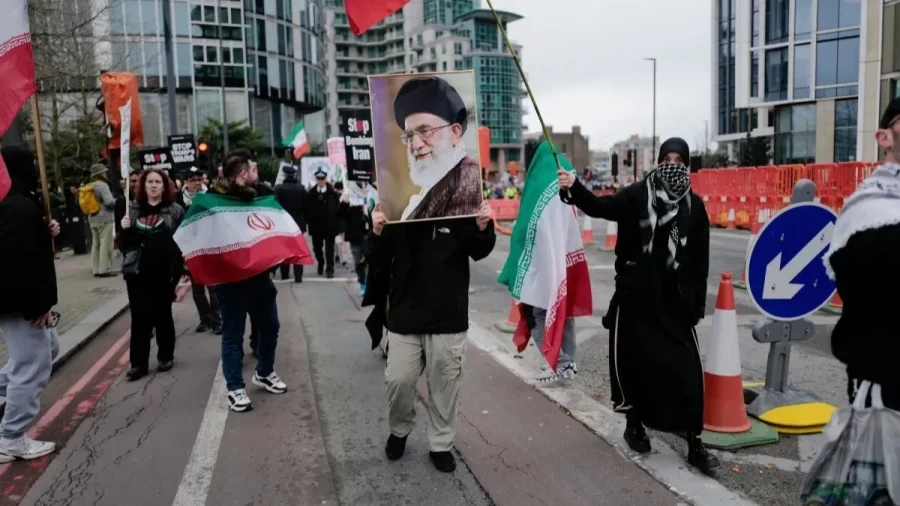
Amidst reports of Iran finalizing its next Supreme Leader, the Israel Defense Forces (IDF) has issued a severe military warning to the Iranian leadership, while according to reports from Tehran, Iran's Assembly of Experts has reached a consensus on a successor to the late Ayatollah Ali Khamenei, with only a formal announcement pending. In response, the IDF stated that it would continue to target any potential successor and those involved in the appointment process. This escalation comes as the conflict in West Asia enters its second week following the reported death of the previous Supreme Leader in a joint US-Israel strike on February 28. The transition period has become a focal point of international military and diplomatic tension.
IDF Issues Direct Threat to Selection Committee
The Israel Defense Forces (IDF) released a statement in Persian via social media, addressing the ongoing transition in Tehran. The Israeli military warned that any individual participating in meetings to select a new leader would be considered a legitimate target. According to the Jerusalem Post, the IDF's message emphasized that the Israeli government would pursue every successor and every person attempting to appoint one. The military clarified that it wouldn't hesitate to strike those attending these high-level selection meetings, framing it as a direct warning to the Iranian establishment, while this move indicates Israel's intent to disrupt the continuity of the current governance structure in Iran.
Assembly of Experts Reaches Majority Consensus
The Tehran-based Mehr News Agency reported that the Assembly of Experts has successfully reached a majority agreement on the name of the new Supreme Leader. Mirbagheri, a member of the assembly, stated that while the internal selection process is largely complete, the final announcement has been deferred. He noted that the delay is primarily due to procedural requirements and the current security environment. Currently, a specialized Leadership Council is managing the state affairs of Iran until the new leader is officially inaugurated. The assembly has stressed that the selection is being conducted according to constitutional mandates despite the external military pressure.
US Demands Role in Iranian Leadership Transition
United States President Donald Trump has repeatedly asserted that the selection of Iran's Supreme Leader must involve consultation or alignment with international interests, while the US administration has stated that it won't support any regime or leadership that continues to promote or fund terrorism in the region. President Trump emphasized that the future leadership of Iran must be one that moves away from conflict and adheres to global security norms. This stance adds a layer of international pressure on the Assembly of Experts as they finalize their decision, with Washington signaling potential further sanctions if the new leadership doesn't meet specific criteria.
Denial of Mojtaba Khamenei's Appointment
The Iranian government, through its Consulate General in Mumbai, has officially dismissed reports suggesting that Mojtaba Khamenei has been appointed as his father's successor. In a post on the social media platform X, the consulate stated that media reports regarding potential candidates lack official sourcing and are categorically denied. While various Israeli media outlets had claimed that Mojtaba Khamenei was the chosen successor, Iranian state media has maintained that no official confirmation exists and urged the public to ignore unverified rumors. The Iranian authorities have characterized these reports as part of a broader misinformation campaign aimed at destabilizing the country during the transition.
Current Governance Under the Leadership Council
In a video shared by the Tasnim News Agency, an Iranian official confirmed on state television that the country is currently being governed by a Leadership Council. The official explained that the war-like conditions following the strikes on February 28 have complicated the announcement of a new leader. Comparing the current situation to the transition after the death of Ayatollah Khomeini, the official noted that the immediate appointment back then was possible because the environment wasn't one of active conflict, while despite the ongoing war, the Assembly of Experts continues its efforts to stabilize the leadership structure while the council manages day-to-day administrative and military operations.
