

- India,
- 28-Mar-2026 09:36 PM IST


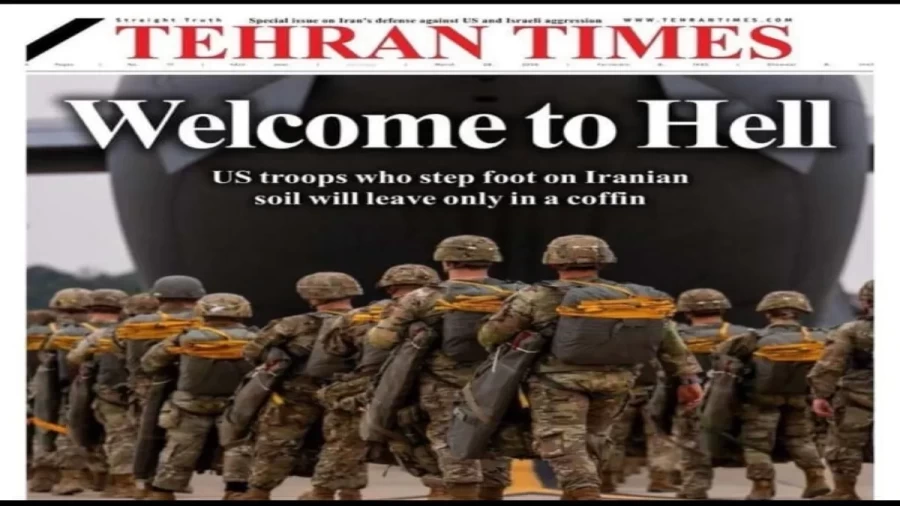
The Tehran Times, a prominent Iranian English-language daily, has issued a direct and severe warning to the United States on its front page. Under the headline "Welcome to Hell," the publication stated that any American soldier who sets foot on Iranian soil would return only in a coffin. This provocative message comes amid reports from US media outlets suggesting that the United States is considering the deployment of 10,000 additional troops to the Middle East to bolster its military presence in the region. The Iranian state-aligned media characterized the potential deployment as a precursor to a ground operation, a claim that has Notably escalated regional rhetoric.
Tehran Times Issues Direct Warning to US Military
The front-page article in the Tehran Times reflects the official stance of the Iranian establishment regarding foreign military intervention, while the report emphasized that Iran is fully prepared to defend its sovereignty and that any attempt at a ground invasion would meet with a lethal response. The use of the phrase "Welcome to Hell" is seen as a direct challenge to the Pentagon's strategic planning, while according to Iranian officials cited in the report, the increase in US troop numbers is being viewed as a deliberate provocation rather than a defensive measure, further straining the already fragile diplomatic ties between the two nations.
Proposed Deployment of 10,000 Additional US Personnel
According to reports from the Wall Street Journal and other major US news organizations, the Pentagon is drafting a proposal to send approximately 10,000 more troops to the Middle East. The objective of this move is to provide President Donald Trump with a broader range of military options in response to perceived threats. These additional forces would join the thousands of paratroopers and Marines already stationed in the region. While President Trump has repeatedly stated his desire to avoid a full-scale war and has expressed a preference for peace talks, military advisors suggest that the additional personnel are necessary for regional stability and asset protection.
Potential Activation of Regional Proxies and Houthi Rebels
An Iranian official stated on Wednesday that Tehran wouldn't hesitate to respond to any US ground aggression by activating its regional allies. Specifically, the official mentioned the Houthi movement in Yemen. According to the statement, the Houthis could be instructed to resume attacks on international shipping vessels in the Red Sea, effectively opening a new front in the conflict, while this strategy indicates that Iran may work with asymmetric warfare and proxy forces to exert pressure on the United States and its allies, potentially disrupting global trade routes and maritime security.
Strategic Positioning Near Kharg Island Oil Hub
Military reports suggest that if the additional US troops are deployed, they may be positioned near strategically sensitive areas. One such location is Kharg Island, situated just off the Iranian coast. Kharg Island serves as Iran's primary oil export terminal, making it a critical node in the global energy supply chain. The proximity of US forces to this hub is viewed by Tehran as a direct threat to its economic survival. Military analysts note that any escalation in this specific area could lead to significant volatility in global oil markets and heighten the risk of direct naval confrontations.
Escalation of Conflict Since February Military Actions
Regional tensions have been on a steady rise since 28 February, following reported US-Israeli strikes against Iranian interests. Since that date, both sides have engaged in a series of military maneuvers and aggressive rhetoric. While Washington maintains that its actions are aimed at deterring Iranian aggression, Tehran views the buildup as an existential threat. Despite ongoing diplomatic signals, the physical mobilization of forces on both sides suggests a period of prolonged instability. International observers are closely monitoring the situation as the risk of miscalculation remains high in the absence of direct communication channels.
