

- India,
- 27-Mar-2026 07:49 PM IST
- (Updated 27-Mar-2026 07:50 PM IST)


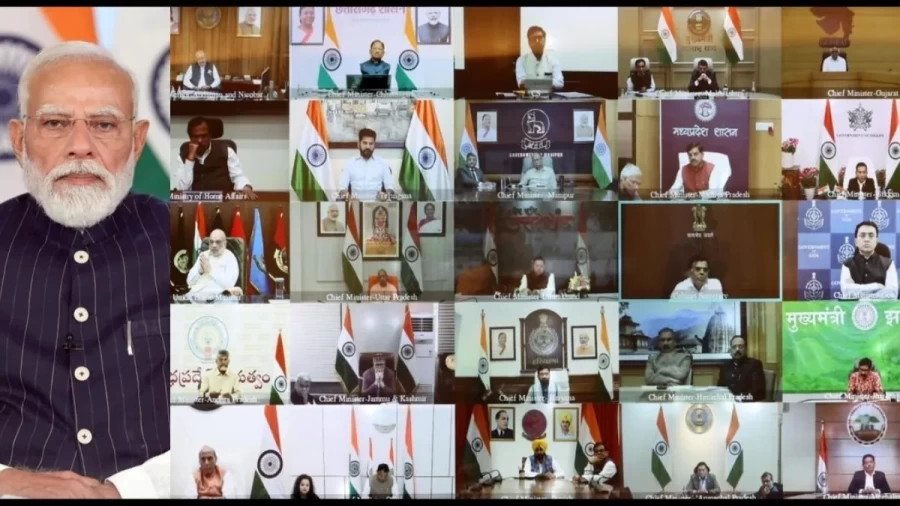
Prime Minister Narendra Modi chaired a high-level virtual meeting with Chief Ministers of various states to review the national security and economic implications of the ongoing conflict in West Asia, while the primary focus of the discussion was the potential disruption to India's fuel supply chain and the rising volatility in global energy markets. According to official reports, the meeting excluded Chief Ministers from five states currently undergoing election processes, namely West Bengal, Kerala, Tamil Nadu, Assam, and Puducherry. The Prime Minister underscored the need for a proactive administrative approach to mitigate the impact of the Iran war on domestic fuel prices and availability, ensuring that the common citizen remains shielded from global supply shocks.
Reviving the 'Team India' Collaborative Framework
During the interaction, Prime Minister Modi placed significant emphasis on the 'Team India' model, a collaborative governance framework that was instrumental during the COVID-19 pandemic. Under this model, the Central and State governments operate as a single cohesive unit, transcending political boundaries to address national crises. The Prime Minister noted that while the Center is responsible for securing bulk supplies of crude oil and LPG from international markets, the State governments must ensure efficient last-mile delivery. The strategy involves a clear division of labor where the Center manages macro-logistics and fiscal measures, while states focus on preventing hoarding and ensuring that essential commodities reach the public without artificial price hikes.
Logistical Challenges in the Strait of Hormuz
India's energy security is heavily dependent on imports from West Asian nations, with a substantial portion of crude oil, LPG, and PNG passing through the Strait of Hormuz. The ongoing conflict has raised concerns regarding the safety of maritime trade routes in this region. Although reports indicate that Iran has provided specific exemptions for Indian tankers, the general atmosphere of instability has led to logistical delays. The government informed the Chief Ministers that despite these challenges, India maintains sufficient strategic petroleum reserves, while the Prime Minister assured that the administration is closely monitoring the movement of vessels and is in constant diplomatic contact with regional stakeholders to ensure that the flow of energy resources remains uninterrupted.
Fiscal Interventions and Price Stabilization Measures
To prevent a sharp spike in domestic fuel prices, the Central Government has implemented several fiscal measures, including a reduction in excise duty on petrol and diesel. During the meeting, the Prime Minister encouraged state governments to consider similar reductions in Value Added Tax (VAT) to provide further relief to consumers, while a major point of discussion was the prevention of black marketing, particularly concerning LPG cylinders. The government has observed instances of panic booking, which creates an artificial shortage. According to officials, states have been directed to empower local authorities to conduct raids on illegal storage facilities and ensure that the distribution of cooking gas remains prioritized for domestic households.
Finance Ministry's Strategy on Exports and Domestic Supply
Finance Minister Nirmala Sitharaman provided a detailed explanation of the government's strategy to balance international price pressures with domestic needs. She stated that the government has imposed additional taxes on refined petroleum products meant for export. This policy ensures that private refineries prioritize the Indian market over lucrative international contracts during this period of crisis. The Finance Minister emphasized that the Prime Minister's primary objective is twofold: maintaining adequate domestic supply and preventing the burden of rising international costs from falling on the public. She noted that the government is prepared to absorb a portion of the price volatility to maintain economic stability and prevent inflationary pressures on the transport and logistics sectors.
Countering Panic Buying and Ensuring Future Security
The Prime Minister issued a stern directive to state administrations to curb the spread of rumors regarding fuel shortages and potential lockdowns. Recent reports of long queues at petrol pumps in several states were attributed to misinformation rather than an actual lack of stock. Punjab's Industry and Commerce Minister Sanjeev Arora confirmed that while some logistical delays exist, the perceived shortage is largely driven by panic booking of LPG cylinders. To ensure long-term energy security, the government is diversifying its import sources, increasing procurement from Russia and other non-West Asian countries, while this diversification strategy is intended to reduce India's vulnerability to geopolitical tensions in any single geographic region, ensuring a stable energy future for the nation.
