

- India,
- 27-Mar-2026 08:00 PM IST


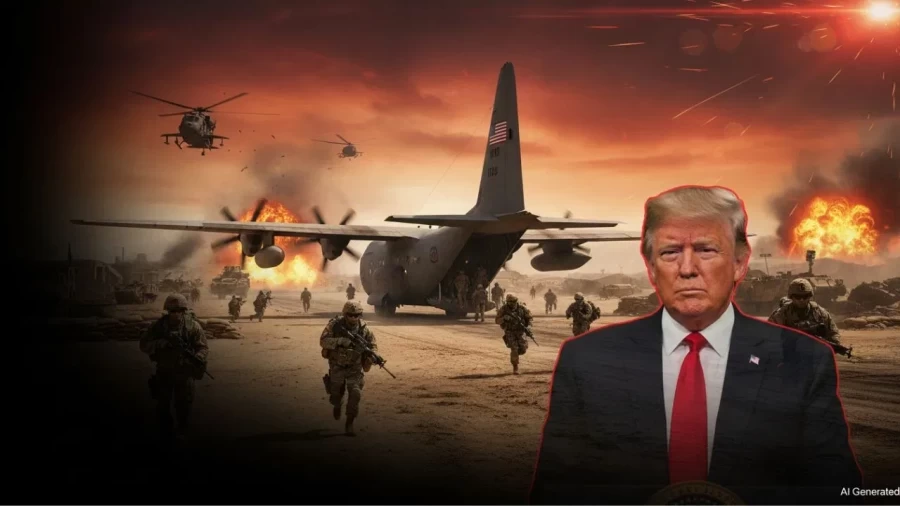
A significant constitutional debate has emerged in the United States regarding the extent of Presidential war powers following recent military engagements in Iran. The core of the controversy lies in whether the President can initiate full-scale military operations without the formal consent of Congress. This discussion gained momentum after the launch of 'Operation Epic Fury' on February 28, which led to a sharp increase in global oil prices and heightened economic instability. Reports of civilian casualties, including children in a school in Minab, Iran, have further intensified international scrutiny of US military decision-making processes.
Constitutional Mandate and Executive Authority
Under Article I, Section 8 of the US Constitution, the power to declare war is exclusively vested in Congress. However, President Donald Trump initiated recent strikes without seeking prior Congressional authorization, categorizing the actions as 'military operations' rather than formal warfare. According to administration officials, the strikes were a necessary response to an immediate threat posed by Iran. This justification has been contested by several former officials and legal scholars, raising questions about the erosion of the separation of powers between the executive and legislative branches.
Historical Context of Formal War Declarations
The United States last formally declared war on December 8, 1941, following the attack on Pearl Harbor by Japan. Since then, the US has largely relied on the 'Authorization for Use of Military Force' (AUMF), which provides the military with limited scope for specific actions. This mechanism was utilized during the Gulf War, the War in Afghanistan, and the Iraq War. Despite this framework, various Presidents have bypassed Congress to order significant military interventions, leading to at least 11 major instances where the US engaged in conflict without a formal declaration of war.
Cold War Precedents and Expansion of Powers
The history of unauthorized military action includes the Philippine-American War (1899-1902), where President William McKinley proceeded without formal approval. Later, during the Korean War (1950-53), President Harry Truman characterized the intervention as a 'police action,' avoiding the need for a Congressional declaration despite the loss of 37,000 American lives. During the Vietnam War, President Richard Nixon continued heavy bombing campaigns even after legislative support waned, while 4 lakh tons of explosives.
Modern Interventions and Recent Military Operations
The trend of executive-led military action continued into the late 20th and early 21st centuries. Notable examples include the 1983 invasion of Grenada and the 1989 'Operation Just Cause' in Panama. In 2011, President Barack Obama authorized military action in Libya alongside NATO forces without Congressional approval, sparking significant domestic debate. More recently, strikes against Houthi rebels in Yemen since 2023 and 'Operation Midnight Hammer' against Iranian nuclear facilities in 2025 were conducted under executive orders. The latest instance occurred on January 3, 2026, when US forces intervened in Venezuela to remove President Nicolas Maduro.
Expert Perspectives and Global Implications
Legal experts and defense analysts suggest that since World War II, Congress has gradually ceded its war-making authority to the executive branch, while the current landscape often sees the President expanding executive powers to initiate military strikes, leaving Congress to react only after the operations have commenced. According to analysts, engaging in warfare without broad legislative debate and approval can lead to prolonged diplomatic crises and severe economic repercussions. Experts argue that had Congressional approval been sought in these 11 historical cases, the scope, conditions, and durations of the conflicts might have been Importantly altered.
