

- India,
- 08-Mar-2026 07:07 PM IST


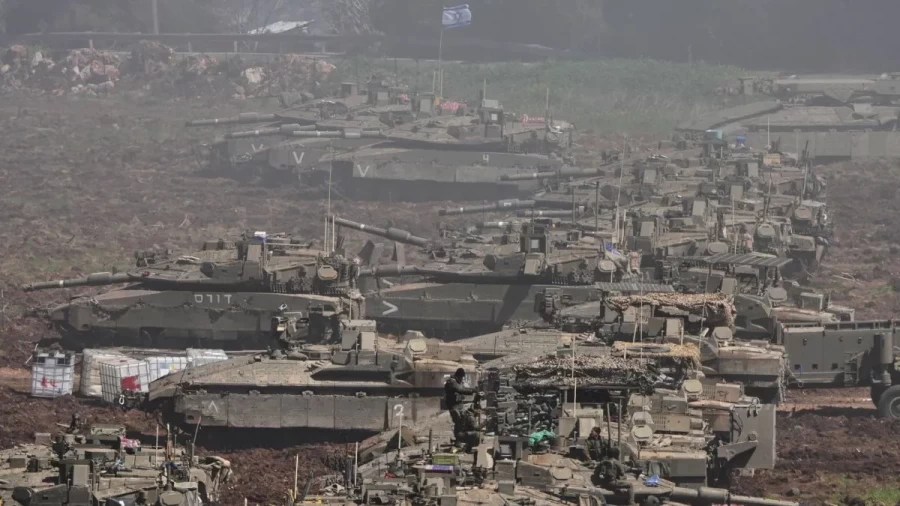
Amidst escalating regional tensions, the Israel Defense Forces (IDF) have initiated a massive military buildup along the northern border with Lebanon, while according to reports and satellite imagery released by Al Jazeera, the Israeli military has deployed a significant number of tanks, armored vehicles, and personnel to the border regions. This development comes at a critical juncture as the conflict between Israel and Hezbollah intensifies, with experts suggesting that this mobilization indicates preparations for one of the largest military operations in the region to date. The buildup is being closely monitored by international observers as the threat of a full-scale ground war looms.
The military activity is a direct response to the persistent rocket and drone attacks launched by Hezbollah into northern Israel. Reports indicate that additional brigades have been moved to the front lines to bolster Israel's defensive and offensive capabilities. Visual evidence shared by Al Jazeera English highlights the scale of the mobilization, showing convoys of military hardware and the establishment of temporary tactical bases. While Israeli officials maintain that these movements are part of a defensive strategy, the nature of the deployment suggests a broader strategic objective aimed at neutralizing threats deep within Lebanese territory.
Visual Evidence of Military Mobilization
Satellite imagery and ground-level photographs have revealed a substantial increase in Israeli military infrastructure near the Blue Line. These images depict hundreds of military vehicles, including Merkava tanks and armored personnel carriers, stationed at strategic assembly points, while the reports indicate that the IDF has fortified several key positions along the border to facilitate rapid movement. Military analysts point out that the construction of new access roads and the positioning of logistical units are classic indicators of a planned ground incursion. The scale of this buildup is reportedly larger than previous mobilizations, signaling a shift in Israel's operational intensity.
Strategic Objectives and Ministerial Directives
Israeli Defense Minister Israel Katz has issued formal directives to the military leadership to expand control over additional territories in southern Lebanon. The stated goal is to eliminate the launch sites used by Hezbollah to target Israeli civilian settlements. Minister Katz emphasized that the military must ensure a security vacuum isn't left for the militant group to exploit. IDF spokesperson Lt, while col. Nadav Shoshani confirmed the deployment of troops to additional points along the border, stating that the primary mission is the protection of Israeli citizens and the dismantling of Hezbollah's operational infrastructure, while the Israeli cabinet has reportedly authorized the military to take all necessary steps to restore security in the north.
Escalation of Rocket Attacks and Aerial Bombardment
In response to the Israeli buildup, Hezbollah has intensified its offensive operations, launching a barrage of rockets and suicide drones toward Israeli military installations and urban centers. The group has stated that these actions are in retaliation for Israeli strikes on its leadership and infrastructure. Conversely, the Israeli Air Force has conducted extensive aerial campaigns targeting Beirut's southern suburbs, the Bekaa Valley, and various locations across southern Lebanon, while these strikes have focused on command centers, weapon caches, and intelligence facilities. The Lebanese Ministry of Health has reported significant damage to civilian infrastructure, further exacerbating the humanitarian crisis in the affected areas.
Mass Displacement and the Litani River Mandate
The Israeli military has issued urgent evacuation orders for residents in southern Lebanon, instructing them to move north of the Litani River, while these forced displacement orders have triggered a massive exodus, with hundreds of thousands of people fleeing their homes in search of safety. International humanitarian organizations have expressed grave concern over the situation, noting that the displacement patterns mirror those seen in other recent conflicts in the region, while the rapid movement of civilians has put immense pressure on Lebanon's internal resources, leading to a growing need for emergency aid and shelter. NGOs have warned that the scale of the displacement could lead to a long-term humanitarian catastrophe.
Ground Incursions and Buffer Zone Development
Field reports indicate that Israeli forces have already conducted incursions at more than 7 distinct locations along the southern Lebanese border. The objective appears to be the creation of a 'buffer zone' to prevent Hezbollah fighters from reaching the border fence. During these operations, Israeli troops have reportedly targeted tunnel networks and fortified positions used by the militant group. The Lebanese Army has repositioned its forces away from the immediate border areas to avoid direct confrontation. This strategy, described by the IDF as 'Forward Defense,' aims to establish a secure perimeter that would mitigate the risk of cross-border raids and short-range projectile attacks.
