

- India,
- 24-Mar-2026 09:01 AM IST


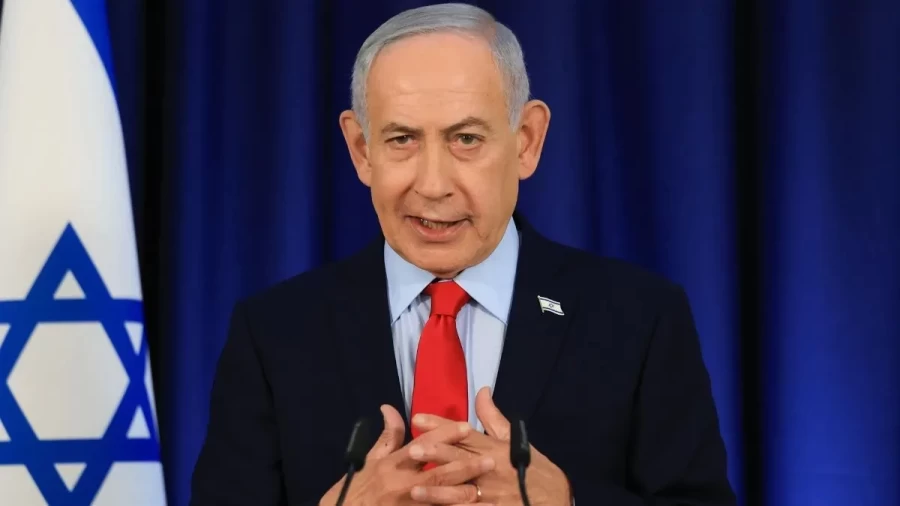
Israeli Prime Minister Benjamin Netanyahu has explicitly stated that Israel's military campaign against Iran and Lebanon won't cease under diplomatic pressure. Following a recent telephonic conversation with US President Donald Trump, Netanyahu issued an official statement emphasizing that Israel remains committed to protecting its national interests at any cost. The Prime Minister asserted that the recent achievements of the Israeli Defense Forces (IDF) would be instrumental in fulfilling the objectives of the war, while according to Netanyahu, Trump also believes that leveraging these military successes can help achieve a strategic advantage in any potential future agreements.
This declaration comes at a time of heightened regional tension, with reports emerging of back-channel communications between the United States and Iran. However, Israel has shown no signs of altering its military strategy, while netanyahu clarified that strikes on Hezbollah positions in Lebanon and strategic assets within Iran would persist. He noted that Israel's goal isn't merely immediate security but the total eradication of future threats. This firm military stance has placed the ongoing conflict in the Middle East at a critical juncture, where diplomatic maneuvers are occurring alongside intensified military operations on the ground.
Netanyahu’s Strategic Objectives in Lebanon and Iran
In his address, Prime Minister Benjamin Netanyahu stated that Israel is actively continuing its strikes on both the Iranian and Lebanese fronts, while he reported that the IDF has Notably degraded Hezbollah's command structure. According to Netanyahu, the operations in Lebanon are aimed at ensuring the safe return of residents to northern Israel. He emphasized that there would be no relaxation in military pressure until the threat from Hezbollah is completely neutralized. The Prime Minister also clarified that his discussion with Trump focused on aligning military goals with diplomatic benefit from.
Netanyahu further added that Israel wouldn't compromise on its vital interests in any potential deal. He argued that military pressure is the only effective way to bring adversaries to the negotiating table or force them to retreat. The Israeli leadership believes that the current military campaign has played a crucial role in diminishing Iran's regional influence. The Prime Minister reiterated that whatever is necessary for Israel's security will be executed without hesitation, regardless of the evolving diplomatic landscape.
Focus on Nuclear and Missile Infrastructure
Regarding Iran, Netanyahu has maintained an extremely tough posture. He claimed that Israel is specifically targeting Iran's missile program and its nuclear infrastructure. The Prime Minister revealed that in recent days, Israeli operations resulted in the elimination of 2 more Iranian nuclear scientists. Israel maintains that Iran's nuclear program poses a significant threat not only to the Jewish state but to global security. Netanyahu stated that Israel would never allow Iran to acquire nuclear weapons and is prepared to take any measures necessary to prevent such an outcome.
Israeli intelligence agencies and the air force have identified several sensitive sites within Iran, while according to Netanyahu, strikes on these locations will continue to paralyze Iran's capability to launch retaliatory attacks. He emphasized that Israel's actions aren't merely defensive; the state is proactively destroying the sources of the threat. The strikes on missile production centers and research laboratories have reportedly impacted Iran's military capabilities, which Israel views as a major strategic victory in the ongoing shadow war.
Trump’s Extension of the Hormuz Strait Deadline
Meanwhile, US President Donald Trump has taken a significant diplomatic step by extending the deadline for Iran to open the Strait of Hormuz. Trump has decided to postpone potential strikes on Iranian energy plants for 5 days. The US President indicated that he's in communication with a 'respected' Iranian leader. Trump's proposal suggests that under a potential deal, Iran would be required to hand over its enriched uranium to the United States. In exchange, there could be a relaxation of certain sanctions and a halt to immediate military escalations.
The Strait of Hormuz is a vital artery for global oil trade. The Trump administration believes that keeping this route open is essential for global economic stability. Trump stated that the US remains committed to the total elimination of Iran's nuclear weapons capability and has kept diplomatic channels open for this purpose, while however, he also warned that if no concrete progress is made within the 5-day window, the US and its allies would be free to take stringent actions. This deadline is being viewed as a strategy to exert maximum pressure on the Iranian regime.
Iran’s Official Response and Denial of Negotiations
Iran has completely dismissed the claims made by the US President. The Iranian Foreign Ministry issued an official statement asserting that there are no secret or direct negotiations taking place with the United States. ' According to Iranian officials, the Trump administration is backtracking on its previous warnings and attempting to mislead the international community. Iran made it clear that it wouldn't compromise on its sovereignty or its rights regarding its nuclear program.
Tehran also alleged that the US is using fake news to stabilize global financial markets, while according to Iran, Trump's claim of speaking with an Iranian leader is entirely baseless. The Iranian leadership stated that they're fully prepared to respond to any military aggression and that their control over the Strait of Hormuz is a key component of their strategic power. This rigid response from Iran has cast doubt on the feasibility of a diplomatic solution in the near term, as both sides remain entrenched in their respective positions.
Impact on Global Oil Markets and Financial Stability
These geopolitical developments have had a direct impact on global financial and energy markets, while following reports of Trump's decision to delay strikes and the possibility of talks, international crude oil prices saw a decline. The reduction in oil prices provided a temporary sigh of relief for global markets, though the situation remains highly volatile. On the other hand, stock markets experienced an initial surge as investors hoped that the immediate threat of a wider war might be receding. However, market analysts maintain that as long as tensions between Israel and Iran remain unresolved, instability will persist.
According to experts, the issue of the Strait of Hormuz is extremely sensitive for the global economy. Any disruption to this route could lead to a massive spike in oil prices, potentially fueling global inflation. Netanyahu's announcement to continue strikes and Iran's denial of talks have created a sense of caution among investors, while currently, the market situation depends entirely on the developments of the next 5 days and the nature of Israel's military actions. Governments worldwide are closely monitoring the situation to mitigate any potential large-scale economic fallout resulting from the conflict.
