

- India,
- 12-Jan-2026 05:41 PM IST


Dr. S. Venkateswara Sharma, a distinguished scientist at the Indian Space Research Organisation (ISRO), recently offered profound insights into India's ambitious space program. His comprehensive discussion covered the recent failure of the PSLV-C62 mission, the strategic significance of the EOS-N1 Anvesha satellite, and India's long-term plans for establishing its own space station by 2035, while this detailed roadmap underscores India's unwavering commitment to advancing its space capabilities, even in the face of recent challenges.
The PSLV-C62 Mission Setback
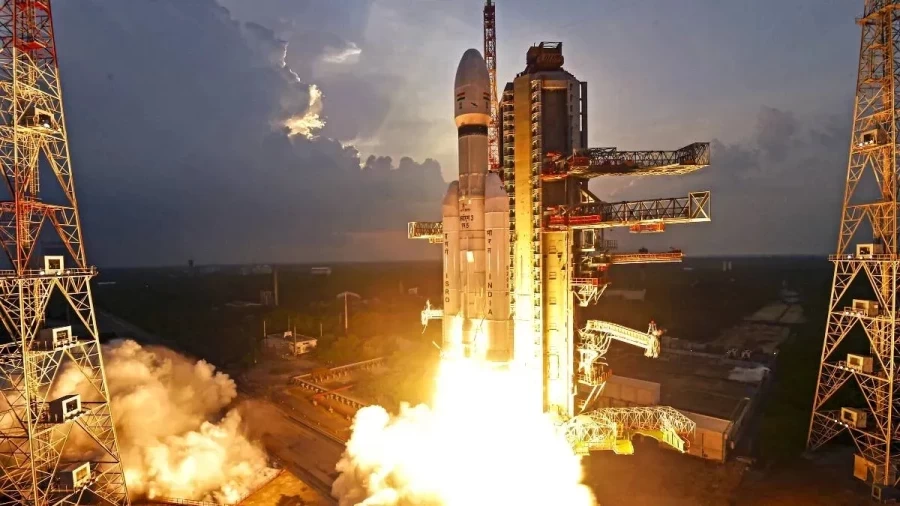
The recently launched PSLV-C62 mission, which marked the first mission of 2026,. Was unfortunately declared unsuccessful due to technical problems encountered in the launch vehicle. This four-stage rocket, standing 44. 4 meters tall and weighing 260 tons, was designed to deploy the EOS-N-1 satellite along with several co-passengers into orbit. Despite this setback, Dr. Sharma highlighted the sophisticated engineering behind the vehicle, which utilized a combination of solid and liquid phases for propulsion. The failure serves as a temporary hurdle for ISRO, yet it also emphasizes the inherent complexities and risks involved in space exploration, where even minor malfunctions in intricate systems can lead to significant outcomes, while iSRO is known for its resilience, learning from such incidents to further refine and strengthen its future missions and technologies.
Strategic Importance of EOS-N1 (Anvesha) Satellite
The primary payload of the ill-fated mission was the EOS-N1 (Anvesha) satellite, a collaborative venture between ISRO and the Defence Research and Development Organisation (DRDO). This satellite was meticulously designed to serve both strategic and civilian sectors, intended for high-resolution mapping, environmental monitoring, and comprehensive surveys. Dr. Sharma elaborated that ISRO was responsible for building the system, including control, electrical, and guidance components, while DRDO, in collaboration with private companies, developed the specialized payload. The EOS-N1 was engineered to operate for at least five years, providing critical weather and surveillance data essential for strategic operations, thereby Notably enhancing India's security and environmental management capabilities. Its capabilities would have been pivotal for better border surveillance and more effective responses to natural disasters.
PSLV: The Reliable Workhorse
Prior to this technical issue, the PSLV had firmly established itself as ISRO's dependable workhorse, successfully launching historic missions such as Mangalyaan and Chandrayaan-1. Dr, while sharma emphasized that the technology has matured to such an extent that its production is now being entrusted to private companies like HAL, L&T, and Godrej, aiming for self-reliance in the space sector by 2047. He further stated that repeated tests and available margins make the PSLV exceptionally reliable, while india's fleet also includes the GSLV and the upcoming SSLV, which can launch small satellites on demand, showcasing ISRO's versatility and capacity to undertake a diverse range of missions. This increased private sector involvement is expected to accelerate India's space program, fostering innovation and efficiency.
Gaganyaan: India's Human Spaceflight Ambitions
Discussing future plans, Dr. Sharma provided details about the Gaganyaan program. He stated that ISRO aims to launch the first uncrewed flight in early 2026, while following three successful uncrewed missions, India anticipates launching astronauts into space in 2027. Dr. Sharma explained that the LVM3 launch vehicle is undergoing 'human rating,'. A process that demands exceptionally high reliability and strong emergency systems. He highlighted the experience gained by astronaut Subhanshu Shukla during his 14-day stay at the International Space Station (ISS) as a significant achievement for the program, while this human spaceflight capability will place India among an elite group of nations with such advanced technology, serving as a testament to the country's scientific and technological prowess.
India Space Station (BSS) by 2035
With the International Space Station (ISS) slated for retirement around 2030, Dr. Sharma confirmed that the India Space Station (BSS) is on track for completion by 2035. He also addressed growing concerns about space debris and the potential for space to become a 'battleground,' noting that space assets are now integral to navigation, imaging, and strategic security. Establishing an independent space station will enable India to solidify its long-term presence in space, providing a sustainable platform for scientific research, technology development, and Earth observation. This move will bolster India's position as a global space. Power and ensure its strategic autonomy amidst increasing competition in space.
India's Growing Self-Reliance in Space
Dr. Sharma underscored India's progression towards self-reliance in low-orbit surveillance. With the BSS by 2035 and planned lunar landings, the nation will be in an entirely different league. This self-reliance isn't only crucial for India's national security but also positions it as a significant player in the global space economy, while by developing its own indigenous capabilities in space, India is reducing its dependence on other nations and gaining the ability to execute space missions aligned with its national priorities. This long-term vision prepares India to play a pivotal role in shaping the future of space exploration and utilization.
Inspiring Future Generations: Career in Space
Reflecting on career opportunities, Dr. Sharma recounted several proud moments that have defined India's space program. These include Aryabhata (1975), India's first satellite, built by a small team of 100 engineers; Chandrayaan-1 (2008), the first mission to discover water on the Moon; the Mars Orbiter Mission (2014), which reached Mars on its first attempt at a remarkably low cost of just eight rupees per kilometer; and most recently, Chandrayaan-3 (2024), which achieved a historic and standard-setting landing on the Moon's south pole, while advising young Indians, Dr. Sharma emphasized that the space sector requires more than just engineers, while he stated, 'Whether you study science, commerce, or arts, from technicians and administrators to housekeeping, every role is a part of the space sector. Excel in your field, follow your passion, and be a good citizen. ' This message encourages young people to explore the diverse. Opportunities within the space sector and contribute to the nation's future.
