

- India,
- 26-Feb-2026 02:25 PM IST


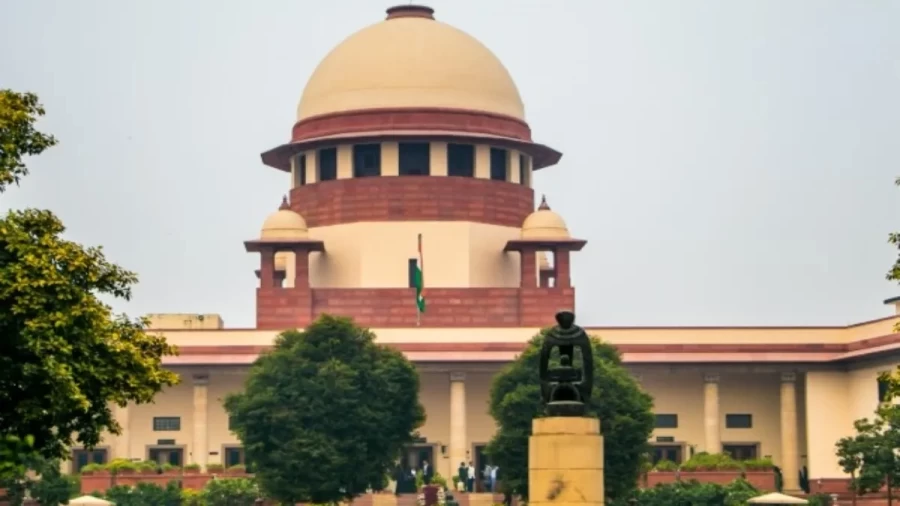
The Supreme Court of India has issued formal notices to the Union Government and the Election Commission of India (ECI) regarding a Public Interest Litigation (PIL) seeking the imposition of a ceiling on the election expenditure of political parties. A bench comprising Justice Surya Kant and Justice Joy Malya Bagchi deliberated on the petition filed by the non-governmental organization 'Common Cause' and directed the respondents to file their replies within a period of six weeks, while the petition challenges the existing legal framework where individual candidates are subject to strict spending limits, while political parties enjoy the liberty to spend unlimited amounts during election campaigns.
Core Arguments and Demands of the Petition
Appearing for the petitioner, senior advocate Prashant Bhushan argued that the unrestrained use of money power by political parties during elections undermines the very foundations of democracy. The PIL contends that the absence of a statutory limit on party spending creates a significant imbalance in the electoral process, favoring wealthier parties and disadvantaging those with fewer resources. According to the petitioner, this lack of a 'level playing field' violates the principle of free and fair elections, which is a part of the basic structure of the Constitution. The plea seeks a judicial direction to establish a transparent and fixed expenditure cap for political parties, similar to the restrictions placed on individual candidates.
Impact of Money Power on Democratic Fairness
The petition highlights a stark disparity in the current electoral laws. Under Section 77 of the Representation of the People Act, 1951, individual candidates contesting Lok Sabha elections have a spending limit of ₹95lakh in larger states and ₹75lakh in smaller states. However, the law doesn't prescribe any such upper limit for the political parties they represent, while advocate Bhushan emphasized that this loophole allows parties to spend hundreds of crores on advertisements, massive rallies, and digital campaigns, effectively bypassing the spirit of the candidate-level spending caps. The petition argues that such excessive spending influences voter behavior through financial dominance rather than ideological merit.
Legal Context of the Electoral Bonds Judgment
During the proceedings, the petitioner's counsel drew a parallel with the Supreme Court's landmark judgment in February 2024, which struck down the Electoral Bonds scheme as unconstitutional. The counsel reminded the bench that the court had previously acknowledged how unregulated financial contributions can distort the democratic process and lead to a 'quid pro quo' culture in policy-making. The PIL suggests that capping political party expenditure is a necessary logical step following the transparency mandates established in the Electoral Bonds case. Without a limit on spending, the petitioner argues, the drive to clean up election financing remains incomplete, as parties will continue to seek vast sums of money to outspend their rivals.
Global Precedents and Practical Implementation Hurdles
While considering the notice, Justice Joy Malya Bagchi raised pertinent questions regarding the practical challenges of enforcing such limits. The bench observed that even in countries like the United States, where various spending regulations exist, political entities often find ways to circumvent them through 'third-party' spending or independent committees, while the court noted that implementing a cap on political parties would require a strong monitoring mechanism to prevent 'proxy' expenditures by supporters or affiliated organizations. The judicial observation pointed towards the complexity of defining what constitutes 'party expenditure' versus 'independent advocacy,' suggesting that any legal remedy would need to address these intricate implementation hurdles.
Current Regulatory Framework and Future Proceedings
The Election Commission of India has historically expressed concerns over the rising cost of elections and has proposed various reforms to the Law Ministry. The Law Commission's 255th report also touched upon the need for stricter financial regulations for political parties. With the Supreme Court now intervening, the Centre and the ECI must provide a detailed stance on whether they intend to amend the Representation of the People Act or introduce new guidelines. The court has scheduled the matter for further hearing after six weeks, by which time the government and the poll body are expected to submit their affidavits detailing the feasibility and potential framework for capping political party expenditures.
