
- India,
- 25-Feb-2026 11:40 PM IST


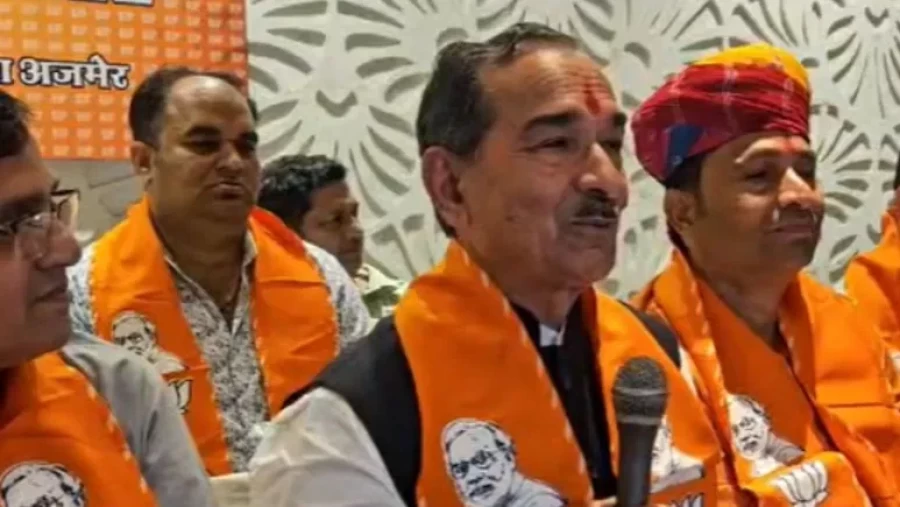
Political activity in Rajasthan has intensified ahead of Prime Minister Narendra Modi's scheduled public address in Ajmer on February 28. Despite the indefinite 'Chakka Jam' called by private bus operators across the state, BJP State President Madan Rathore has dismissed concerns regarding the rally's success. Rathore emphasized that the public's enthusiasm for the Prime Minister remains undeterred and predicted a massive gathering of over 2 lakh people at the venue. He assured that all necessary logistical arrangements are being made to ensure that the transport strike doesn't hinder the movement of supporters and citizens wishing to attend the event.
Madan Rathore on Rally Turnout and Public Sentiment
Speaking to the media, BJP State President Madan Rathore asserted that the bond between Prime Minister Narendra Modi and the people of Rajasthan is unbreakable, while he stated that while the private bus operators have their grievances, the government is actively engaging in dialogue with them to reach a resolution. Rathore claimed that the party has devised a comprehensive strategy to facilitate the arrival of attendees from various districts. According to him, the lack of private buses will be compensated by alternative means of transport, and the party's grassroots workers are coordinating local travel for supporters. He reiterated that the sheer volume of people expected will demonstrate the public's support for the Prime Minister's vision.
The Scope of the Private Bus Operators' Strike
The strike by private bus operators has Importantly impacted the transportation network in Ajmer and surrounding regions. More than 200 private buses in Ajmer alone have ceased operations as part of the indefinite protest. The Private Bus Association has formally announced its refusal to provide vehicles for the Prime Minister's rally on February 28, citing unresolved demands with the state government. This strike has caused widespread inconvenience not only for political organizers but also for daily commuters, students, and professionals who rely on private transport services. Bus terminals remain deserted, and the suspension of services has led to a surge in demand for alternative travel options.
Government Response and Roadways Contingency Plan
In response to the transport crisis, the Rajasthan State Road Transport Corporation (RSRTC) has initiated contingency measures. Roadways officials have been directed to keep additional buses in reserve to handle the expected influx of people for the rally and to assist regular commuters. According to department sources, the frequency of buses on major routes connecting to Ajmer will be increased. While the capacity of state-run buses is limited compared to the private sector, the administration is making every effort to bridge the gap. Transport department officials are also continuing their negotiations with the striking unions, hoping to reach a compromise before the high-profile event takes place.
Preparations for the Prime Minister's Visit
The Ajmer district administration and police department have stepped up security and logistical preparations for the Prime Minister's visit. A specialized traffic management plan has been drafted to prevent congestion on the highways leading to the rally site. Heavy police deployment is expected at the venue, with surveillance being conducted through CCTV networks and drone technology. The administration is working under significant pressure to balance the security protocols required for a VVIP visit with the logistical challenge of managing a crowd of over 2 lakh people amidst a transport strike. Emergency services and medical teams have also been put on high alert to handle any contingencies during the event.
Ongoing Negotiations and Political Implications
The standoff between the government and the private bus operators remains a focal point of the current political discourse in Rajasthan. While the BJP leadership remains confident that the strike won't mar the Prime Minister's rally, the opposition has highlighted the transport crisis as a sign of administrative friction. BJP workers, however, have been actively mobilizing at the village level, using personal vehicles and community transport to ensure a high turnout. The rally is seen as a crucial platform for the Prime Minister to connect with the electorate, and the party is determined to make it a landmark event regardless of the logistical hurdles posed by the ongoing 'Chakka Jam'.
