

- India,
- 06-Mar-2026 04:15 PM IST


Six days after the reported death of Iran's Supreme Leader Ayatollah Ali Khamenei, significant details have surfaced regarding the military operation that led to the destruction of his official residence, while according to international reports and intelligence sources, the strike was a highly coordinated joint operation between Israel and the United States. The mission specifically targeted a high-level meeting taking place within a fortified complex in Tehran, utilizing advanced missile technology to penetrate deep underground structures.
The operation, which reportedly took place on 28 February, was executed with surgical precision. At the time of the attack, Khamenei was allegedly chairing a strategic session with his advisors and Mohammad Pakpour, the head of the Islamic Revolutionary Guard Corps (IRGC) Ground Forces, while the intensity of the bombardment was such that it completely leveled the surface structure and collapsed the reinforced bunkers situated beneath the residence, leaving no room for escape for those inside.
Technical Specifications of Blue Sparrow Missiles
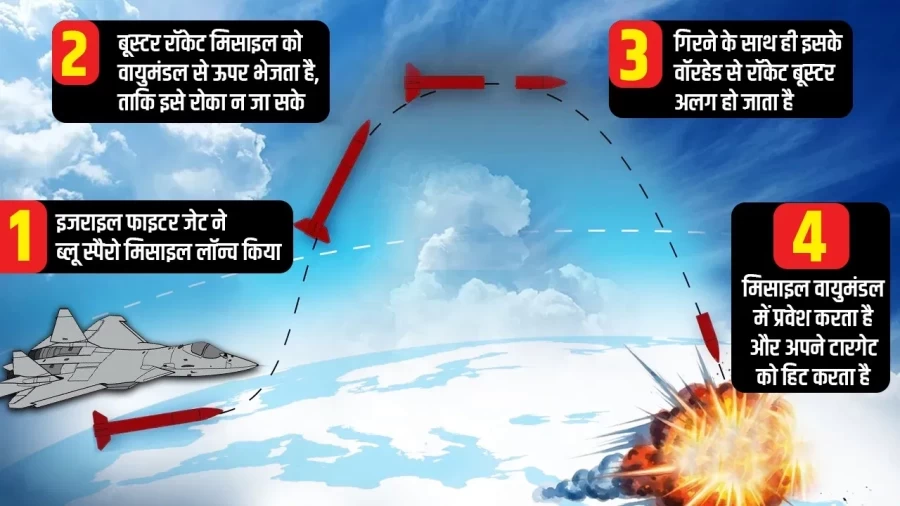
The primary weapon used in this operation was the 'Blue Sparrow' missile, an advanced air-launched ballistic missile developed by Israel. Technically described as a sophisticated derivative of the Scud missile series, the Blue Sparrow is designed to simulate long-range threats for missile defense testing but possesses lethal combat capabilities, while it has an operational range of approximately 1,240 miles (nearly 1,500km) and weighs around 1,900kg. The missile utilizes solid-fuel rocket technology, which allows for rapid deployment and high-velocity impact.
High-Altitude Trajectory and Precision Strike
A defining feature of this strike was the trajectory of the missiles. Reports indicate that the Blue Sparrow missiles were launched from F-15 fighter jets and ascended to the upper reaches of the atmosphere—referred to in descriptive terms as reaching the 'seventh heaven'—before re-entering for a vertical descent. During the flight, the rocket boosters separate from the warhead, Notably increasing the terminal velocity and making interception nearly impossible for conventional air defense systems. This high-altitude approach ensured that the missiles struck the Tehran residence with maximum kinetic energy.
Role of Intelligence Assets and Joint Coordination
The success of the operation relied heavily on a sophisticated intelligence network established by the CIA and Mossad within Iran. Intelligence assets on the ground provided real-time data regarding Khamenei's movements and the exact timing of the meeting. According to the New York Post, Israeli officials temporarily vacated their headquarters during the operation to maintain absolute secrecy and prevent any leaks that could have alerted the Iranian leadership. The coordination between human intelligence (HUMINT) and satellite surveillance allowed the strike to be timed perfectly with the Supreme Leader's presence in the bunker.
Casualties and Impact on the Supreme Leader's Family
The strike resulted in multiple fatalities beyond the primary target. Reports confirm that Ayatollah Ali Khamenei's wife, daughter, son-in-law, granddaughter, and grandson were present in the residence at the time of the attack and were killed, while however, his son, Mojtaba Khamenei, wasn't at the premises during the strike and survived. This survival has led to immediate speculation regarding the political future of Iran, with reports suggesting that preparations are underway to position Mojtaba as the next Supreme Leader to maintain the continuity of the clerical establishment.
Succession Plans and Current Status in Tehran
In the aftermath of the attack, the area surrounding the official residence in Tehran has been cordoned off by elite security units. The destruction of the bunker complex has created a significant void in the Iranian leadership structure. While the Iranian government has maintained a level of secrecy regarding the full extent of the damage, the loss of the Supreme Leader and key IRGC commanders represents a critical shift in the regional geopolitical landscape. Efforts to clear the debris and recover remains from the deep-level bunkers are reportedly ongoing under heavy guard.
