

- India,
- 06-Jan-2026 01:11 PM IST


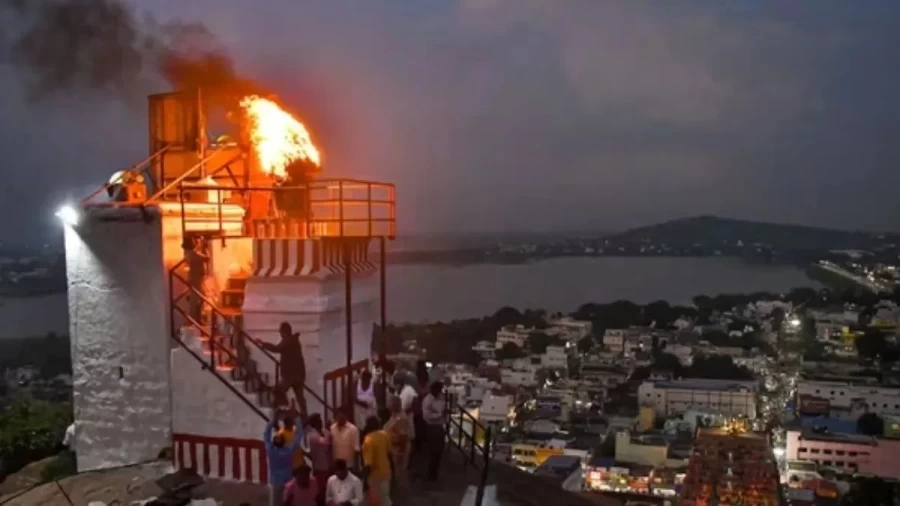
The Madurai Bench of the Madras High Court has delivered a significant ruling concerning the lighting of the Karthigai Deepam on Thiruparankundram Hill. The court has upheld its earlier decision, permitting the traditional lamp lighting on the hill, thereby reinforcing the petition filed by Hindu Tamil Party leader Ram Ravikumar. This judgment is considered a major setback for the DMK-led Tamil Nadu government, which had appealed against the order citing potential law and order disturbances.
Order to Light Deepam Upheld
A division bench comprising Justices G. Jayachandran and K. K. Ramakrishnan affirmed the single judge's order, which directed the lighting of the lamp on a stone pillar known as 'Deepathoon' located on the Thiruparankundram hills. This 'Deepathoon' is situated near a dargah, which has been the focal point of the dispute. The bench explicitly clarified that the location where the stone pillar (Deepathoon) stands belongs. To the Lord Subramaniam Swamy Temple, further solidifying the temple's claim over this religious ritual.
Government's Law and Order Argument Rejected
The state government, in its appeal, had raised concerns about potential law and order issues, which had previously prevented the implementation of the order. However, the court dismissed the government's argument. Petitioner Ram Ravikumar stated that the court observed that citing law and order concerns merely reflects the government's inaction. The court advised the district administration to view this issue as an opportunity to resolve differences between communities, rather than perceiving it as a problem.
ASI Consultation Mandated
The court's ruling also includes a crucial condition. Given that Thiruparankundram Hill is a protected site, the court stipulated that any activities undertaken there must strictly adhere to the provisions of the relevant act. In this context, the court clarified that the lamp could only be lit after consulting with the Archaeological Survey of India (ASI). On top of that, the number of individuals involved in the Deepam lighting ceremony would also. Be determined in consultation with the ASI, ensuring the site's safety and preservation.
Petitioner Welcomes the Verdict
Ram Ravikumar, the leader of the Hindu Tamil Party and the petitioner in this case, warmly welcomed the Madras High Court's decision. He hailed it as a victory for the devotees of. Lord Muruga, stating that the court has delivered a remarkable judgment. Ravikumar emphasized that the government's appeal petition has been dismissed, and arrangements for lighting the Deepam on the Deepathoon should now be made by the temple administration. According to him, this verdict represents a significant triumph for Hindus and Murugan devotees in Tamil Nadu.
Historical Context of Thiruparankundram Dispute
Thiruparankundram Hill is one of the six sacred abodes of Lord Murugan and hosts an ancient rock-cut temple, making it a prominent pilgrimage site. A dargah is also located on this hill, contributing to a long-standing history of tension between the temple and the dargah, while this dispute dates back to the 1920s when disagreements over the ownership of the hill first arose. A civil court judgment, later upheld by the Privy Council, confirmed that the hill belonged to the Subramaniaswamy Temple, with the exception of certain areas associated with the dargah. However, this judgment didn't explicitly mention rituals or the Deepam tradition.
Evolution of the Deepam Lighting Controversy
The specific controversy surrounding the Deepam lighting emerged in 1994 when a devotee requested the High Court to shift the ritual from its traditional location near the Uchippillaiyar Kovil Mandapam to the Deepathoon site near the dargah on the hilltop. In 1996, the High Court ruled that the Deepam should. Typically be lit at the traditional spot near the Mandapam. This directive was the sole judicial order defining the recognized site for this ritual. The current ruling provides a new direction to this long-standing tradition and religious right, generating enthusiasm among devotees.
