
- India,
- 24-Jun-2026 07:15 PM IST



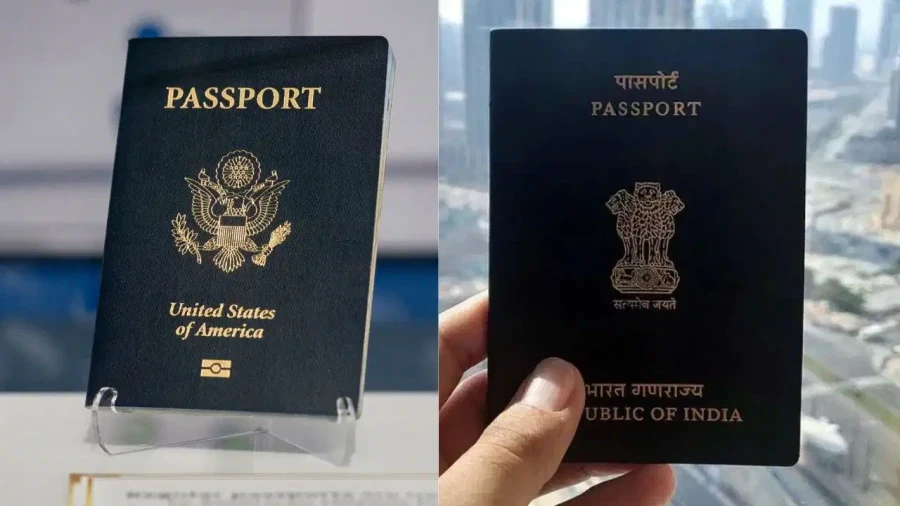
The Ministry of External Affairs (MEA) has issued a significant clarification regarding the legal status of a passport, stating that it's primarily a travel document and shouldn't be considered absolute proof of citizenship. This statement comes at a time when the ministry has seen a massive surge in passport applications and a significant expansion of its service network across the country. According to an official from the Ministry of External Affairs, while a passport allows an individual to travel internationally, its primary function is that of a travel facilitation document. The official emphasized that the possession of a passport doesn't automatically serve as a final certificate of citizenship under all legal circumstances.
Massive Expansion in Passport Services
The ministry provided detailed statistics regarding the scale of operations in recent times. 5 crore passport and related services. 39 crore. This reflects a high demand for international travel documents among Indian citizens. To meet this growing demand, the government has drastically increased the number of passport issuance centers. A decade ago, there were only 77 passport centers across India. Today, that number has grown to 545, marking a six-fold increase in infrastructure. This expansion includes Passport Seva Kendras (PSK) and Post Office Passport Seva Kendras (POPSK), while the ministry official noted that 10 new POPSKs were opened last year, and there are plans to open 10 more in the current year to further ease the process for citizens.
Efficiency and Processing Times
The Ministry of External Affairs also highlighted the efficiency of the current system. Excluding the time required for police verification, the actual processing of a passport now takes only 6 working days. Plus, the time spent by an applicant inside a Passport Seva Kendra (PSK) or a Post Office Passport Seva Kendra (POPSK) has been reduced to less than 45 minutes. This streamlined process is part of the government's effort to make public services more accessible and less time-consuming for the common man.
Enhanced Global Mobility for Indians
On the international front, the ministry shared positive news regarding the strength of the Indian passport and global mobility, while the number of countries offering visa-free entry to Indian citizens has increased to 27, up from 16 in 2019. Also, 47 countries now provide 'Visa on Arrival' facilities for Indians, and 66 countries offer electronic visa (e-visa) facilities. The ministry official also mentioned that mobility agreements have been signed with several European nations. These agreements are designed to facilitate the easy movement of academics, students, apprentices, general tourists, and business professionals, while crucially, these agreements also establish a formal system for the easy return of illegal migrants, ensuring regulated and legal mobility.
Legal Context and Citizenship Laws
The clarification regarding the passport's status as a travel document is rooted in Indian law. According to the legal framework, if a person was born after July 1, 1987, simply possessing a birth certificate, passport, or Aadhaar card may not be sufficient to prove Indian citizenship. The law stipulates that a person born in India after July 1, 1987, can't automatically claim citizenship unless at least one of their parents is an Indian citizen. The ministry's statement aligns with a 2013 Bombay High Court ruling. In that case, Justice KU Chandiwal refused to grant relief to four individuals accused of being illegal migrants. Despite presenting passports (which were later cancelled), Aadhaar cards, and birth certificates, the court ruled that under the law, the applicant must prove that their parents were Indian citizens. No such evidence was provided in that case. Under the law, a person born in India on or after January 26, 1950, but before July 1, 1987, is considered an Indian citizen by birth. However, for those born after July 1, 1987, the citizenship of at least one parent is a mandatory requirement for claiming citizenship.