
- India,
- 01-Aug-2026 11:51 AM IST



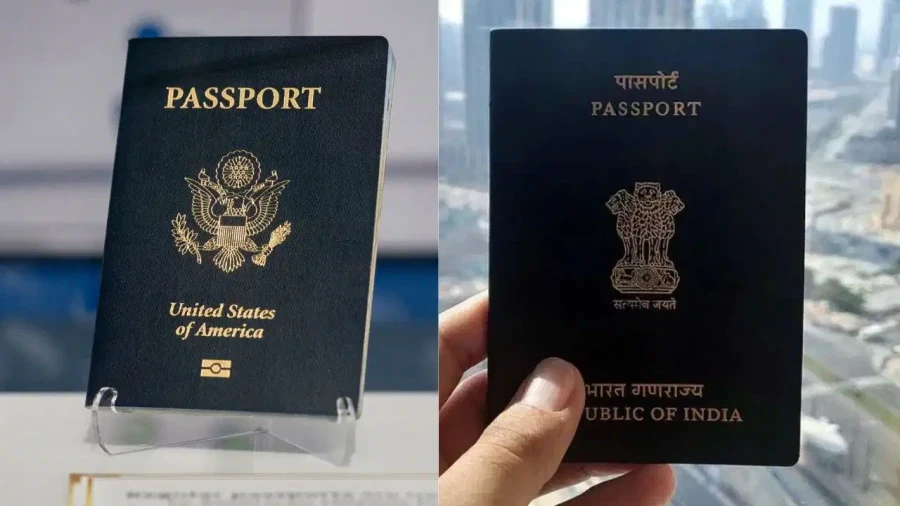
The Henley Passport Index 2026 has been officially released, bringing significant news for international travelers and global mobility experts. According to the latest data, the United States passport has experienced a notable decline, reaching its lowest ranking in the last 10 years. This shift indicates a changing landscape in global travel freedom, where more than 30 countries have now overtaken the United States in terms of passport power. While the US remains a strong contender in the global arena, the rapid progress of other nations in securing visa-free agreements has pushed the American travel document further down the list than seen in a decade.
The Decline of the United States Passport
The report highlights a major setback for the United States in the Henley Passport Index 2026. For the first time in 10 years, the US passport has touched its lowest point in the rankings. Currently, more than 30 nations have surpassed the US, offering their citizens greater ease of travel across the globe. It's important to note that this doesn't necessarily mean the US passport has lost its inherent strength or that its travel privileges have been revoked. Instead, the decline is attributed to the proactive measures taken by other countries to enhance their citizens' mobility. Many nations have successfully negotiated new visa-free or visa-on-arrival agreements, allowing them to climb higher in the rankings and push the US to a lower position. Consequently, US citizens now find themselves requiring prior visas or travel authorizations for more destinations compared to the citizens of the top-ranking nations. This ranking reflects the current state of travel freedom rather than the economic or political power of the country.
India's Performance and Ranking Improvement
In contrast to the US decline, India has seen an improvement in its overall standing in the Henley Passport Index 2026. India is now ranked at the 81st position, which is a step up from its 85th rank in the previous year. This upward movement in the rankings suggests a positive trend for Indian passport holders on the global stage. However, there is a nuanced detail regarding the number of visa-free destinations available to Indians. Despite the improved rank, the number of countries offering visa-free or visa-on-arrival access to Indian citizens has actually decreased from 57 to 55. The report clarifies that this reduction isn't due to India losing access to new countries, but rather because of changes in the visa policies of certain nations. That's why, while India's relative position compared to other countries has improved, the absolute number of accessible destinations has seen a minor dip due to external policy shifts.
Methodology of the Henley Passport Index
The Henley Passport Index is widely regarded as one of the most authoritative and चर्चित rankings of the world's passports. The assessment for 2026 involved a comprehensive evaluation of 199 different passports and their access to 227 travel destinations. The ranking is strictly based on the number of destinations a passport holder can enter without a prior visa, while this includes countries that offer visa-free entry as well as those that provide visa-on-arrival facilities. The index serves as a benchmark for global mobility, reflecting the diplomatic reach and international relations of various countries. It's crucial to understand that this ranking focuses solely on travel freedom and doesn't take into account a country's economic power or political influence, although these factors often play a role in diplomatic negotiations for visa waivers. The index shows how easily a citizen can travel today as a measure of their global reach.
Global Leaders: Singapore and Other Top Nations
Singapore continues to dominate the global rankings, retaining its title as the country with the world's most powerful passport. Following closely behind, Japan, South Korea, and the United Arab Emirates (UAE) share the second position jointly. Sweden has secured the third spot in this year's index, while the top tier of the rankings is heavily populated by European nations, including Belgium, Denmark, Finland, Germany, Ireland, Italy, Luxembourg, the Netherlands, Norway, and Spain. Other countries that have maintained their presence in the top 10 include the United Kingdom, New Zealand, Canada, Switzerland, Austria, and Greece. These nations represent the pinnacle of global travel freedom, providing their citizens with easy access to a vast majority of the world's destinations. The index highlights that today, the ease of travel has become a major scale for a country's global accessibility.
Conclusion and Global Mobility Trends
The Henley Passport Index 2026 underscores the evolving nature of international travel. As countries continue to strengthen their diplomatic ties and negotiate better travel terms for their citizens, the hierarchy of passport power remains fluid. The decline of the US ranking and the improvement in India's position are key indicators of these shifting dynamics. For modern citizens, the ease with which they can travel across borders has become a significant measure of their country's global standing and reach. While the US remains among the world's strong passports, the rapid advancements made by other nations in expanding visa-free access have redefined the competitive landscape of global mobility. The report shows that the US passport is still strong, but other countries have progressed faster in increasing visa-free travel.