
- India,
- 29-Oct-2026 08:50 PM IST



Global technology pioneer and Tesla Chief Executive Officer Elon Musk has made a profound and revolutionary prediction regarding the future of human labor. According to Elon Musk, the coming era will witness Artificial Intelligence, commonly known as AI, and advanced robots taking over the vast majority of tasks currently performed by humans. Following this massive technological transformation, engaging in traditional employment for the sake of earning a livelihood will no longer remain a compulsion or a grim necessity for people. Instead, working a job will transform into an absolute personal preference or a matter of pure individual choice. Musk has termed this visionary concept of the future as universal high income, which carries deep economic and social implications for the entire world.
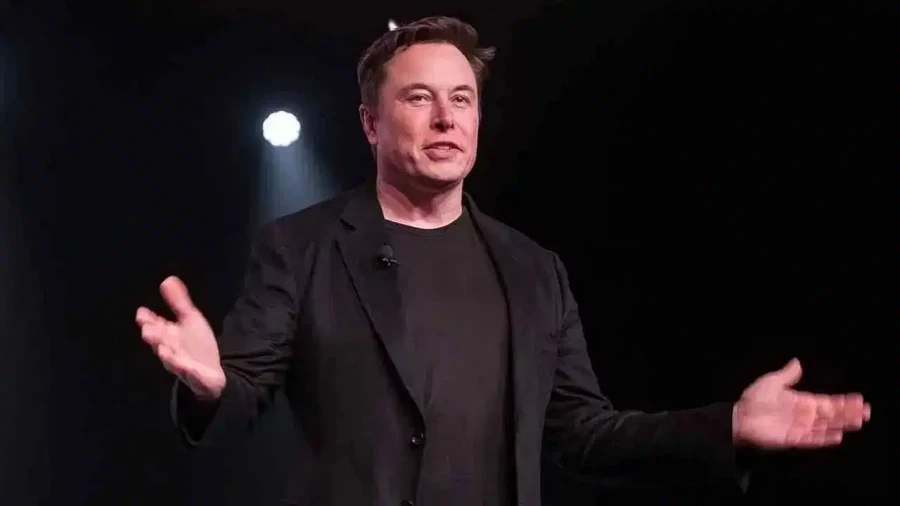
Recently, during his appearance at the All-In Summit, Elon Musk shared his detailed perspective on the future of artificial intelligence and robotics, clearly outlining his thoughts before the global audience. Emphasizing his viewpoint, he stated that in the near future, AI and sophisticated robots will become fully capable of performing virtually every kind of task just like human beings, while once machines and technology begin performing physical and mental labor with greater speed and efficiency than humans, the act of doing a job will cease to be a fundamental requirement for survival and will instead become a voluntary decision based on personal inclination and liking.
In alignment with Musk's perspective, AI and Tesla humanoid robots named Optimus will collaborate in the future to execute a wide variety of functions. These tasks won't merely be restricted to physical labor inside manufacturing plants or heavy industrial sites, but will also encompass white-collar corporate jobs performed inside office environments. Also, the role of artificial intelligence is projected to expand rapidly into data processing, information analysis, and other highly technical as well as managerial duties, fundamentally reshaping the global workspace and organizational culture.
Elon Musk firmly believes that once machines begin mass-producing consumer goods and delivering various services on an unprecedented global scale, fulfilling the basic needs and requirements of the general population will become remarkably easy. He has designated this prospective systemic framework by the term universal high income. The direct and clear meaning of this terminology refers to a socioeconomic scenario where advanced technology ensures such an abundant supply of goods and services that achieving a high standard of living becomes effortlessly accessible for everyday citizens, regardless of whether they hold a conventional job.
Nevertheless, amidst this grand vision, a paramount question arises as to whether every individual will genuinely receive these enhanced facilities and superior amenities. Ordinarily, discussions surrounding universal basic income or UBI frequently emerge in economic debates, signifying a guaranteed fixed financial assistance provided to citizens to help them cover their fundamental necessities like food, clothing, and shelter. However, Elon Musk's imagination transcends far beyond this conventional economic concept and represents a Importantly more ambitious model, while according to his analysis, the escalating utilization of artificial intelligence and automated systems will drastically multiply the physical availability of commodities and services worldwide.
Driven by this technological wave, operational costs are highly likely to plummet across key industrial sectors including manufacturing, transportation, agriculture, and healthcare services. If this materializes in the future, acquiring top-tier facilities and modern amenities will become substantially easier for a much larger segment of the population. At the same time, however, this outcome will heavily depend upon the mechanisms through which the benefits of this emerging technology are distributed across various societal strata and economic classes, while merely witnessing an upsurge in industrial production doesn't automatically guarantee that every single person will harvest an equal or fair share of its advantages.
While artificial intelligence and advanced robots hold the incredible potential of making human life Notably easier, this transformative shift bears a critical flip side that can't be overlooked, while if machines systematically take over jobs traditionally held by humans, the demand for numerous existing occupations and employment opportunities could experience a sharp decline. Such a scenario could potentially unleash severe financial distress and economic hardships for millions of families whose daily survival and household expenditures depend entirely on monthly salaries, wages, or hourly labor. Consequently, the most daunting question looming on the horizon is who will ultimately capture the massive financial proceeds generated by these autonomous machines.
Will the unprecedented wealth and corporate profits resulting from automated labor remain exclusively concentrated in the hands of corporate robot and AI owners, or will its dividends successfully trickle down to the general public, while addressing this complex dilemma, Elon Musk has openly acknowledged that this transitional phase will by no means be a smooth or effortless journey. He has characterized this massive evolutionary process as a turbulent voyage filled with unforeseen twists, severe volatility, and formidable challenges. Because of this, while this futuristic AI-driven vision can undoubtedly unlock boundless new possibilities for humanity, finding accurate and equitable answers regarding employment, income distribution, and economic security remains an absolute necessity.