
- India,
- 17-Oct-2026 01:03 PM IST



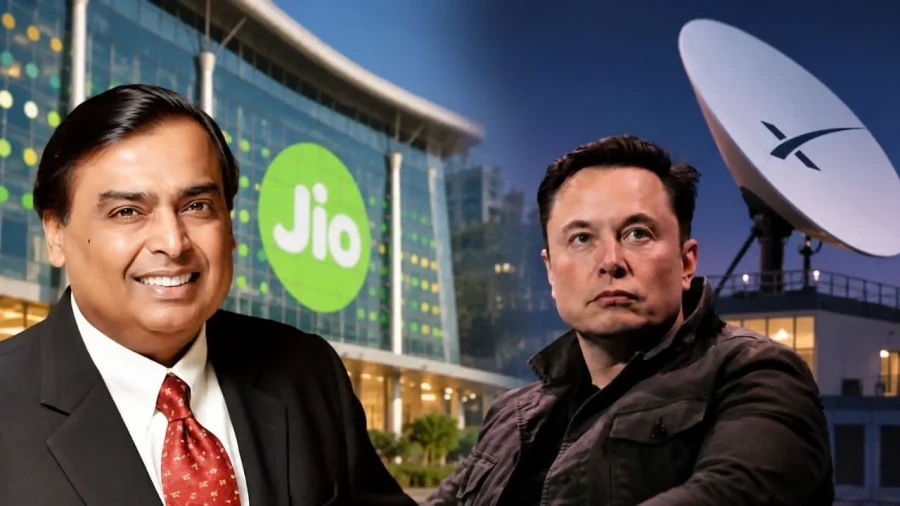
A major and fascinating new twist has emerged in the ongoing debate surrounding the rollout of satellite internet in India. Following a strong and forceful rebuttal from Reliance Industries to allegations made by Elon Musk, Starlink has noticeably softened its tone. Immediately after Reliance made its clear and firm position known, a fresh statement was issued by Starlink, wherein the company stated its full preparedness to launch its services and connect India to high-speed internet. This latest statement from Starlink comes at a critical juncture, arriving shortly after Reliance Industries strongly rejected allegations by Elon Musk claiming that certain domestic business groups were attempting to block or obstruct Starlink's entry into the Indian market.
What Starlink Said After Reliance's Response
Following the clarification and strong response from Reliance Industries, Starlink shared an official post on the social media platform X. Through this post, softening its previous stance, the company stated that it's fully prepared to connect India to high-speed internet. Starlink mentioned in its statement that it has worked closely with regulators, industry stakeholders, and operators in India for over five years. The company further claimed that it has established a dedicated network of systems, gateways, and other infrastructure directly within India, designed to serve Indian traffic in a secure and reliable manner, all while complying with necessary government approvals, while starlink reiterated that with these preparations in place, it stands ready to connect India to high-speed internet.
Reliance Industries Refutes All Allegations Made By Elon Musk
This latest and softened statement from Starlink comes at a time when Reliance Industries firmly refuted all allegations leveled by Elon Musk claiming that Indian business groups were creating obstacles for Starlink's market entry. In its official statement, Reliance clarified that it fully welcomes fair competition in the market, but emphasized that every company, including Jio, must strictly comply with the country's laws, rules, and policies. Reliance specifically highlighted that despite being a leading telecommunications provider, Jio's own satellite service is also currently awaiting the necessary regulatory approvals, demonstrating that the process is applied uniformly to all players.
Jio Also Awaiting Approvals For Satellite Service
Expanding on its position, Reliance Industries stated that in light of recent commentary regarding Reliance and the Indian market, it wishes to set the facts completely straight. Reliance noted that, like every Indian enterprise, Reliance has grown within an India that welcomes both domestic and international investment and innovation aimed at improving people's lives. The company stressed that this openness is firmly rooted in the rule of law. As reiterated by the Government of India, the administration follows a uniform and consistent process for all applicants, regardless of whether they're domestic entities or foreign enterprises. Reliance reaffirmed that Jio's own satellite service is similarly awaiting the requisite regulatory clearances.
Government Has Already Dismissed Musk's Claims
Not only Reliance, but the Government of India has also previously dismissed the claims made by Musk regarding entry barriers. Union Minister for Communications Jyotiraditya Scindia clarified the government's stance by stating that satellite spectrum will be allocated only after the government finalizes the revenue-sharing framework and companies fulfill all necessary security requirements. This firm stance by the government made it crystal clear that national security and legal procedures won't be compromised, and all corporations must operate strictly within the framework of established regulations.
Starlink, Reliance Jio, And Eutelsat OneWeb Already Licensed
Under the current regulatory landscape, Starlink, Reliance Jio, and Eutelsat OneWeb have already secured the necessary licenses to provide satellite communication services within India. Industry experts believe that the commencement of these advanced services will successfully bridge the digital divide, extending high-speed internet access to remote and rural regions where the deployment of traditional terrestrial broadband infrastructure remains exceedingly difficult or practically unfeasible. Also, e-commerce and technology giant Amazon's Project Kuiper is actively pursuing licenses to roll out its operations in India. The entry of these major global and domestic players is expected to foster intense competition in the Indian satellite internet sector, ultimately benefiting ordinary consumers across the nation.