
- India,
- 16-Oct-2026 01:39 PM IST



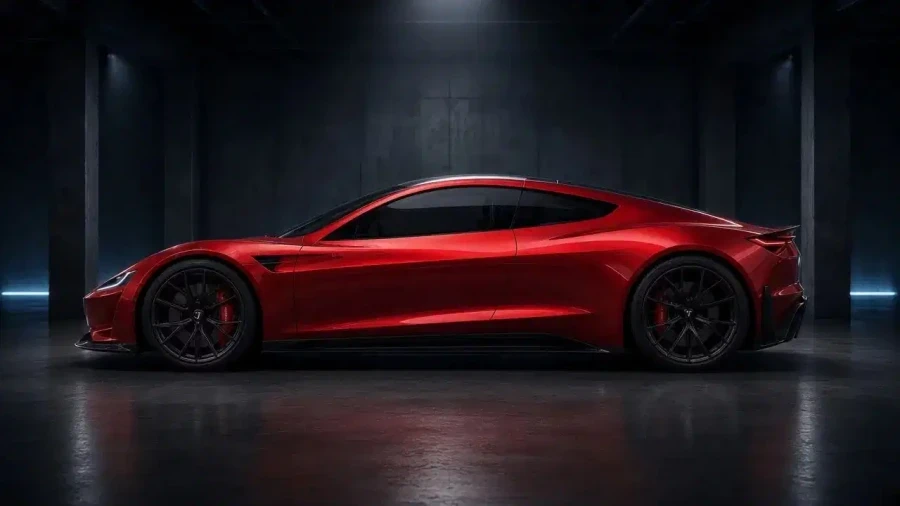
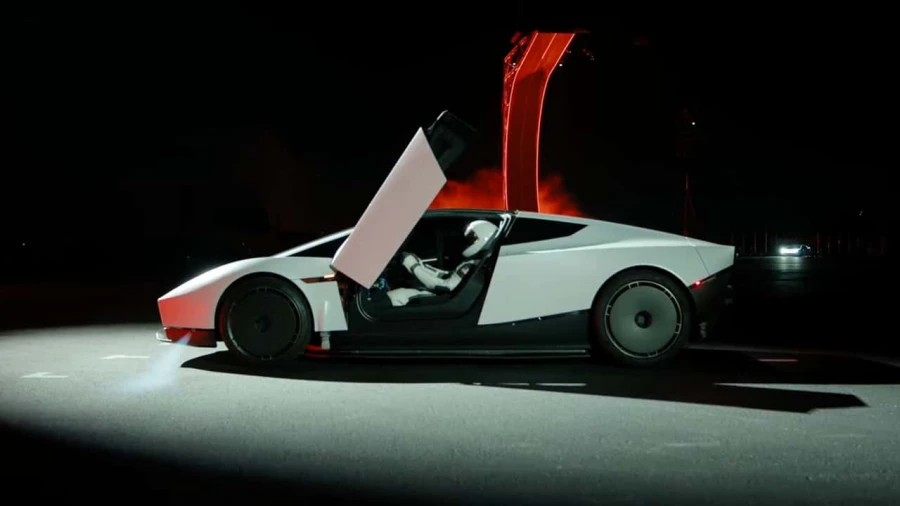
Elon Musk's Tesla has officially unveiled the second-generation Roadster sports car, a vehicle that promises to redefine the boundaries between automotive engineering and aerospace technology. The grand reveal took place on the night of October 15 at the SpaceX Rocket Test Center in Texas. The event was a spectacle of innovation, featuring a dramatic atmosphere filled with smoke, laser lights, and breathtaking stunts that showcased the car's unprecedented capabilities. This new iteration of the Roadster isn't just designed for the road; it's equipped to take to the skies, albeit briefly, using advanced rocket thruster technology.
The Revolutionary Flying Capability
The most striking feature of the new Tesla Roadster is its integration of rocket-style thrusters. These thrusters enable the car to lift off the ground, hover for a period, and even leap over other vehicles, while during the demonstration, the car was seen performing stunts that included rotating in mid-air and executing a controlled landing reminiscent of a helicopter. While these features have captivated the audience, they also raise significant questions regarding safety regulations and the feasibility of using such technology on public roads. The ability to maneuver in three dimensions marks a significant departure from traditional sports car design.
A Long Wait Since 2017
The journey of the second-generation Roadster has been a long one, spanning nearly 9 years since its initial concept. Tesla first showcased the prototype of this car in 2017, with an original delivery target of 2020. However, the project faced numerous delays over the years. In 2024, Elon Musk shared on the social media platform X that the car had been completely redesigned to incorporate even more advanced features. Now, the company has announced that production is slated to begin in 2028. This follows the legacy of the original Tesla Roadster, which was the company's first electric vehicle, sold between 2008 and 2012 and built on a Lotus Elise chassis.
SpaceX Collaboration and Technical Specifications
The flying capability of the new Roadster is made possible through a close collaboration with SpaceX. The car is equipped with specialized thrusters located at the bottom and rear of the vehicle. These thrusters work with highly pressurized air to lift the car, assist in rotation, and slow it down during descent. Lars Moravy, Tesla's Vice President of Engineering, explained that the vehicle features 10 thrusters and a 600 liter tank designed to hold pressurized air. This system allows the car to hover and rotate, with the tank being capable of being refilled as needed. During the event, the car was demonstrated driving up a high ramp, staying airborne for a short duration, and then landing. It even performed a jump over other Tesla models, including the Cybercab, Cybertruck, Tesla Semi, Model Y, and Model 3. Tesla also claims the car can accelerate from 0 to 60 mph in approximately 1 second.
Variants and Booking Details
Tesla plans to offer the Roadster in three distinct variants to cater to different levels of performance and exclusivity. The first is the Performance model, which is designed for road use and features a two-seat configuration. The second is the Thrust variant, a racing-focused model equipped with multiple rear thrusters. The most extreme version is the Rocket variant, which boasts 10 thrusters and is designed as a single-seater for maximum performance. Booking for the Performance model requires a deposit of 50,000 dollars, while the Thrust model requires 250,000 dollars. The Rocket variant will be available exclusively through company invitation.
Market Outlook and Musk's Vision
Elon Musk emphasized during the event that the version shown is what people will eventually see on the roads. He stated that the car would be capable of lifting itself using its own power and performing various aerial maneuvers, while despite the excitement, details regarding the final price and delivery timelines remain somewhat vague. Seth Goldstein, an analyst at Morningstar, estimates that Tesla might sell around 2,000 units of the Roadster annually. This is a niche figure compared to the 16 lakh vehicles the company sold in 2025, highlighting the Roadster's position as a halo product rather than a mass-market vehicle.