
- India,
- 17-Oct-2026 01:15 PM IST



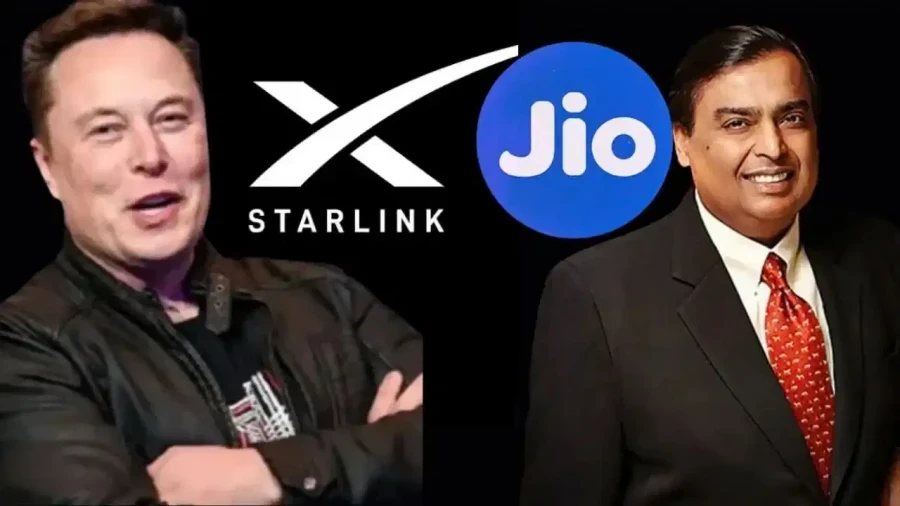
High-stakes preparations for high-speed internet in India have triggered a massive tussle among tech giants, with Elon Musk's Starlink issuing a fresh response following statements from Reliance Industries. Musk's satellite internet company has firmly asserted that it's completely prepared to deliver high-speed internet services across India, while the fierce battle over satellite communication, commonly known as satcom, has escalated Importantly between Reliance and Starlink following a major statement from the Indian conglomerate regarding the sector.
Elon Musk had earlier criticized India's satcom ecosystem through his official social media account on X, raising serious questions about the country's competitive and regulatory environment, while in a sharp counter-statement posted on X, Starlink claimed that it has spent over five years working closely with regulators, industries, and operators in India. The company stated that it has built a dedicated network of systems, gateways, and other vital infrastructure within the country to serve Indian traffic securely and reliably, all backed by the necessary government approvals. Musk's enterprise reiterated its absolute readiness to connect India with high-speed internet.
Starlink's post on X explicitly tagged the official statement issued on Friday by Reliance Industries, headed by billionaire Mukesh Ambani. Reliance stated that it warmly welcomes competition in the satellite communication sector, which includes global players like Starlink, while simultaneously emphasizing that every corporate entity must strictly adhere to Indian laws and regulations.
This public war of words comes amid an ongoing intense debate surrounding competition in India's booming satellite communication market. ” The company asserted in its official statement that Reliance has never feared true competition, viewing it as the ultimate test of which company delivers the best service to consumers.
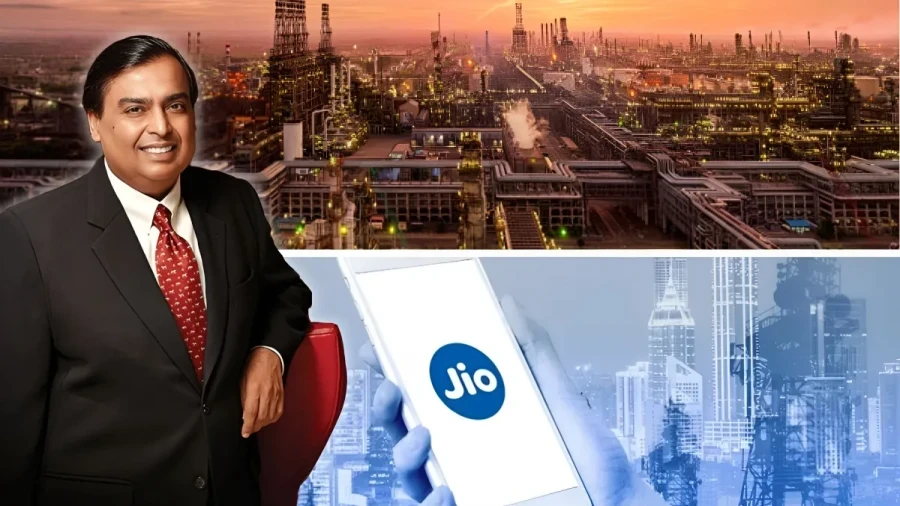
Backing its firm stance, Reliance highlighted the remarkable track record of Jio. The company pointed out that when Jio entered India's already crowded telecom market as a newcomer in 2016, it didn't have a single subscriber. However, within a span of just 10 years, it has earned the profound trust of over 530 million or 53 crore subscribers, providing Indians with world-class digital infrastructure and the most affordable data on the planet.
The Reliance statement explicitly reiterated that the company welcomes competition in satellite communication, including Starlink, while every enterprise, including Jio, must serve the people of India while strictly abiding by the laws and policies of the nation. The statement further noted that India's openness toward domestic and international investment and innovation is fundamentally anchored in the rule of law.
Highlighting its roots, Reliance noted that it has grown in a progressive India that welcomes all investments and innovations aimed at improving human lives, all firmly grounded in the rule of law, while echoing the government's stance, Reliance noted that authorities follow a uniform process for every applicant, whether domestic or foreign. The company also added that Jio's own satellite services are currently awaiting formal commercial approvals.
Amid the growing controversy surrounding recent claims made by Starlink and Musk, authoritative government sources have made it crystal clear that any entity operating in India must comply with the nation's legal framework. The central government's stance has remained consistent and clear from the very beginning. Government sources stated earlier this week that the government's policy is straightforward: if you don't comply with Indian laws, you can't conduct business here, making adherence to local laws mandatory for commercial operations.
Airtel And OneWeb Lead The Race
Adding another dimension to the ongoing debate, Bharti Airtel Chairman Sunil Mittal made a significant statement during the recent Bloomberg New Economy Forum 2026. He asserted that his venture, Eutelsat OneWeb, is considerably ahead of Elon Musk's Starlink in the queue to launch commercial satellite services in India. Mittal's remarks injected a fresh twist into the public dispute over regulatory clearances and market competition in the country's satellite internet space.
Mittal stated candidly that he believes his company is far ahead in the queue, noting that he applied five years ago. He added that while OneWeb doesn't have final permits yet, securing approval even a few days ahead of competitors would be welcome. Mittal revealed that OneWeb's ground infrastructure has been fully ready for three years and its satellites have been positioned over India for five years, awaiting final commercial clearance.
Statements From Communications Minister Jyotiraditya Scindia
Union Communications Minister Jyotiraditya Scindia provided official clarity on the matter, noting that three major entities—Elon Musk's Starlink, Reliance's Jio Satcom, and Bharti-backed Eutelsat OneWeb—have already secured satellite communication licenses, while he added that Amazon's Project Kuiper has also expressed keen interest but must strictly follow the established procedural framework.
Minister Scindia clarified that actual spectrum allocation will proceed only after the government finalizes the revenue-based charging framework and operators fulfill rigorous security conditions. He noted that the Telecom Regulatory Authority of India and the Department of Telecommunications are close to finalizing decisions on satellite spectrum pricing. The crucial distinction in this ongoing debate lies between holding a license and receiving operational approval; merely possessing a license doesn't permit commercial service rollout without spectrum allocation and security compliance.
Reliance Prepares For Massive IPO
This high-profile dispute unfolds at a critical juncture for Reliance Industries, which is gearing up to launch a massive initial public offering for its digital services subsidiary, Jio Platforms, while jio has established a price band ranging from 1,065 rupees to 1,119 rupees per share for 270 million new shares, representing approximately 3 percent of its existing equity capital.
The offering doesn't include any secondary share sales by existing investors. At the upper end of the price band, the share sale is projected to raise approximately 30,213 crore rupees, surpassing the previous record held by Hyundai Motor India's 27,870 crore rupee share sale in October 2024.3 trillion rupees, slightly below its previously stated target of 11 trillion rupees. Bidding for the IPO will run from October 21 to October 23, with anchor investors bidding on October 19, and stock trading expected to commence on October 28.
Reliance's Ambiguous Satellite Plans
Expanding its digital footprint further, Reliance is actively pursuing its ambitious satellite project aimed at establishing a constellation of approximately 1,600 satellites in low-earth orbit. The core objective of this initiative is to deliver strong internet connectivity to 600,000 villages across India.
This venture positions Jio in direct competition with Starlink, which aims to tap into one of the world's largest growing markets by providing satellite broadband to remote and underserved rural communities where conventional network coverage is minimal or nonexistent. Interestingly, reports last year indicated that discussions had taken place between Reliance and SpaceX regarding potential avenues to distribute Starlink services to Indian consumers via Jio's extensive retail network.