
- India,
- 22-Sep-2026 09:02 AM IST



The collective conscience of society has been deeply shaken by two harrowing incidents involving minors in the neighboring states of Bihar and Jharkhand. In Jamui, Bihar, a minor girl and her friend were subjected to brutal harassment by a group of miscreants on a public road. Meanwhile, in Koderma, Jharkhand, a mob took the law into its own hands by tying three minors to an electric pole and parading them through the village in a display of what is being described as Talibani justice. These incidents have not only highlighted the audacity of criminals but also the growing and dangerous trend of mob justice where the crowd assumes the role of judge, jury, and executioner.
The Jamui Incident: A Viral Horror
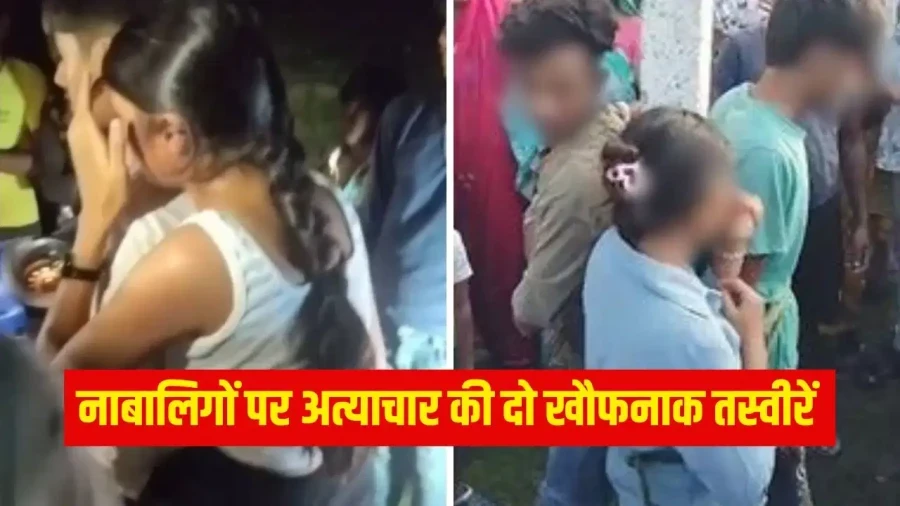
The first case emerged from the Jamui district of Bihar, specifically within the Town police station area. On the evening of 19 September, a minor girl and her male friend, both students at a local coaching center, were intercepted on the road by a group of seven men. The miscreants proceeded to harass and physically abuse the girl, while the gravity of the situation came to light on 21 September when a video of the incident went viral on social media, causing widespread public outrage. In response, the Jamui police acted swiftly, registering an FIR under sections 74 and 76(3)(5) of the Bharatiya Nyaya Sanhita (BNS), along with sections 8 and 12 of the Protection of Children from Sexual Offences (POCSO) Act.
Under the direct orders of Jamui SP Vishwajeet Dayal, a Special Investigation Team (SIT) was constituted to probe the matter, while this SIT is being led by SDPO Deepti Monali. Out of the 7 identified accused individuals, the police have successfully arrested 3 so far. The incident has drawn attention from high-level officials and politicians. Apsara, the Chairperson of the Bihar State Commission for Women, has formally requested a detailed report from the Jamui District Magistrate. Also, Rahul Gandhi, the Leader of the Opposition in the Lok Sabha, along with several other political leaders, has expressed deep concern over the incident and demanded the strictest possible action against the perpetrators.
The Koderma Case: Mob Justice and Public Shaming
In a parallel display of lawlessness, the Lochanpur village in the Koderma district of Jharkhand witnessed a shameful incident where a mob bypassed the legal system entirely. On a Sunday night, two minor boys had gone to the house of a minor girl to meet her. When the villagers discovered this on Monday morning, an angry crowd gathered and took the three minors into custody. Instead of informing the authorities, the villagers held a self-styled Talibani court, while the three children were paraded through the village and subsequently tied to an electric pole with ropes, where they were forced to apologize publicly. The ordeal ended only when the police arrived at the scene, rescued the minors from the mob, and initiated an investigation into the illegal detention and harassment by the villagers.
Five Critical Questions for Law and Society
These two incidents have raised five fundamental questions regarding the state of law and the moral fabric of society. The first question asks whether any citizen or mob has the right to take the law into their own hands. According to the Indian Constitution and the Bharatiya Nyaya Sanhita, kidnapping, restraining, or physically assaulting an individual is a serious crime, while the power to determine guilt and deliver punishment rests solely with the courts of law. The second question concerns the protection of minor rights. Under the Juvenile Justice (JJ) Act and the POCSO Act, it's a grave offense to disclose the identity of minors or subject them to mental or physical torture. The actions of the villagers in Koderma represent a direct violation of these fundamental rights.
The third question challenges the moral or legal authority of a mob to question a girl or a couple. Indian law guarantees every citizen the right to privacy and personal liberty. Even if a crime is suspected, the only legal recourse is to inform the police, not to engage in mob justice. The fourth question addresses the growing trend of bystanders becoming silent spectators or video recorders. Legal and moral duties dictate that citizens should immediately contact the police helpline 112 or the child helpline 1098. The law provides full protection to those who assist victims, ensuring they aren't entangled in legal complications. Finally, the fifth question focuses on the support systems for victims, while under the POCSO and JJ Acts, the District Child Protection Unit (DCPU) and the Child Welfare Committee (CWC) are mandated to provide free legal aid, professional counseling, and rehabilitation. It's the responsibility of society and families to report such incidents to these authorities without hesitation to ensure justice and recovery for the victims.