
- India,
- 14-Dec-2025 09:12 AM IST
- (Updated 14-Dec-2025 09:21 AM IST)


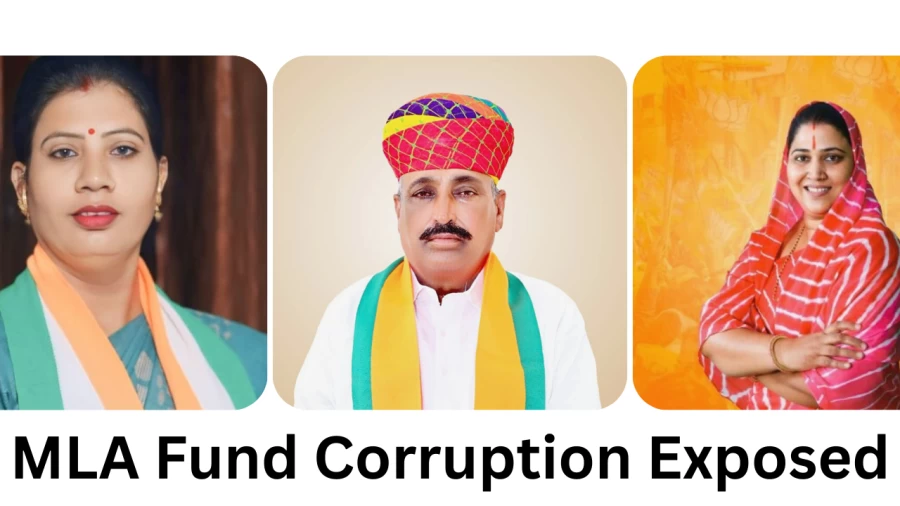
A major exposé by a reporter has brought to light widespread corruption in the allocation and execution of MLA funds, while the investigation involved a reporter posing as a representative of a dummy firm, contacting MLAs to uncover the illicit demand for commissions for development projects. This sting operation focused on MLAs from Khinvsar, Hindaun, and Bayana, revealing significant irregularities in works funded by the MLA Local Area Development Scheme. The Bhaskar reporter created a dummy firm to approach elected representatives, aiming to ascertain the true cost of development works, particularly those related to schools, and their actual necessity. The investigation revealed that 'honorable' MLAs were demanding up to 40% commission for approving these projects. The MLA fund, which provides an annual sum of ₹5 crore for local development,. Appears to be a significant source of corruption, as evidenced by this groundbreaking exposé.
Allegations Against BJP MLA Rewantram Danga from Khinvsar
Rewantram Danga, a 60-year-old BJP MLA from Khinvsar, was allegedly caught demanding a 40% commission for facilitating development work, while he reportedly told the reporter that he would provide work worth ₹50 lakh and suggested giving 'a little bit' to the officers involved. Danga allegedly accepted an advance of ₹10 lakh and issued a letter for work valued at ₹50 lakh, while he also asked for a ₹50,000 token to commence the work. His son, Ashok Danga, was also implicated, reportedly asking for a 50% commission and advising the reporter to. Hold off on submitting the letter, hinting that his father might become a minister, which could complicate matters.
Role of Congress MLA Anita Jatav from Hindaun
Anita Jatav, a 41-year-old Congress MLA from Hindaun, is alleged to have taken ₹50,000 and subsequently issued a letter for work worth ₹80 lakh. Jatav reportedly told the reporter that she had previously given work but officers often created obstacles, advising the reporter to 'take care of them'. She also mentioned budget constraints and a deal involving a plot in Jaipur Awas. A person named Pawan reportedly mediated the deal with Anita Jatav, where. ₹50,000 was taken as a token for work valued at ₹80 lakh.
Deal with Independent MLA Ritu Banawat and Husband Pawan from Bayana
Independent MLA Ritu Banawat, 41, from Bayana, and her husband Pawan were involved in a deal for ₹40 lakh, while ritu stated that there was 'no budget' for the requested work, but her husband Pawan took charge of the negotiations. Pawan initially mentioned a commission of 30-35% but later insisted on. 40% for the specific project, accepting a token amount of ₹50,000. Pawan assured the reporter that the 'work will be done' and stated he would discuss it with 'Madam' (Ritu). This clearly indicates that commission-taking is a prevalent practice in MLA fund-related projects.
The Question of Officer Commissions
The sting operation also raised critical questions about the involvement of government officials in these corrupt practices. BJP MLA Rewantram Danga's casual remark about giving 'a little bit' to the officers suggests a systemic issue where commissions are distributed across various levels, while this implies that the corruption isn't limited to the elected representatives but extends to the bureaucratic machinery responsible for approving and executing development projects, highlighting a deeply entrenched problem in the system.
Implications and Public Trust
This groundbreaking exposé by Bhaskar has significant implications for public trust. In elected representatives and the integrity of the MLA fund scheme. The revelations highlight a deep-rooted problem of corruption where funds meant for public welfare are siphoned off through illicit commissions. There is an urgent need for greater transparency, stricter oversight, and strong accountability mechanisms to prevent such misuse of public money and restore faith in the democratic process. The public awaits swift action against those involved to ensure. That public funds are utilized for their intended purpose of development.
