
- India,
- 28-Nov-2026 08:50 AM IST



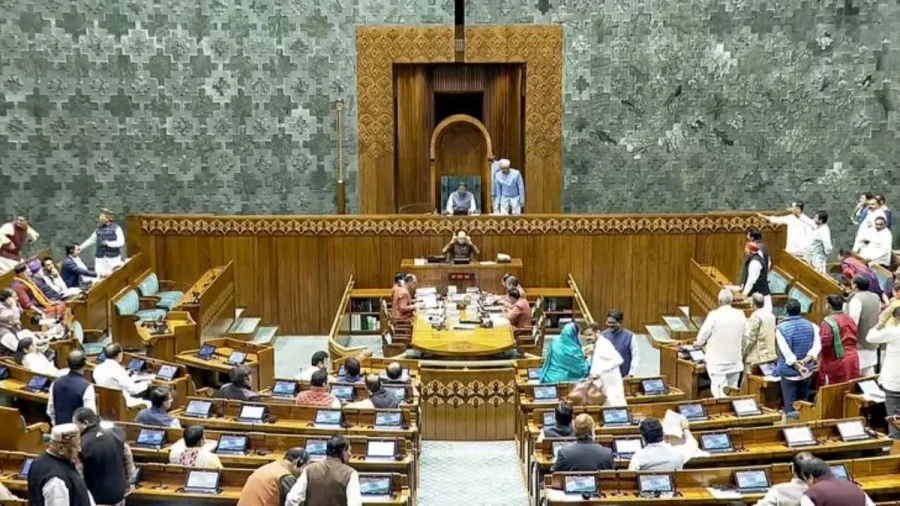
The central government has accelerated preparations for major changes to the country's electoral map. Following approval from the Union Cabinet, the revised delimitation bill has been distributed among members of parliament. It's now expected to be introduced in the Lok Sabha on November thirty. Under the new proposal, Lok Sabha and assembly seats across all states may be increased by fifty percent compared to their current numbers. The maximum number of members in the Lok Sabha is proposed to be capped at eight hundred fifty. The government claims that the new formula won't reduce the existing proportional share of any state.
Lok Sabha seats could rise from five hundred forty-three to eight hundred fifteen
Currently, the Lok Sabha has five hundred forty-three seats, while according to the new proposal, seats will be increased at a uniform rate of fifty percent across all states. Based on this, Lok Sabha seats could reach around eight hundred fifteen, meaning an increase of two hundred seventy-two seats over the current number. However, the maximum strength of the house is proposed to be kept at eight hundred fifty. The government is preparing to maintain the current ratio of seats among states for the next twenty-five years.
Uttar Pradesh assembly seats could reach six hundred five
The delimitation bill also proposes to increase state assembly seats by fifty percent. The constitutional limit for the maximum number of assembly seats is proposed to be raised from five hundred to six hundred fifty. Following this change, assembly seats in Uttar Pradesh could increase from four hundred three to six hundred five. Similarly, other states will see proportional increases in their existing seats.
State-wise breakdown of potential assembly seat increases
Based on the new proposal, the tentative figures for state assembly seats are as follows:
- Uttar Pradesh: Current seats four hundred three, potential new seats six hundred five, increased seats two hundred two
- West Bengal: Current seats two hundred ninety-four, potential new seats four hundred forty-one, increased seats one hundred forty-seven
- Maharashtra: Current seats two hundred eighty-eight, potential new seats four hundred thirty-two, increased seats one hundred forty-four
- Bihar: Current seats two hundred forty-three, potential new seats three hundred sixty-five, increased seats one hundred twenty-two
- Tamil Nadu: Current seats two hundred thirty-four, potential new seats three hundred fifty-one, increased seats one hundred seventeen
- Madhya Pradesh: Current seats two hundred thirty, potential new seats three hundred forty-five, increased seats one hundred fifteen
- Karnataka: Current seats two hundred twenty-four, potential new seats three hundred thirty-six, increased seats one hundred twelve
- Rajasthan: Current seats two hundred, potential new seats three hundred, increased seats one hundred
- Gujarat: Current seats one hundred eighty-two, potential new seats two hundred seventy-three, increased seats ninety-one
- Andhra Pradesh: Current seats one hundred seventy-five, potential new seats two hundred sixty-three, increased seats eighty-eight
Note that these are tentative figures based on the proposed fifty percent increase. Final seat determinations will follow the delimitation process.
Delimitation to be based on nineteen seventy-one and twenty eleven census
The new bill proposes using the nineteen seventy-one census to determine the number of seats and the twenty eleven census to determine parliamentary constituency boundaries, while during delimitation, constituency boundaries will also be redrawn. The distribution of new seats is proposed to remain in effect until twenty fifty-one, thus planning to maintain the seat ratio among states for the next twenty-five years.
What changed from the April bill
The government had previously introduced a delimitation-related bill on April sixteen, but it couldn't be passed. Now, the government has brought a revised proposal. The biggest change in this is regarding the method of increasing seats. Earlier, the total membership of the Lok Sabha was proposed to be eight hundred fifty, whereas now a fifty percent increase over current seats in every state is proposed, while earlier, seat distribution was planned based on population, but now seats are to be increased in equal proportion across all states. Earlier, southern states feared a reduction in their share, but now the proposal maintains the existing proportional representation of states until twenty fifty-one. The objective of the government's new formula is to ensure that no state's representation decreases compared to another despite an increase in Lok Sabha seats.
Delimitation bill also linked to women's reservation
The new delimitation bill is also linked to the Nari Shakti Vandan Adhiniyam, or women's reservation law. The government plans to implement thirty-three percent reservation for women in the twenty twenty-nine Lok Sabha elections after the delimitation process and related amendments are completed. The number of reserved seats for women among the proposed seats could be around two hundred seventy-two. Provisions to reserve the increased seats for women are also under discussion.
Provisions regarding PoK in the bill
The proposal reportedly includes a provision regarding Pakistan-occupied Kashmir, or PoK. According to this, if PoK joins India, the Election Commission will function like a delimitation commission, determining the map of electoral constituencies and seats there.
Government confident of two-thirds majority
The government is confident that this time the Nari Shakti Vandan amendment bill and the delimitation bill will pass parliament. The government claims to have secured the necessary two-thirds majority support. Meanwhile, the opposition has termed this an exercise to redistribute Lok Sabha seats for political gain rather than an attempt to empower women through reservation.
Why southern states are getting relief
The new proposal is expected to alleviate concerns among South Indian states. Had Lok Sabha seats been increased solely based on population, high-population states like Uttar Pradesh, Bihar, and West Bengal would have gained more seats, potentially reducing the overall share of southern states. However, the proposal to increase seats by fifty percent across all states preserves the current representation ratio for southern states, safeguarding their voters' political share.
What Chandrababu Naidu said
Andhra Pradesh Chief Minister Chandrababu Naidu expressed satisfaction with the new proposal, stating that the government is working towards fifty percent reservation and a fifty percent seat increase. He noted that southern states previously had concerns, facing major challenges looking at census data from nineteen seventy-one, twenty eleven, or twenty twenty-six, especially as these states worked hard on family planning. Naidu said he has personally witnessed this shift, which began two to three decades ago.
Opposition alleges women's reservation is just an excuse
Opposition parties claim that the government's real intention is neither providing reservation to women nor completing the constitutional delimitation process, but rather dividing Lok Sabha seats for political advantage. Opposition leaders, including those from Congress, Samajwadi Party, DMK, RJD, NCP, and Shiv Sena Uddhav faction, held a meeting to question the government's intentions.
Is the government's path easier after the revised bill
Earlier, there were concerns about resentment from southern states and opposition protests over the delimitation bill. However, the proposal for a uniform percentage seat increase across all states has raised expectations of securing support. The government believes the amendments have addressed states' concerns. The bill will now face discussion and voting after being presented in parliament, with November thirty considered a crucial date for the government.