

- India,
- 01-Feb-2026 08:57 AM IST


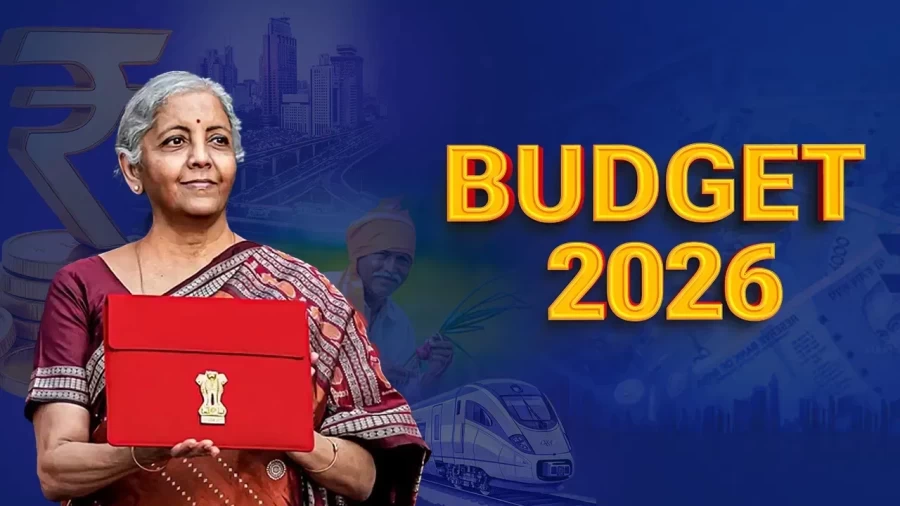
Finance Minister Nirmala Sitharaman is scheduled to present the Union Budget for the fiscal year 2026-27 today at 11:00 AM in the Lok Sabha. This event marks a significant milestone in Indian parliamentary history as Sitharaman becomes the first Finance Minister to present nine consecutive budgets, while prior to the speech, the Finance Minister will visit Rashtrapati Bhavan to brief President Droupadi Murmu, followed by a formal approval from the Union Cabinet. The nation, including the salaried class, farmers, and industrial stakeholders, awaits the fiscal roadmap with high expectations.
Historic Milestone and Legislative Process
The presentation of the 9th consecutive budget places Nirmala Sitharaman in an elite category of India's longest-serving Finance Ministers. According to legislative protocols, the budget speech is expected to last between 90 and 120 minutes, detailing the government's projected revenue and expenditure for the upcoming fiscal year. Sources indicate that the primary objective remains maintaining economic growth momentum while adhering to fiscal consolidation targets. Security has been tightened around the Parliament, and in line with the Digital India initiative, the budget documents will be accessible via the official mobile application immediately after the speech.
Railway Expansion and Infrastructure Development
The railway sector is anticipated to receive significant focus in this budget, while according to official sources, the government may propose the introduction of approximately 50 new trains, including Vande Bharat, Vande Bharat Sleeper, and Amrit Bharat variants. 0' safety system and track modernization is expected. 0' campaign and a roadmap for the next phase of the 'UDAN' scheme for regional air connectivity are likely to be unveiled.
Technological Advancement and Defense Modernization
To accelerate the 'Atmanirbhar Bharat' mission, the government has planned substantial investments in the defense and technology sectors. An increase in budgetary allocation is expected to encourage indigenous manufacturing within the defense industry. On the technological front, a dedicated fund for Artificial Intelligence (AI) and Deep Tech startups may be announced. To strengthen the manufacturing base, the government is considering a reduction in import duties on mobile and electronic components and expanding the scope of Production Linked Incentive (PLI) schemes. Infrastructure development for large-scale data centers also remains a priority.
Financial Reforms and Middle-Class Provisions
According to financial analysts, proposals to make the National Pension Scheme (NPS) more attractive and provide tax benefits for investments in Systematic Withdrawal Plans (SWP) are under discussion. While major changes to income tax slabs are considered less likely, revisions to the Long-Term Capital Gains (LTCG) and Securities Transaction Tax (STT) structures may be introduced to stabilize foreign institutional investment. Also, a review of import duties on precious metals such as gold and silver is expected to be part of the fiscal announcements.
Expert Analysis and Conclusion
Economic analysts suggest that Budget 2026 will be a pivotal step toward the 'Viksit Bharat 2047' vision. Experts believe the government's focus will remain on balancing rural economic strengthening with urban infrastructure modernization. Policies aimed at job creation in the manufacturing sector and support for the startup ecosystem are expected to be the highlights of this budget. Overall, the Union Budget 2026-27 is anticipated to provide the necessary policy direction to sustain India's GDP growth rate above the 7% mark.
