

- India,
- 08-Mar-2026 02:34 PM IST


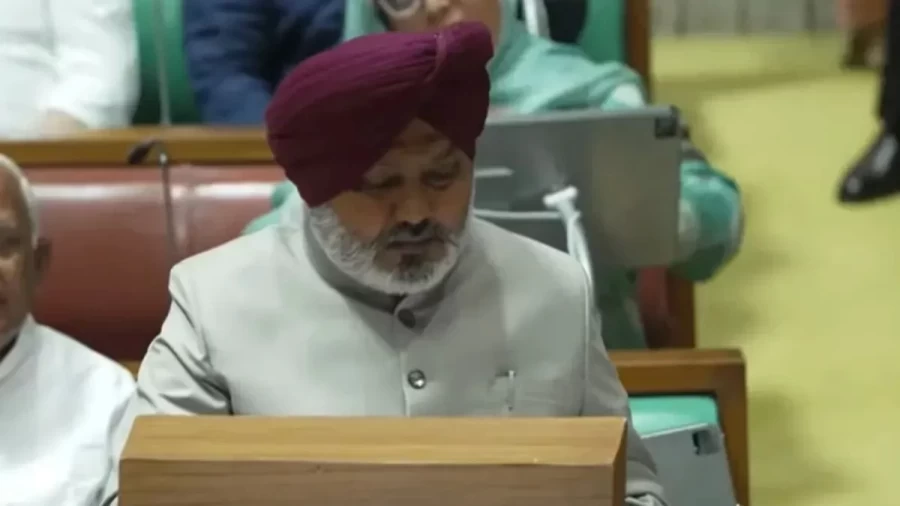
The Punjab government, led by Bhagwant Mann, presented its annual budget for the financial year 2026-27 in the state assembly on Sunday. Finance Minister Harpal Singh Cheema tabled a total budget outlay of ₹2,60,437 crore. During his speech, the Finance Minister dedicated the budget to 'mothers and daughters' and described it as a document aimed at fulfilling the guarantees made to the people of the state, while according to official reports, the budget prioritizes healthcare, education, and agriculture, with significant financial allocations for infrastructure development and social welfare schemes.
Education Sector and Sikhiya Kranti 2.0 Initiatives
According to the Finance Minister, a budget of ₹19,279 crore has been allocated for school education, marking a 7% increase over the previous year. 0' scheme, under which ₹3,500 crore will be spent over the next six years to overhaul the education system. In the higher education sector, there is a proposal to establish a world-class university named after Sri Guru Teg Bahadur Ji. Also, to boost vocational training, ITI seats have been increased from 35,000 to 52,000. A separate provision of ₹569 crore has been made for technical education, which includes starting ITI training in 11 jails across the state.
Universal Healthcare via Mukhya Mantri Sehat Yojana
The healthcare sector has been allocated a total of ₹6,879 crore. The most significant announcement in this budget is the 'Mukhya Mantri Sehat Yojana,' which provides health insurance coverage of up to ₹10 lakh per family. As per official data, approximately 65 lakh families in Punjab will benefit from this scheme, enabling cashless treatment at over 900 government and private hospitals. The government has earmarked an initial budget of ₹2,000 crore for this specific scheme. The initiative aims to reduce the burden of medical expenses on citizens and ensure access to quality healthcare services across the state.
Expansion of Aam Aadmi Clinics and Medical Infrastructure
To strengthen primary healthcare services, the state is expanding the Aam Aadmi Clinic network, while currently, 881 Aam Aadmi Clinics are operational, with 565 in rural areas and 316 in urban areas. The budget provides ₹351 crore for the construction of 143 new Aam Aadmi Clinics and the upgrading of 308 existing health centers. The government aims to establish a total of 1,432 clinics over the next five years. Also, ₹300 crore is being utilized to purchase medical machinery for the upgrade of 23 district hospitals and 42 sub-divisional hospitals. The recruitment of 400 specialist doctors and 500 nurses is also underway to address human resource needs.
Agricultural Subsidies and Crop Diversification Measures
Given Punjab's status as an agrarian state, the government has allocated ₹15,377 crore for agriculture and allied sectors. This includes a major portion of ₹7,715 crore to continue providing free electricity to farmers. To promote crop diversification, a 33% subsidy on cotton seeds and an assistance of ₹1,500 per acre for farmers adopting the Direct Seeded Rice (DSR) technique have been announced. A subsidy of up to 80% has been provided for crop residue management machinery. Also, a new scheme has been outlined to encourage maize cultivation to reduce the state's reliance on paddy.
Horticulture Development and Skill Training Programs
A comprehensive project worth ₹1,300 crore has been announced for the development of the horticulture sector. 34 lakh hectares by the year 2035. The Finance Minister stated that this investment is essential for strengthening the rural economy and diversifying income sources for farmers. The budget also includes various allocations for environmental conservation and water harvesting, which are considered vital steps toward the sustainable development of the state.
