
- India,
- 24-Jul-2026 12:51 PM IST



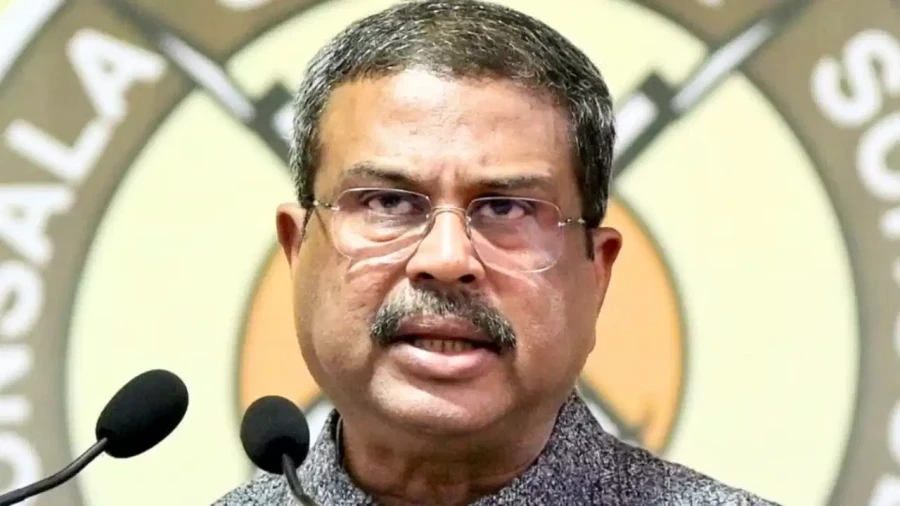
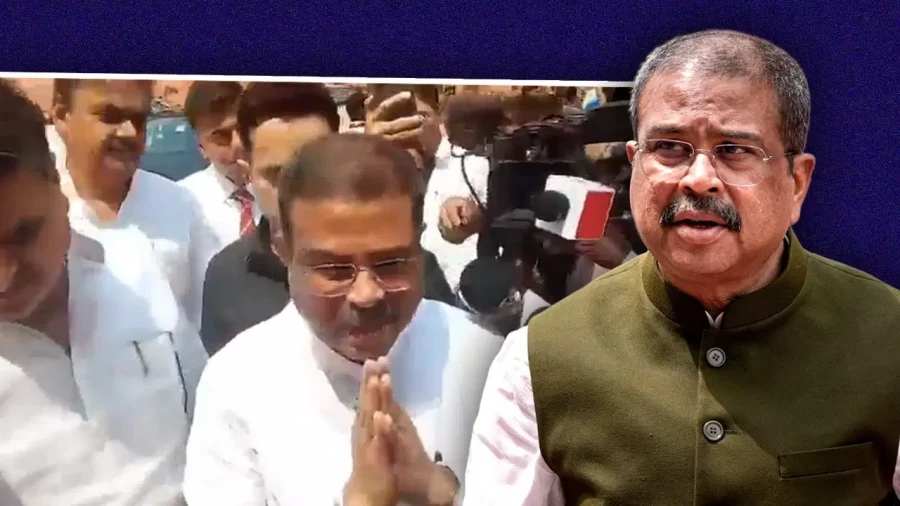
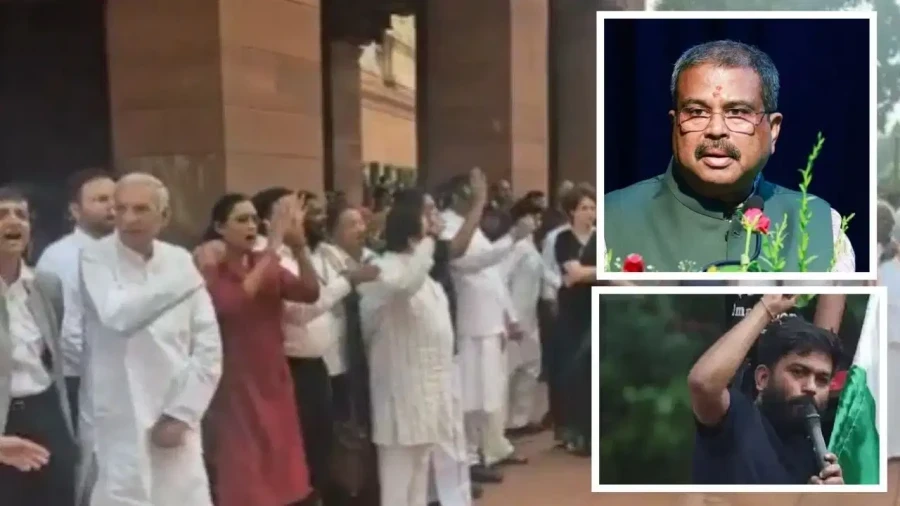
The political atmosphere in the national capital remained charged as opposition parties and the Cockroach Janta Party (CJP) intensified their demand for the immediate resignation of Union Education Minister Dharmendra Pradhan. On Friday, the protest reached a crescendo both inside and outside the Parliament, with leaders from various political outfits joining forces to corner the government over recent controversies. The agitation, which has been brewing for several days, saw a significant escalation as members of the opposition staged a massive demonstration within the Parliament complex, while the Cockroach Janta Party continued its sit-in at the historic Jantar Mantar.
Protests at Jantar Mantar and CJP's Stance
At Jantar Mantar, the Cockroach Janta Party (CJP) maintained its firm stance against the Education Minister. Abhijit Dipke, the founder and president of the Cockroach Janta Party, addressed the media and the gathered supporters, making it clear that the protest wouldn't conclude until Dharmendra Pradhan stepped down from his ministerial position. Dipke emphasized that the accountability of the education department is paramount and the current leadership must take responsibility for the grievances of the student community.
During his address, Abhijit Dipke also expressed a sense of relief regarding the health of climate activist Sonam Wangchuk. He noted that Wangchuk had ended his hunger strike, which had lasted for more than 26 days. Dipke remarked that Wangchuk's life is extremely precious to the nation and his decision to end the fast was welcomed by the protesters, while regarding the scheduled meeting with Union Ministers, Dipke clarified that the discussion must take place at a neutral venue. He reiterated the party's core demand, stating that nothing less than the resignation of Dharmendra Pradhan would be acceptable to them.
Opposition Unity in Parliament
Inside the Parliament complex, the scene was equally intense. Leaders from the Congress party and other opposition factions gathered near the Makar Dwar to voice their dissent. Congress President Mallikarjun Kharge led the charge, supported by prominent figures including Congress General Secretary Priyanka Gandhi and Trinamool Congress MP Sagarika Ghosh. The leaders raised slogans such as "We Want Justice," demanding a fair investigation and accountability from the Ministry of Education.
The opposition's protest wasn't limited to slogans. CPI (M) MP John Brittas articulated the specific reasons behind the demand for resignation. He pointed out that while Prime Minister Narendra Modi often speaks about accountability, the government has appointed an individual as the Higher Education Secretary who is allegedly involved in a scandal, while this contradiction, according to Brittas, is the primary reason why the opposition is seeking Dharmendra Pradhan's exit from the cabinet.
Adding a metaphorical perspective to the protest, Samajwadi Party chief Akhilesh Yadav criticized the government's approach to solving problems. He stated that when the disease lies in the roots, treating the fruit won't satisfy anyone. He remarked that every problem in the country has a single root cause that has become stubborn, referring to the BJP, while his comments highlighted the deep-seated frustration within the opposition ranks regarding the government's handling of education-related issues.
Disruption of Parliamentary Proceedings
The ripples of the protest were felt strongly within the chambers of both the Lok Sabha and the Rajya Sabha, while as soon as the Lok Sabha convened on Friday morning, the atmosphere was tense. Speaker Om Birla began the session by paying tribute to the martyrs of the Kargil War, marking the occasion of Kargil Vijay Diwas on 26 July. The House observed a moment of silence to honor the supreme sacrifice made by the armed forces personnel during the 1999 conflict.
However, the solemnity was short-lived. Immediately after the tribute, opposition members began shouting slogans against the government. They raised several issues, including the police action against students protesting in the capital on Monday over the NEET paper leak case. The demand for Dharmendra Pradhan's resignation echoed through the hall, making it impossible for the scheduled Question Hour to proceed.
Speaker Om Birla made several attempts to restore order, appealing to the members to allow the Question Hour to function. He assured the opposition that they would be given an opportunity to raise their concerns after the Question Hour, emphasizing that this period is crucial for holding the government accountable through direct questions. Despite his assurances that discussions could be held under the rules on any subject, the uproar continued unabated. Consequently, the Speaker was forced to adjourn the proceedings of the Lok Sabha within minutes of its commencement, initially until 12 PM. A similar situation unfolded in the Rajya Sabha, where the proceedings were also disrupted and subsequently adjourned due to the persistent demands and slogans from the opposition benches.