
- India,
- 01-Nov-2026 09:16 AM IST



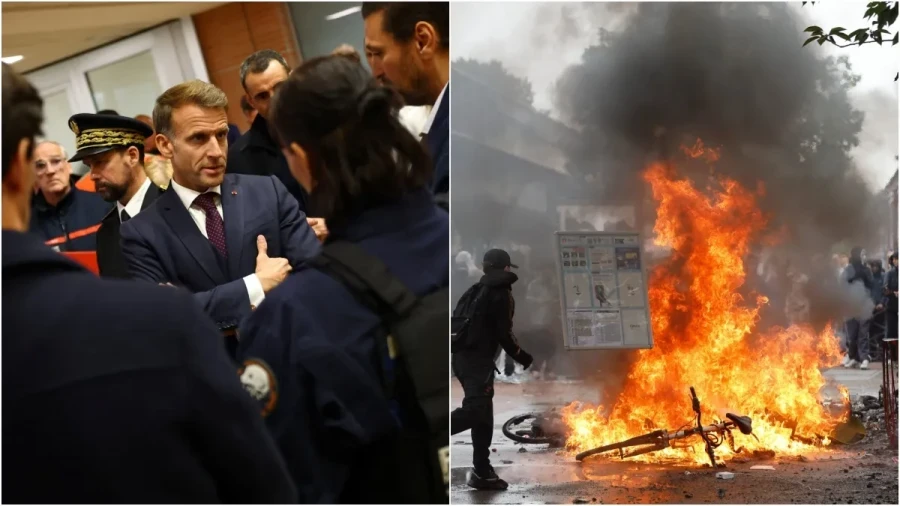
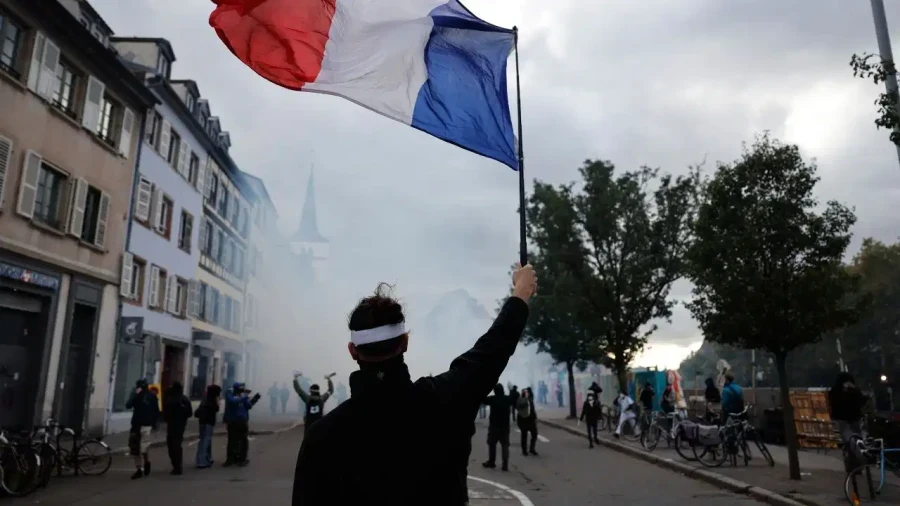
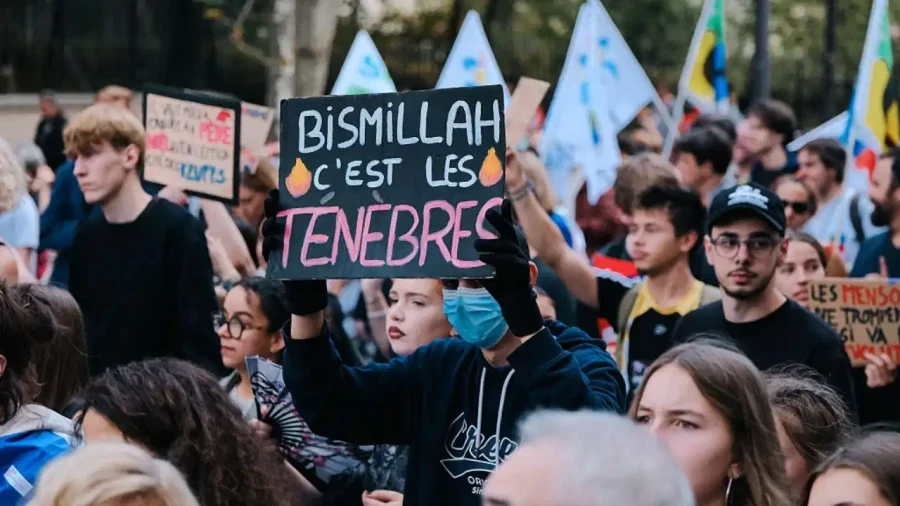
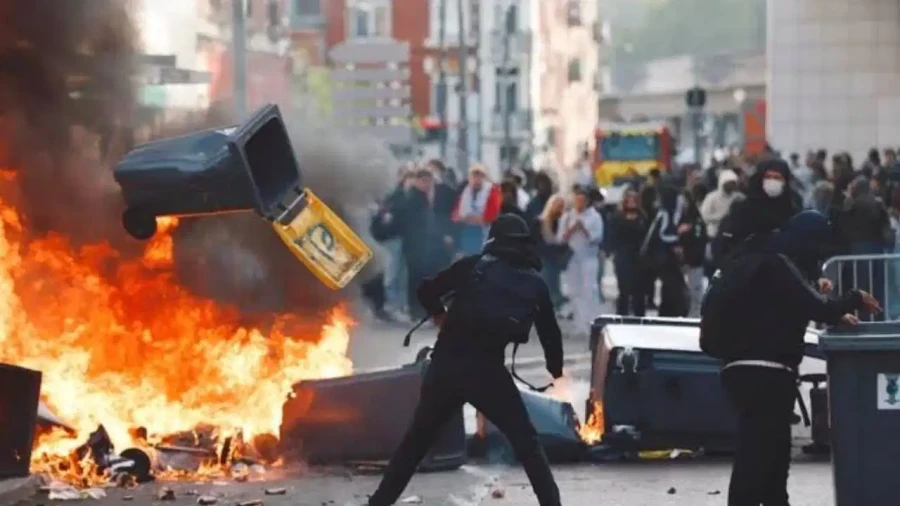
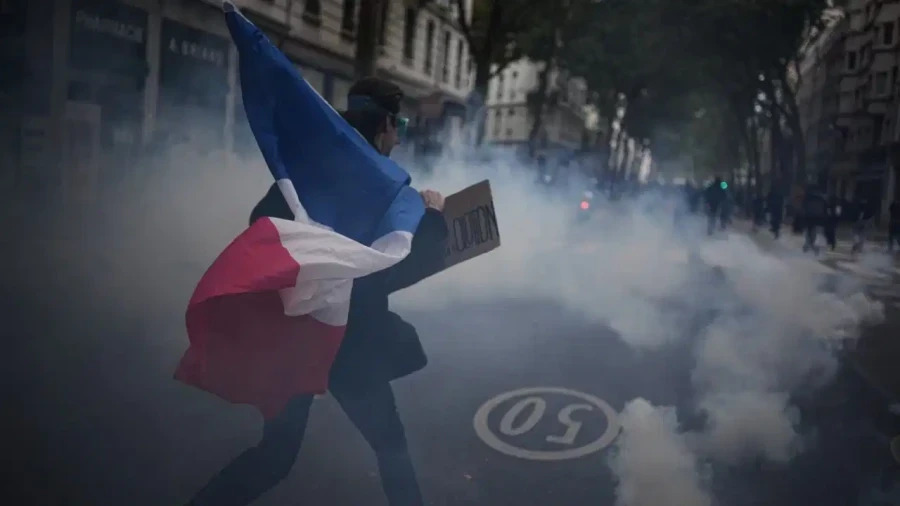
Public outrage against soaring inflation and deteriorating public services in France continues to escalate sharply, leading to massive protests across the country for the third consecutive weekend. 20 lakh people participated in these nationwide demonstrations on Saturday. Out of this total count, nearly 70 thousand people were concentrated in the national capital of Paris alone. 50 lakh participants on October 17. On Saturday, intense clashes erupted between protesters and security forces in Paris as well as several other major cities across the nation, creating a deeply tense atmosphere.
Clashes and Tear Gas Deployed Across Paris and Major Cities
Throughout Saturday, police in Paris made rigorous efforts to disperse and push back aggressive protesters, while meanwhile, in critical urban centers such as Lyon and Toulouse, law enforcement personnel were forced to deploy tear gas shells to regain control over unruly crowds. A high level of tension was also prominently visible in the port city of Marseille. While these demonstrations remained largely peaceful until midday, violence broke out precisely as the scheduled marches were concluding. Amidst this rising hostility, administrative and security authorities expressed grave concerns that certain disruptive elements might exploit the upcoming Halloween celebrations to incite further violence and vandalism, potentially concealing their identities beneath Halloween masks.
Halloween Mask Fears and Heightened Security Measures
Addressing these emerging security threats, French Interior Minister Laurent Nunez stated that explicit appeals are currently being circulated online to incite violence on Halloween night. He issued a firm warning that police will deal with such instigators with utmost strictness. According to the Ministry of Interior, rogue groups attempted to break away from authorized protest routes to engage in vandalism and looting in four major cities including Bordeaux, Toulouse, Lyon, and Marseille, though vigilant police forces successfully intercepted them. During intensive security checks conducted at railway stations and public roads, authorities intercepted several individuals carrying objects that could readily be deployed as weapons, while these widespread protests have drawn a diverse coalition of participants, including students, trade union representatives, and members associated with the prominent Yellow Vest movement, all demanding relief from high inflation, skyrocketing petrol and diesel prices, and essential improvements in public services, alongside demanding a complete structural shift within President Emmanuel Macron's administration.
Previous Violence and Growing Administration Concerns
The severe violence and looting witnessed during the previous mobilization on October 17 had resulted in extensive damage to local retail shops, private businesses, and critical government buildings. During those earlier incidents, security forces had struggled to manage the rapidly deteriorating situation and failed to maintain full control. Consequently, officials now harbor deep anxieties that individuals intent on causing destruction might use Halloween masks to evade identification by law enforcement, while interior Minister Laurent Nunez further clarified that if any imminent threat to public order materializes, the police possess the authority to enforce a total ban on covering one's face in public. In Paris, Saturday's march was spearheaded by prominent leftist figure Jean-Luc Melenchon. Demonstrators had originally planned to march from Place de la Nation to Place de la Bastille, but local administrative authorities denied official permission for this specific route.
Escalating Economic Pressures and Credit Rating Downgrade
Amidst these persistent and aggressive demonstrations, President Emmanuel Macron's government faces mounting pressure to implement deep cuts in public expenditure. Compounding these administrative challenges, major credit rating agency Fitch revised its outlook on France's sovereign debt to negative on Friday, placing additional strain on state finances. Current macroeconomic data indicates that France's total public debt has climbed to approximately 120 percent of the nation's overall economic output, while borrowing costs continue to rise steadily. Newly released statistics on Friday also confirmed a contraction in the French economy during the third quarter, delivering yet another blow to the ruling administration.
Origins of the Movement and Massive Economic Toll
This large-scale socio-political movement originated in late September, initially sparked by students protesting against dilapidated school infrastructure, overcrowded classrooms, and complex university admission systems, while over subsequent weeks, labor unions and the Yellow Vest movement joined the cause in solidarity. Despite government promises to reform the educational framework and provide financial relief on fuel prices, protesters remained entirely unsatisfied. According to data published by the Chamber of Commerce, three weeks of continuous violence and rioting across France have inflicted a devastating financial toll of over 1 billion euros on local merchants and business owners.