

- India,
- 11-Feb-2026 06:37 PM IST


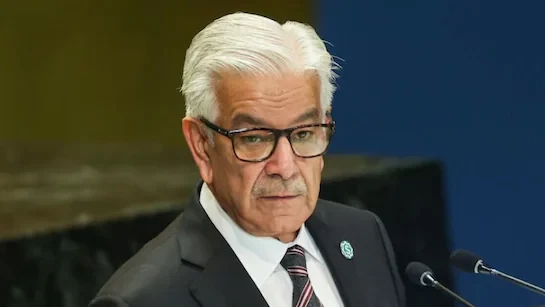
Pakistan's Defense Minister Khawaja Asif delivered a scathing critique of the United States in the National Assembly on Wednesday, characterizing the historical bilateral relationship as purely transactional and exploitative. S. utilized Pakistan for its strategic interests and discarded the nation like 'toilet paper' once its objectives were met. His remarks come at a time when Pakistan is grappling with a severe economic downturn and a resurgence of domestic militancy, leading to a re-evaluation of its past foreign policy choices.
Addressing the Parliament, the Defense Minister asserted that Pakistan's involvement in two major Afghan conflicts wasn't driven by national interest but by the personal ambitions of military rulers. He noted that while these wars were framed under the guise of religion and Islam, they were actually calculated moves by military dictators—General Zia-ul-Haq and General Pervez Musharraf—to secure international legitimacy and support for their regimes. Asif emphasized that the repercussions of these decisions continue to haunt the country's security landscape today.
The Legacy of Military Dictatorships
Khawaja Asif revisited the 1979 Soviet intervention in Afghanistan, noting that the Soviet forces entered at the invitation of the then-Afghan government. S. constructed a specific narrative of a direct invasion to draw Pakistan into the conflict. According to Asif, Zia-ul-Haq aligned with Washington to solidify his grip on power. -led 'War on Terror' after a single phone call placed Pakistan in the crosshairs of a conflict that resulted in immense human and economic loss.
The Minister lamented that Pakistan has failed to learn from its historical missteps. , Russia, and the UK—for short-term gains. Asif pointed out that the influence of these foreign entities on Pakistan's internal affairs is more pronounced today than it was 30-40 years ago. He candidly admitted that the terrorism currently plaguing the nation is a direct byproduct of the 'nursery of militancy' created during those decades of strategic involvement in regional wars.
Impact on Education and Social Fabric
In a significant revelation, Asif claimed that Pakistan's education system was deliberately manipulated to provide ideological justification for the Afghan wars. He stated that curricula were altered to foster a specific mindset among the youth, ensuring a steady stream of support for the conflicts. According to the Minister, these systemic changes remain embedded in the national infrastructure, contributing to ongoing radicalization. He argued that the socio-cultural damage inflicted upon the nation during this period is irreparable and continues to hinder social cohesion.
S. President Bill Clinton to Islamabad in 2000. He highlighted that Clinton spent only a few hours in Pakistan after an extensive multi-day tour of India, which he interpreted as a clear sign of Pakistan's diminished standing. S. exerted significant pressure on Musharraf regarding democracy, nuclear non-proliferation, and counter-terrorism. Asif used this example to illustrate how the relationship lacked mutual respect and was defined by American demands rather than partnership.
Internal Security Crisis and Political Unity
The Defense Minister's remarks were made during a session where the Parliament passed a resolution condemning a recent suicide attack on a Shia mosque in Islamabad. The attack, which occurred on February 6 during prayers, resulted in 31 fatalities and 169 injuries, with the Islamic State (ISIS) claiming responsibility. Asif expressed deep concern over the lack of political unity even on matters of national security. He criticized political leaders who abstained from attending the funerals of the victims due to partisan differences, calling for a unified national identity to combat the threat of terrorism.
Geopolitical Analysis and Future Implications
According to geopolitical analysts, Asif's statements reflect a growing frustration within the Pakistani establishment regarding its traditional alliance with the West. Experts suggest that while the rhetoric is sharp, it underscores the difficult position Pakistan finds itself in—balancing its security needs with a strained relationship with Washington. S. S. seeks to strengthen ties with Pakistan but not at the expense of its relationship with New Delhi.
Defense analysts observe that Pakistan is currently at a crossroads, needing to address the internal blowback of its past 'strategic depth' policies while navigating a complex global environment. The admission of historical errors regarding militancy is seen by some as a necessary step toward policy correction, though the path to stability remains fraught with challenges. S. continues to prioritize its Indo-Pacific strategy, Pakistan's role in American foreign policy appears to be transitioning from a primary strategic partner to a secondary regional actor, a shift that's clearly causing friction in Islamabad.
