

- India,
- 25-Apr-2026 05:39 PM IST


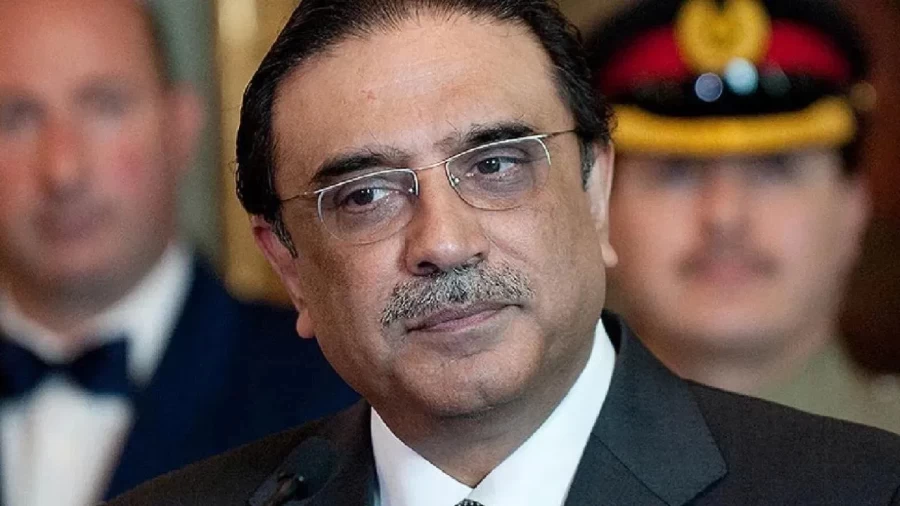
Pakistan President Asif Ali Zardari's visit to China, scheduled from April 25 to May 1, 2026, isn't merely a formal diplomatic event but a significant indicator of the shifting geopolitical structure in South Asia. The central element of this visit is to revitalize the China-Pakistan Economic Corridor (CPEC) and expand bilateral relations beyond an economic partnership toward strategic coordination, while this development is viewed by India through the broad perspective of its security and sovereignty.
75th Anniversary of Ties and Official Engagements
According to the official schedule, President Zardari will hold meetings with regional leadership in Changsha, Hunan, and Sanya, Hainan, to discuss trade, investment, and infrastructure cooperation. ' This visit coincides with the 75th anniversary of diplomatic relations between the two nations, providing it with both symbolic importance and strategic depth at a time when global supply chains and maritime geopolitics are being restructured.
CPEC: From Infrastructure Project to Geopolitical Tool
CPEC, formally an infrastructure and connectivity project, has in practice become a convergence of China's westward reach and Pakistan's economic dependence. Its passage through Pakistan-occupied Kashmir (PoK) isn't only a question of sovereignty for India but also institutionalizes China's geographical presence in the disputed territory. Experts suggest that economic projects like CPEC are no longer just mediums for development but have become instruments of geopolitical influence and strategic competition.
Strengthening the China-Pakistan Axis and Two-Front Threat
This visit can be seen as a comprehensive strategic consolidation where China and Pakistan are moving toward more coordinated defense, economic, and diplomatic interests. For India, this further clarifies the 'two-front strategic challenge' (China-Pakistan collusive threat). While India attempts to maintain a multilateral balance with the Quad, Europe, and the Global South, the increasing proximity between China and Pakistan highlights a period of emerging competing alignments and regional polarization.
Maritime Dimensions and the String of Pearls Strategy
The high-level dialogue in Hainan signifies more than just economic cooperation; it points toward emerging maritime links between the South China Sea and the Indian Ocean. In the context of China's 'String of Pearls' strategy and Pakistan's Gwadar Port, this could pose a long-term challenge to India's maritime interests. Zardari's visit is being viewed as a move beyond a routine state visit, signaling a new phase in power balance, connectivity politics, and strategic partnerships in South Asia.
