

- India,
- 24-Mar-2026 02:54 PM IST


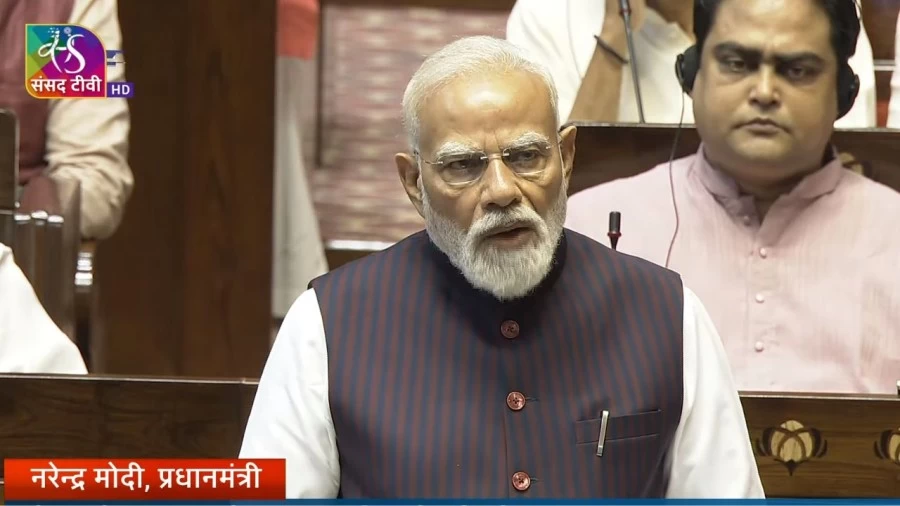
Prime Minister Narendra Modi delivered a comprehensive 21-minute speech in the Rajya Sabha on Tuesday, addressing the ongoing conflict in West Asia and its multifaceted impact on India. The Prime Minister emphasized that if the war between Iran and Israel continues, it will lead to severe consequences, testing the nation's resilience in the coming times. He stressed the necessity of a 'Team India' spirit, urging states to cooperate closely with the central government to mitigate the economic and logistical fallout of the crisis. According to the Prime Minister, the government is maintaining constant communication with global leaders to monitor the rapidly changing situation.
Impact on Global Energy and Supply Chains
The Prime Minister informed the House that the conflict in West Asia has triggered a significant global energy crisis. For India, this has directly affected the routine supply of petrol, diesel, gas, and fertilizers. Prime Minister Modi noted that while the government is actively managing the situation, the prolonged nature of the conflict poses a risk to price stability and availability, while to counter these challenges, India has strategically diversified its energy import sources. The number of countries from which India imports energy has increased from 27 to 41, providing greater flexibility and ensuring that the nation's energy security isn't compromised by regional instability.
Strategic Importance of the Hormuz Strait
A significant portion of the Prime Minister's address focused on the Hormuz Strait, a critical maritime route for global trade. He highlighted that a vast quantity of India's gas and fertilizer imports passes through this route. Currently, several commercial vessels, including those with Indian crew members, are stranded in the region due to the conflict. The Prime Minister expressed deep concern over these developments, stating that attacks on commercial shipping are unacceptable. India has advocated for the use of diplomacy and dialogue to ensure the strait remains open and safe for international commerce, as any prolonged blockage could lead to a severe economic crisis.
Diplomatic Efforts and Evacuation of Citizens
The safety of approximately 1 crore Indians residing in Gulf countries remains a top priority for the government. 75 lakh Indians have been successfully evacuated and brought back home. This includes more than 1000 individuals from Iran, among whom are over 700 medical students. The Prime Minister expressed grief over the loss of Indian lives in the conflict zone and assured that the government is providing all necessary assistance to the families of the deceased and medical care to the injured, while he confirmed that heads of state in the region have provided assurances regarding the safety of the Indian diaspora.
Administrative Response and Call for State Cooperation
To manage the domestic impact of the crisis, the central government has established an inter-ministerial group to assess difficulties in imports and exports, while On top of that, 7 empowered groups of officials have been formed to handle sector-specific challenges, similar to the management model used during the COVID-19 pandemic. The Prime Minister made a special appeal to state governments to take proactive measures against black marketing and hoarding, which often surge during such crises, while he emphasized that the benefits of the PM Garib Kalyan Anna Yojana must reach the poor and laborers without interruption, and states must prioritize the protection of vulnerable sections of society.
Strengthening Self-Reliance and Future Strategy
Highlighting the importance of 'Atmanirbhar Bharat' (Self-Reliant India), the Prime Minister stated that reducing dependence on other nations is the only viable long-term solution. He pointed out that over 90% of global trade is conducted via sea routes, making it vulnerable during international conflicts. Over the past decade, India has made significant strides in domestic manufacturing of defense equipment, life-saving medicines, and the processing of rare earth minerals. The Prime Minister assured farmers that the government has made adequate arrangements for fertilizer supply for the upcoming sowing season. He also noted that India's refining capacity has been enhanced, and efforts are underway to increase domestic LPG production and promote PNG usage.
