
- India,
- 27-Sep-2026 12:47 PM IST



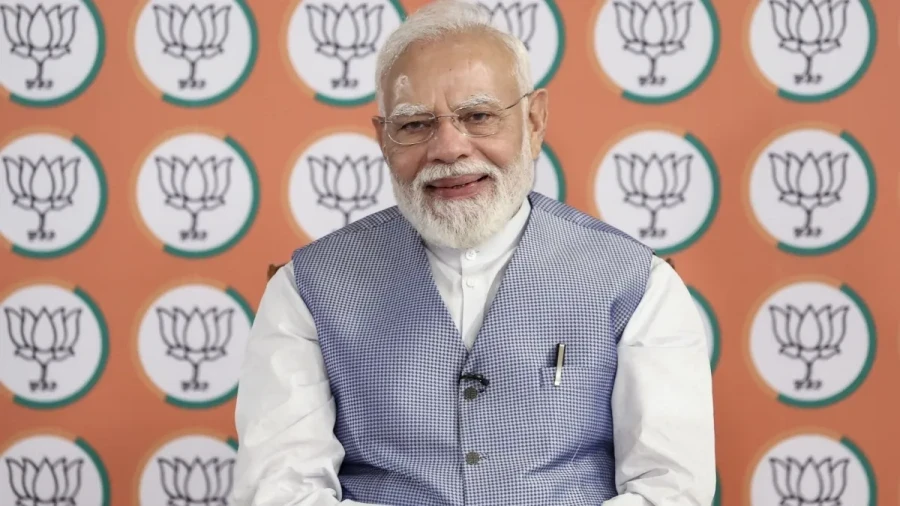
Prime Minister Narendra Modi addressed the nation through the 138th episode of his monthly radio program, Mann Ki Baat. During this significant broadcast, the Prime Minister touched upon various themes ranging from national security and historical heritage to environmental conservation and grassroots sports initiatives, while he emphasized that the India of today has a zero-tolerance policy towards terrorism, a sentiment echoed by the upcoming 10th anniversary of the historic Surgical Strike conducted by the Indian Army.
Commemorating 10 Years of the Surgical Strike
Reflecting on the bravery of the Indian armed forces, Prime Minister Modi reminded the citizens that 10 years are being completed since the Surgical Strike. He recalled that on the intervening night of 28 and 29 September 2016, the Indian Army carried out a precise and decisive operation against terrorist launch pads across the Line of Control (LoC). The Prime Minister stated that the way our brave soldiers crossed the LoC to take action against terrorism left the entire world in awe. He noted that the Surgical Strike presented a new example of India's policy against terrorism to the global community. For a long time, India had endured the pain caused by terrorist attacks, and the Surgical Strike was a decisive response to that suffering, proving that today's India doesn't tolerate terror.
Tribute to Ashok Singhal on His Birth Centenary
In his address, PM Modi paid a heartfelt tribute to the late Ashok Singhal, while he mentioned that today, 27 September, marks the birth anniversary of Ashok Singhal, who was born in Agra in 1926. As the nation observes his birth centenary, the Prime Minister honored his memory, describing him as a person who lived a life like an ascetic while remaining deeply connected to society. PM Modi highlighted Singhal's pivotal role in giving a new direction and energy to the Ram Janmabhoomi movement. He credited the construction of the magnificent Ram Temple in Ayodhya today as a result of those dedicated efforts and the foundation laid by leaders like him.
The 1000 Year Legacy of Modhera Sun Temple
The Prime Minister also spoke about the historical significance of the Modhera Sun Temple in Gujarat, while he recounted that in 1026 AD, Mahmud of Ghazni attacked the Somnath Temple, and during that same period, the famous Sun Temple in Modhera was also desecrated. The temple was originally built in 1025 AD by King Bhimdev. This year marks 1000 years since the destruction of this architectural marvel. However, PM Modi pointed out that today, Modhera isn't only recognized for its historical Sun Temple but has also carved a new identity as the country's first 'Solar Village'. This transition from a site of historical struggle to a modern symbol of renewable energy represents the resilience of India.
Environmental Conservation and Women Empowerment in Sundarbans
Highlighting inspiring stories from across the country, the Prime Minister mentioned the efforts of women in the Jharkhali area of the Sundarbans. These women are actively involved in creating mangrove forests. PM Modi shared a poignant detail that many of these women had lost their husbands to tiger attacks. After such personal tragedies, they found a source of livelihood and purpose within the Sundarbans itself. The mangroves planted by these women now serve as a natural protective shield for their villages against environmental threats. This initiative, according to the Prime Minister, is a remarkable example of combining nature conservation with women empowerment.
Grassroots Initiatives: From Hockey to Amla Processing
The Prime Minister lauded the efforts of Rajinder Singh Senior, who is dedicated to discovering and training young hockey talent in rural areas. PM Modi emphasized that for India to excel in sports, it's essential to reach out to villages and small towns where immense talent exists, waiting for the right opportunity and training. Plus, he discussed the economic transformation in Pratapgarh through Amla cultivation. Around 100 units are currently involved in Amla processing, where women from Self-Help Groups (SHGs) play a vital role. He cited the example of the Savitri Phule Self-Help Group from Devgarh Kamasi village, where women produce candy, murabba, and juice. Under the One District One Product (ODOP) initiative, these products are reaching new markets, Notably increasing the income of these women.
A Call for a Drug-Free India
Concluding his address, PM Modi spoke about the 'Nasha Mukt Yuva Abhiyan' (Drug-Free Youth Campaign). He noted that millions of young people across the country have taken a solemn pledge against drugs. These youths have not only committed to staying away from addiction themselves but have also taken the responsibility of spreading this message to others. The Prime Minister also mentioned unique heritage preservation efforts in Manapparai, Tiruchirappalli, Tamil Nadu, and positive environmental changes in Assam, reinforcing that the dedication of citizens is keeping India's heritage and future vibrant.