

- India,
- 10-Dec-2025 06:01 PM IST


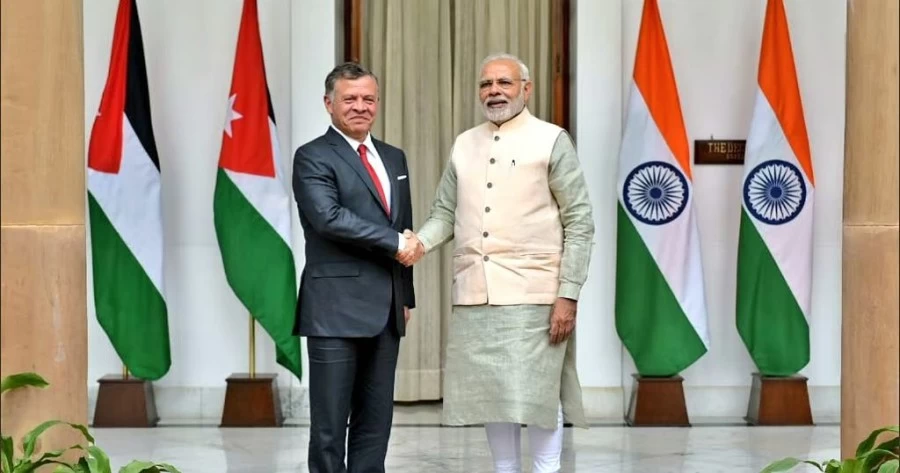
Prime Minister Narendra Modi is set to embark on his second visit to Jordan from December 15-16, marking the first leg of a three-nation tour that will also include Ethiopia and Oman, while this visit underscores the profound importance of Jordan to India, a small nation strategically nestled between Israel and Saudi Arabia, which possesses neither vast oil reserves nor a significant role in the global arms trade. Despite these traditional markers of geopolitical influence, Jordan stands as India's fourth-largest trading partner, fostering solid and multifaceted relationships across trade, investment, education, health, and culture. Prime Minister Modi's return to Jordan, following his initial visit in February. 2018, signifies the continuous strengthening of bilateral ties between the two nations.
Jordan's Strategic Position in the Middle East
Jordan occupies a unique and critical geopolitical position in the Middle East. It's a country that consistently aligns itself with Israel and the United States, a cornerstone of its foreign policy. Whether it concerns the escalating Iran-Israel tensions or the ongoing Gaza conflict, Jordan's policies have consistently been supportive of the US-Israel stance. This strategic alignment positions Jordan as a key player in regional stability and security. For India, maintaining strong relations with such a reliable partner in the complex and dynamic Middle East is of paramount importance. Jordan's role in regional balancing acts makes it a strategically valuable nation for India's foreign policy objectives, even in the absence of conventional resources like oil.
Deepening Bilateral Relations: A Historical Perspective
The relationship between India and Jordan has historically been characterized by friendship and mutual trust, with roots extending back several decades. The two nations formalized their initial agreement in 1947, marking the nascent stages of their diplomatic engagement. Full diplomatic relations were subsequently established in 1950, laying a solid foundation for future cooperation. In recent years, high-level visits have further invigorated these ties, while king Abdullah II of Jordan visited India in 2018, providing significant momentum to bilateral relations. India's National Security Advisor, Ajit Doval, and various ministers have also made frequent visits to Jordan, underscoring the continuous dialogue and commitment to cooperation, while the fourth round of Foreign Office Consultations between the two countries, held in April 2025, further exemplifies their dedication to reviewing and enhancing collaboration across diverse sectors.
Strong Trade and Investment Partnership
India's position as Jordan's fourth-largest trading partner highlights the strength and diversity of their economic relationship. In the fiscal year 2023-24, bilateral trade reached an impressive 2, while 875 billion US dollars (approximately 25,858 crore Indian rupees), indicating a significant economic exchange. During this period, India's exports to Jordan amounted to 1,465 million US dollars (approximately 13 crore Indian rupees). India primarily exports electrical equipment, grains, chemicals, petroleum products, and auto parts to Jordan, showcasing the capabilities of India's manufacturing and agricultural sectors, while conversely, India's main imports from Jordan include fertilizers, phosphates, and phosphoric acid, which are crucial for India's agricultural and industrial needs, playing a vital role in its food security and industrial production.
Key Investment Sectors and Industrial Collaboration
Significant investments by companies from both nations further underscore the depth of their economic partnership, while india has made substantial investments totaling 1. 5 billion US dollars in Jordan's phosphate and textile sectors, while these investments not only contribute to Jordan's economic development but also secure the supply of critical raw materials for India. Notably, the IFFCOJPMC's JIFCO Project, valued at 860 million US dollars, is a pivotal initiative in phosphoric acid production. This project stands as a prime example of industrial collaboration between the two countries, yielding long-term economic benefits. On top of that, over 15 Indian-origin garment companies are successfully operating in Jordan, contributing to. Job creation, boosting the local economy, and strengthening trade linkages between the two nations.
Growing People-to-People Connect and Cultural Exchange
The people-to-people connections between India and Jordan are steadily growing, bringing the citizens of both countries closer. Approximately 17,500 Indians reside in Jordan, engaged in various sectors such as textiles, construction, health, and IT. This vibrant Indian community makes significant contributions to Jordan's economy and serves as a living cultural bridge between the two nations. Jordan facilitates Indian tourists with a visa-on-arrival facility, and e-visas are now. Also available, making travel to Jordan even more accessible for Indian citizens. The increasing number of Indian tourists and students further strengthens. Cultural exchange and deepens mutual understanding between the two countries.
Cooperation in Education and Skill Development
Education serves as a significant medium for connecting the people of India and Jordan. Over 2500 Jordanians are alumni of Indian universities, having pursued their higher education in India. Annually, approximately 500 students from Jordan come to India for higher studies, reflecting the quality and appeal of India's educational system. India has also established an IT Center of Excellence (IJCOEIT) in Jordan, a crucial symbol of technological cooperation between the two nations, while this center provides training to Jordanian youth in modern and emerging fields such as cybersecurity, machine learning, and big data, equipping them with essential skills to thrive in the global digital economy.
Cultural Ties and Soft Power Diplomacy
Culturally, India and Jordan share strong bonds. Bollywood films are highly popular in Jordan, showcasing the global reach of Indian culture. Several Hindi films have also been shot in Jordan's picturesque and historical locations, further deepening artistic ties between the two countries. Indian performances are regularly featured in major cultural events like Jordan's Jerash Festival, providing opportunities to share the rich cultural heritage of both nations. Princess Basma bint Ali of Jordan participated in Yoga Day 2025, symbolizing the global acceptance of Yoga and the cultural harmony between the two countries. The Indian community in Jordan also celebrates its cultural events and festivals with enthusiasm, further strengthening the cultural bridge.
Health and Humanitarian Cooperation
Significant cooperation has also been observed in the health sector between India and Jordan. In 2025, a Joint Working Group meeting on Health discussed crucial topics such as medicine regulation, medical devices, and the digital health mission, reflecting shared efforts to improve healthcare services. During the COVID-19 pandemic, both countries extended mutual assistance, demonstrating their deep friendship and commitment to supporting each other in times of crisis. India sent 5 million US dollars worth of medicines and vaccines to Jordan, serving as an excellent example of humanitarian aid and global solidarity. This cooperation further strengthens trust and goodwill between the two nations.
Future Prospects and Strategic Significance
Prime Minister Modi's upcoming visit presents an invaluable opportunity to further deepen the multifaceted relationship between India and Jordan. Beyond traditional trade in oil or weapons, Jordan is a crucial strategic, economic, and cultural partner for India. Its unique position in the Middle East, strong trade ties, investment opportunities, educational collaboration, and growing people-to-people connections give it a significant place in India's foreign policy, while the increasing cooperation between the two nations is poised to foster regional stability and prosperity, and this partnership is set to reach new heights in the future, fulfilling the shared interests and aspirations of both nations.
