

- India,
- 14-Nov-2025 06:49 PM IST


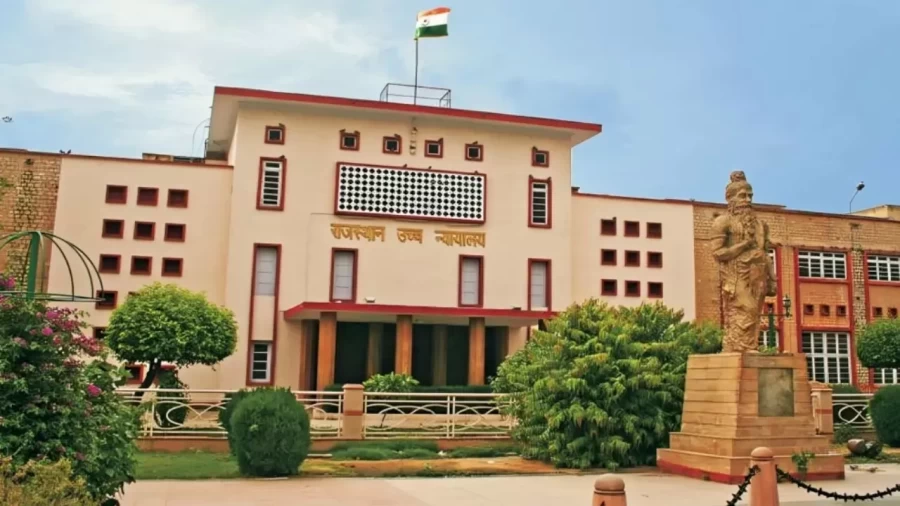
The Rajasthan High Court has delivered a significant verdict regarding the long-pending Panchayat and Urban Local Body elections in the state, while on Friday (November 14), a division bench led by Acting Chief Justice S. P. Sharma instructed the state government to conduct elections for Panchayats and Municipalities by April 15, 2026, while this order came after hearing petitions filed by former MLA Sanyam Lodha and Giriraj Singh Devanda, among others, which contended that the postponement of elections violated constitutional provisions.
Fixed Timeline for Elections
The High Court's ruling has established a clear timeline for the state government. The court explicitly directed that both Panchayat and Urban Local Body elections must be conducted concurrently. Also, the delimitation process, which is crucial for these elections, must be completed by December 31, 2025. This directive is seen as a major step towards strengthening local self-governance in Rajasthan and ensuring timely democratic processes. Currently, the terms of approximately 6,759 Panchayats and 55 Municipalities in the state have. Already expired, leading to a lack of elected representatives in these crucial local bodies.
Hearing on Over 450 Petitions
This decision follows the conclusion of hearings on approximately 450 petitions related to the reorganization and delimitation of Panchayats. The High Court had reserved its judgment on these petitions on August 12, and the verdict was pronounced three months later. The petitioners had alleged that the state government had arbitrarily postponed the Panchayat and Urban Local Body elections, acting contrary to the provisions of the Constitution. The issue of constitutional rights violation was a central point. Raised in these petitions, which the court considered with utmost seriousness.
Allegations of Constitutional Violations
Representing the petitioners, advocate Premchand Devanda argued in court that the postponement of elections through a notification issued on January 16, 2025, was a direct violation of Articles 243E, 243K of the Constitution and Section 17 of the Rajasthan Panchayat Raj Act 1994, while he contended that under constitutional provisions, elections for Panchayats can't be postponed even for a single day after their term expires. On top of that, he asserted that the Sarpanchs whose terms have ended are no longer elected representatives,. And Because of this, their appointment as administrators is also incorrect and against the spirit of the Constitution. In its response to the court, the state government stated that it's considering the concept of 'One State, One Election'. The government informed the court that a high-level committee would be constituted to implement this concept, while the government's argument was that this approach would save time, money, and resources, while also working towards empowering local institutions. The government also clarified that the process of delimitation and reorganization remained incomplete due to the formation of new districts in the previous tenure and the subsequent dissolution of some of them. This, it stated, was the primary reason for the postponement of elections.
Government's Stance on Administrator Appointments
Regarding the appointment of administrators, the government stated that it had appointed administrators under Section 95 of the Rajasthan Panchayat Raj Act 1994. The government further argued that the Act doesn't explicitly specify who can or can't be appointed as an administrator, thereby justifying their appointments. However, despite these arguments, the court decided to set a definitive timeline for the elections to ensure that democratic processes aren't hindered and that local bodies receive elected representatives as soon as possible, while this ruling is expected to be a pivotal moment for the future of local self-governance in Rajasthan.
