

- India,
- 25-Nov-2025 08:41 AM IST


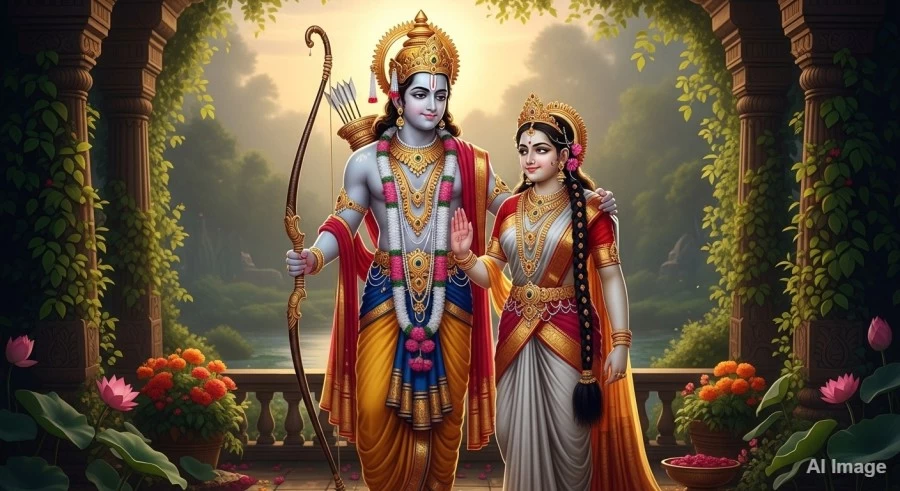
The auspicious festival of Vivah Panchami is celebrated every year on the fifth day of the bright half of the Margashirsha month with great enthusiasm and devotion. This sacred day commemorates the holy marriage of Lord Rama and Mata Sita, when they were united in wedlock. According to Hindu beliefs, performing worship and observing a fast for Lord Rama and Mata Sita on this day leads to an increase in happiness and prosperity in life, while this festival holds special significance for fostering a blissful and harmonious married life.
Significance and Rituals of Vivah Panchami
Vivah Panchami symbolizes the divine love and marriage of Lord Rama and Mata Sita. This day is considered extremely auspicious for all married couples who wish for happiness, peace, and prosperity in their marital journey. On this day, devotees wake up early, take a purifying bath, and wear clean clothes. Subsequently, an idol or picture of Lord Rama and Mata Sita is installed, and they're worshipped with full rituals. Offerings typically include flowers, fruits, incense, lamps, and sweets (naivedya).
The Importance of Reciting Vrat Katha
During the worship on Vivah Panchami, it's considered essential to recite the Vrat Katha (fasting story). It's believed that reading this Vrat Katha ensures a happy married. Life and strengthens the bond of love and trust between husband and wife. This narrative recounts the entire story of Lord Rama and Mata Sita's marriage, inspiring devotees with their ideal lives. Temples also celebrate the marriage ceremony of Lord Rama and. Mata Sita on this day, often featuring processions and special prayers.
The Vivah Panchami Vrat Katha
According to religious beliefs, it was on the fifth day of the bright half of the Margashirsha month that Mata Sita's Swayamvar (a ceremony for a princess to choose her husband from among a group of suitors) was held. This Swayamvar was organized by the valiant King Janak of Mithila for his daughter, Sita. King Janak had set a condition: whoever could string the mighty Pinaka bow of Lord Shiva would be the one to marry his daughter Sita, while many powerful and great kings and emperors from various lands arrived at this Swayamvar, all eager to demonstrate their strength and valor.
The Breaking of Shiva's Bow and Sita's Choice
In this grand Swayamvar, Lord Rama and his younger brother Lakshmana arrived accompanied by Guru Vashishtha. One by one, all the kings attempted to lift the bow, but none could even budge the enormous weapon, let alone string it, while after all the kings had failed, Lord Rama, upon the command of Guru Vashishtha, stepped forward towards the bow. Lord Rama effortlessly lifted Lord Shiva's colossal Pinaka bow, while as soon as he strung it, the bow broke into two with a thunderous sound that echoed across the three worlds. Witnessing this extraordinary feat, all those present were astonished. As per the condition, Mata Sita chose Lord Rama as her husband and garlanded him. Thus, Lord Rama and Mata Sita were united in the sacred bond of marriage.
Establishment of Vivah Panchami
Due to breaking Lord Shiva's bow and marrying Mata Sita, Lord Rama's fame and glory spread throughout the three worlds. In remembrance of this historic and sacred event, the festival of Vivah Panchami began to be celebrated annually on the fifth day of the bright half of the Margashirsha month, while this festival continues to be a symbol of the ideal married life of Lord Rama and Mata Sita and their unbreakable love, inspiring devotees even today.
