

- India,
- 02-Mar-2026 05:47 PM IST


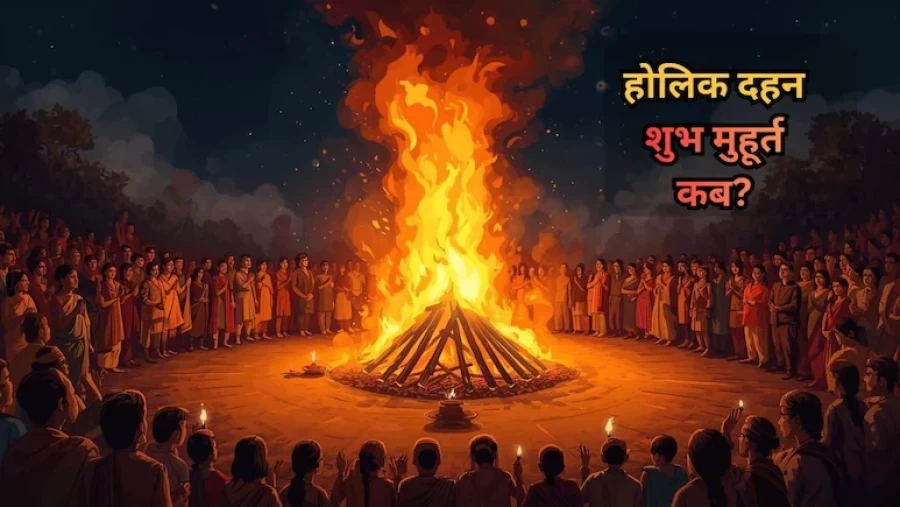
The festival of Holi in 2026 is set to witness a unique astronomical and astrological alignment. According to the Hindu calendar and astrological calculations, Holika Dahan will be observed on March 2, 2026, while the festival of colors, Dhulandi, will be celebrated on March 4, 2026. This shift in the traditional schedule is primarily due to the occurrence of the year's first lunar eclipse and the presence of the Bhadra period during the Phalguna Purnima Tithi, while authorities and religious scholars have emphasized following the specific timings to ensure the rituals align with Vedic traditions.
Phalguna Purnima and Bhadra Timings
The Phalguna Purnima Tithi is scheduled to commence at 5:56 PM on March 2, 2026, and will conclude at 5:08 PM on March 3, 2026. Traditionally, Holika Dahan is performed during the Pradosh Kaal (the period after sunset) while the Purnima Tithi is prevailing. Since the Purnima Tithi ends before sunset on March 3, the ritual of Holika Dahan must be conducted on the night of March 2. However, the Bhadra period poses a constraint. The 'Bhadra Punchha' (the tail end of the Bhadra period), which is considered auspicious for the bonfire, will occur between 12:50 AM and 2:02 AM on the intervening night of March 2 and March 3. Scholars suggest that performing the ritual during this window ensures success and prosperity.
Impact of the First Lunar Eclipse of 2026
A total lunar eclipse is set to occur on March 3, 2026, which will be visible in various parts of the world, including India. The eclipse is expected to start at 3:20 PM and conclude at 6:47 PM. In India, the eclipse will be visible during its concluding phases, while according to religious protocols, the 'Sutak' period (inauspicious time before an eclipse) begins 9 hours prior to a lunar eclipse. Consequently, the Sutak will be effective from the morning of March 3. During this period, all religious activities, temple worship, and public celebrations like Dhulandi are strictly prohibited, leading to the postponement of the color festival to the following day.
Rescheduling of Dhulandi to March 4
Due to the lunar eclipse and the associated Sutak period on March 3, the celebration of Dhulandi has been moved to March 4, 2026. This applies to major cities in Rajasthan, including Jaipur, Jodhpur, Bikaner, and Udaipur, as well as the rest of the country. In Jaipur, the traditional festivities at the City Palace and the Govind Dev Ji Temple will now take place on Wednesday, March 4. Astrologers state that celebrating after the eclipse and performing purification rituals on the next sunrise is the correct way to observe the festival. This creates a three-day sequence: Holika Dahan on March 2, the Eclipse observation on March 3, and Dhulandi on March 4.
Rituals and Puja Vidhi for Holika Dahan
The ritual of Holika Dahan involves a specific Puja Vidhi that's believed to ward off evil. Devotees typically sit facing East or North at the site of the bonfire. The puja materials include Roli, Akshat (rice), flowers, raw cotton thread, jaggery, whole turmeric, moong dal, and sugar candies. Before the fire is lit, devotees circumambulate the Holika structure 3, 5, or 7 times while wrapping the raw cotton thread around it. Finally, water is offered, and new harvests like barley or wheat stalks are roasted in the fire. This ritual symbolizes the victory of Prahlad's devotion over the demonic forces of Holika and Hiranyakashipu.
Regional Significance in Rajasthan
In Rajasthan, the timing of Holika Dahan holds immense cultural significance. In regions like Shekhawati and Mewar, the local communities organize folk dances and songs that are timed according to the lunar calendar, while for 2026, local administrations and temple boards have issued advisories regarding the eclipse timings to manage crowds. The traditional 'Gair' dance and other community gatherings will be adjusted to accommodate the March 4 Dhulandi schedule. The state's tourism department also monitors these dates as they attract significant international interest, ensuring that the astronomical events don't disrupt the safety and cultural integrity of the celebrations.
[DISCLAIMER_START] This report is based on astrological calculations and the Hindu calendar. Timings and rituals may vary based on local traditions and regional scholarly interpretations.