
- India,
- 19-May-2026 12:03 PM IST



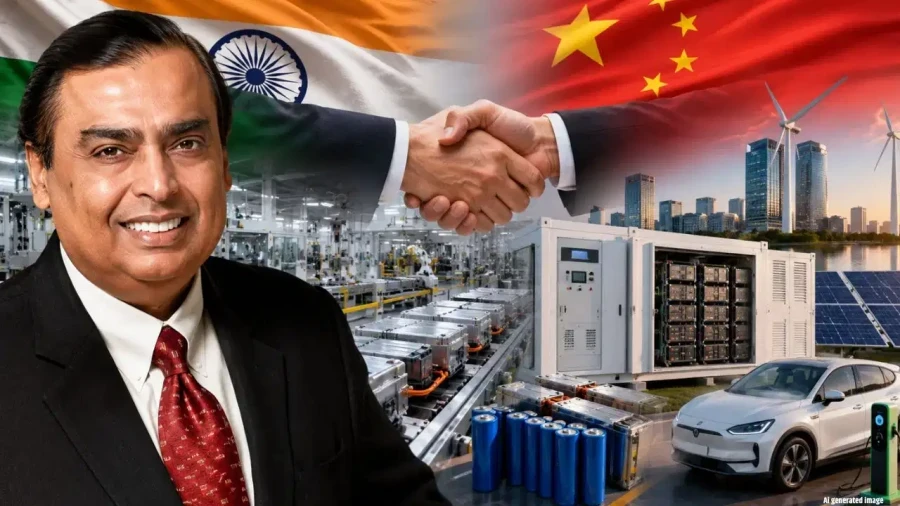
Reliance Industries, led by Chairman Mukesh Ambani, is making a significant move in the green energy sector as it prepares to bolster its massive Jamnagar project. The company is currently in discussions with Contemporary Amperex Technology Co. Limited (CATL), the world's largest battery manufacturer based in China, along with several other global suppliers. These negotiations are centered around the procurement of critical components for large-scale Battery Energy Storage Systems (BESS), which are essential for the company's ambitious renewable energy roadmap.
The Jamnagar Energy Storage Complex
The Energy Storage Complex being developed in Jamnagar, Gujarat, is set to become India's largest facility of its kind, while this project serves as the cornerstone of Mukesh Ambani's vision to transform India into a global leader in clean energy. The facility is designed to support the integration of renewable energy into the national grid, ensuring a steady and reliable power supply. Initially, Reliance had planned to acquire the complete end-to-end technology for manufacturing lithium-ion battery cells. However, this plan faced a significant hurdle due to external factors.
Strategic Shift in Battery Technology
The original strategy of acquiring core battery manufacturing technology became difficult to execute after China implemented stringent regulations on the export of its core battery technologies, while recognizing these limitations, Reliance Industries has strategically pivoted its approach. Instead of focusing on acquiring the underlying technology to manufacture cells from scratch, the company is now focusing on importing mass-produced battery cells from global leaders. These cells will then be integrated and packed into large-scale battery storage systems within the Jamnagar complex. This shift ensures that the project remains on track despite international regulatory challenges.
Navigating Global Partnerships
Reliance is known for maintaining a solid supply chain by keeping multiple backup options available. According to sources, the company had previously engaged in discussions with CATL for a technology transfer agreement, but those talks didn't reach a definitive conclusion. Subsequently, Reliance established a partnership with Xiamen Hithium Energy as its primary collaborator, while however, recent months have seen some interruptions in the progress of this deal. Consequently, Reliance has reopened negotiations with CATL and other international suppliers to secure a reliable second option for the Jamnagar plant's requirements. While these developments are significant, a spokesperson for Reliance Industries declined to provide specific comments, labeling the reports as media speculation.
Impact on India's Clean Energy Future
This corporate development has far-reaching implications for India's power infrastructure and the general public, while india has set an ambitious target of achieving 500 gigawatts of renewable energy capacity by 2030. Since solar and wind energy are intermittent, massive battery storage systems are required to provide 24/7 electricity and maintain grid stability. A report by BloombergNEF (BNEF) highlights the immense potential of this sector, projecting that India's energy storage market will grow 115 times by 2035 compared to its 2025 levels. The success of the Jamnagar plant will provide unprecedented strength to the national electricity grid, paving the way for a future powered by uninterrupted clean energy.