
- India,
- 04-Sep-2026 02:57 PM IST



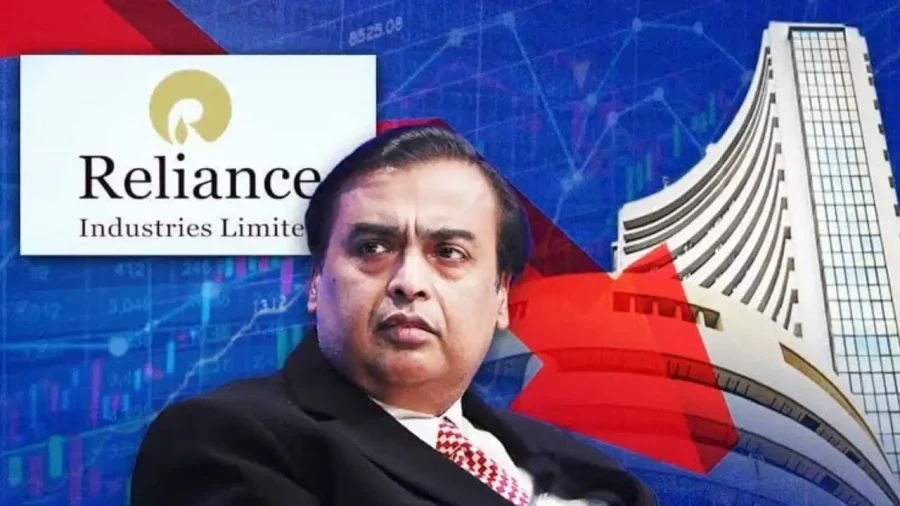
Reliance Industries Limited (RIL), India's largest corporate giant, has faced a significant downturn in its stock performance during the current year, while despite reporting strong earnings in its core Oil-to-Chemicals (O2C) business, the company's shares have plummeted by 17 percent as of August 3.63 lakh crore. Market analysts suggest that while the traditional business segments are performing well, investors are increasingly focused on the growth prospects of the retail and new energy divisions, as well as the company's ability to generate free cash flow.
The Sharp Decline in Market Valuation
The stock performance of Reliance Industries has been under pressure throughout the year. 40.05, marking a 17 percent decrease. 90 on the BSE, the overall year-to-date decline remains around 15 percent. This volatility has Notably impacted the company's market capitalization. 67 crore.
Strong Performance in Refining and Petrochemicals
Interestingly, the operational environment for Reliance's O2C business has improved considerably. Global brokerage firm Jefferies notes that global refinery throughput has decreased by about 4 percent due to various conflicts. 5 million barrels per day last year. This disruption has pushed diesel and gasoline stocks to their lowest levels in five years. 5 dollars per barrel in FY26. Petrochemical spreads have also strengthened, with margins for polyethylene, polypropylene, and polyethylene terephthalate increasing by an average of 64 percent since late February. Plus, RIL's Special Economic Zone refinery remains exempt from windfall taxes, allowing the company to fully capitalize on the favorable refining environment, while jefferies maintains a 'Buy' rating with a price target of 1710, expecting a 10 percent consolidated EBITDA CAGR between FY26 and FY29.
Investor Concerns and Brokerage Perspectives
Despite these strong numbers, the market remains cautious. A report from JPMorgan suggests that investors are looking beyond immediate O2C earnings. For the stock to see a significant re-rating, the market requires either further strengthening of refining margins or a higher valuation for Reliance Retail. 5 times for the O2C business, which JPMorgan believes doesn't account for the potential of the renewables venture, real estate holdings, or the fast-growing FMCG revenue. JPMorgan has an 'Overweight' rating with a September 2027 price target of 1625. However, they warn that if Reliance Retail fails to show stable growth, the valuation could face further downside risks, potentially dropping to 1100 or 1210 under more conservative scenarios.
The Role of Retail and New Energy
Reliance Retail is a critical factor in the company's overall valuation. JPMorgan estimates the business is valued at 26 times its FY28 blended EBITDA, which is lower than DMart's 34 times. While there is room for growth, recent declines in margins and a lack of significant store expansion have weighed on EBITDA growth, while simultaneously, the New Energy segment is viewed with cautious optimism. RIL aims to start large-scale solar-cell and battery-packing lines by March 2027. JPMorgan previously valued this business at 160 per share, assuming the installation of 70 GW of modules over four years. Jefferies also highlights a 10 billion dollar investment plan over three years in the renewable production chain. However, the realization of this value depends on timely execution and achieving operational efficiency.
Free Cash Flow and Future Outlook
A major point of concern for the market is Reliance's free cash flow. For the past three years, the company has operated with negative free cash flow due to heavy investments in retail, new energy, and petrochemicals. JPMorgan expects this to turn positive as the annual EBITDA run rate approaches 20 billion dollars. The company's guidance to keep net debt-to-EBITDA below one time also suggests improving cash generation. Ultimately, while strong O2C margins provide a cushion for earnings, the stock's future trajectory will depend on clear evidence of growth and sustainability in the Retail and New Energy sectors. Until then, the market may continue to treat the refining recovery with skepticism.